Picture a round, golden loaf resting on a long white towel embroidered in red and black, with a tiny mound of salt pressed into the top crust. Someone holds it out to you with both hands and a smile. You break off a piece, dip it in the salt, eat it, and in that moment you stop being a stranger. That is the Slavic welcome of bread and salt, one of the oldest gestures of hospitality in Europe, and it is very much the spirit of the Slavic Food & Cultural Festival Orlando, which returns to Reiter Park in Longwood on Saturday, February 27, 2027. Nobody at the gate will hand you a loaf, of course, but the idea behind the ritual, that a guest is a gift and should leave well fed, is exactly what the parish kitchen of Saint Nina Mission has been practicing in Central Florida for more than ten years.
In this article we look at where the bread and salt custom comes from, how it is performed from Kyiv to Kraków to Belgrade, why the wedding loaf called the korovai is practically a work of sculpture, and how families in Seminole County and beyond keep these traditions alive far from the wheat fields where they began.
A Loaf, a Pinch of Salt, and a Promise
Across the Slavic world, bread was never just food. For centuries most families lived from harvest to harvest, and a year of good bread meant survival. Bread was blessed, kissed when a piece fell to the floor, never thrown away, and never placed upside down on the table, because that was said to invite poverty or quarrels. Many grandmothers still sweep crumbs into their palm and give them to the birds rather than toss them in the trash. Before cutting a new loaf, some people make the sign of the cross over it with the knife. In a peasant house, a loaf often sat in the corner under the icons, the most honored place in the home.
Salt carried its own weight. Before refrigeration, salt kept meat, fish, cabbage and cucumbers through the long winter, and it was expensive enough that it was taxed, traded and fought over. To share salt with someone was to share something precious. In many cultures, eating salt together created a bond of trust, and Slavic folk wisdom says you cannot really know a person until you have eaten a pood of salt with them. A pood is an old Russian weight of about thirty-six pounds, so the saying means you need years of shared meals before you truly know someone.
Put the two together and you have a complete message. The bread says: may you never be hungry in this house. The salt says: may our friendship last, and may we face life's bitter moments together. The Russian language even has a single word for a hospitable person, khlebosolny, literally "bread-and-salt-ish." Ukrainians say khlib i sil, Poles say chleb i sól, Czechs chléb a sůl, Slovaks chlieb a soľ, and in Serbian and Croatian it is hleb i so or kruh i sol. The words differ slightly, but the gesture is understood everywhere from the Baltic to the Adriatic.
How the Welcome Is Performed
The classic version goes like this. A woman of the household, often the eldest, or a young woman in folk dress at a public event, holds a round loaf on an embroidered towel. In Ukraine and Belarus this towel is the rushnyk (an embroidered ritual towel, rushnik in Russian and ruchnik in Belarusian), and it is just as important as the bread. A small salt cellar sits on top of the loaf or in a hollow pressed into the crust. The honored guest bows slightly, sometimes kisses the bread, breaks off a small piece, dips it in the salt and eats it. Refusing would be a serious insult, so if you are ever offered bread and salt, take a piece, even a tiny one.
Families welcome newlyweds this way, and villages once greeted a bishop or an important visitor the same way. Bread and salt are also the traditional housewarming gift. When someone moves into a new home in Ukraine, Russia, Poland or the Czech Republic, friends still arrive with a loaf and a little bag of salt so the new house will always have food and good fortune. Some families carry bread and salt into their empty new home before the furniture, a custom many immigrant families have carried with them to new homes in America.
There are regional twists. In Bulgaria, a round ceremonial bread called pitka is often broken between people, and at weddings it may be offered with honey for a sweet married life. In Serbia, Montenegro and Bosnia, a flat round bread called pogača appears at celebrations of all kinds, and the Christmas bread česnica hides a coin for one lucky family member. In Poland, parents waiting at the reception hall greet the bride and groom with bread and salt: bread so they will never be hungry, and salt so they will learn to handle hardship together. Slovaks and Czechs offer bread and salt at weddings and to honored guests at village festivals. However it is done, the message is the same: you are welcome here.
The Rushnyk: A Towel That Tells a Story
To an outsider, the towel under the loaf might look like decoration. To a Ukrainian or Belarusian grandmother, it is a document. A rushnyk is a long, narrow strip of linen or cotton, often several feet long, embroidered at both ends. The patterns differ from region to region: Poltava is famous for delicate white-on-white work, the Carpathian highlands favor dense geometric patterns, and Podillia is known for dark, almost black designs. Red is the most common color, standing for life, love and protection, while black often stands for the earth and the land.
The motifs are not random. You will see the tree of life rising from a vase or a pot, birds facing each other in pairs, stars, rhombuses that represent sown fields, and branches of kalyna (viburnum, the red-berried shrub that is one of Ukraine's beloved symbols). A rushnyk was used to wrap bread, hang over icons, bind the hands of a couple during the wedding, and even lower a coffin into the grave. Every important moment of life passed across one.
A girl traditionally started embroidering rushnyky long before marriage, filling a chest with them as part of her dowry. During the wedding ceremony itself, the couple steps onto a rushnyk laid on the floor before the altar, and an old belief holds that whoever steps on it first will lead the household. That little race still makes guests laugh today. If you browse the outdoor vendor market at Reiter Park, you might spot embroidered textiles or shirts, and now you will know how to read some of the symbols stitched into them.
The Korovai: A Wedding Loaf Fit for a Sculpture Museum
If the everyday welcome loaf is a sonnet, the wedding korovai is an epic poem. The korovai (karavai in Russian and Belarusian) is a large, round, richly decorated bread baked for a wedding in Ukraine, Belarus and Russia. It can be as wide as a car tire and stand several layers high. Its top is covered with ornaments sculpted from dough: pairs of birds, often swans or doves that represent the couple, braided ropes, suns and moons, pine cones, flowers, sprigs of periwinkle and viburnum berries. In some regions a small branch decorated with ribbons is pushed into the center, a little wedding tree that stands for the new family taking root.
Almost every detail has a meaning. The circle stands for eternity and the sun. Braids wrapped around the edge stand for unity and for the binding of two families. Paired birds stand for faithfulness, because swans and doves were believed to mate for life. Ears of wheat promise abundance and children. The shine on the crust, from a careful egg wash, is meant to reflect a bright and prosperous future.
Baking it was a ritual in its own right. Traditionally the korovai was not baked by the bride's mother but by a group of korovainytsi (korovai bakers), married women chosen because their own marriages were happy and long. Widows and divorced women were usually not invited, a rule that can sound harsh today but grew from the belief that the bakers pass their own fortune into the dough. The women gathered in the house of the bride or groom a day or two before the wedding, washed their hands, tied on clean aprons, and kneaded the dough while singing special korovai songs. These songs ask God and the saints to help with the baking, describe the flour and eggs gathered from the whole village, and tease the men of the household. In some villages the job of placing the huge loaf into the oven fell to a man, who had to do it with great care, because a cracked korovai was considered a bad omen.
When the loaf came out of the oven whole, glossy and fragrant, the women cheered and sang again.
From Altar to Table: The Korovai at the Wedding
The korovai has a starring role during the celebration. It is carried in with ceremony, often on a rushnyk, and placed at the center of the wedding table where everyone can admire it. In many traditions, the parents of the couple welcome the newlyweds with a smaller loaf of bread and salt when they arrive from the church or the civil registry. In Russia and Ukraine a cheerful custom has the bride and groom each bite into that loaf at the same time, while everyone watches to see who takes the bigger bite, since that person, according to the joke, will be head of the family. Grooms have been known to open their mouths very wide, and brides have learned to do the same.
At the end of the feast comes the dividing of the korovai. The senior member of the wedding party, sometimes a godparent and sometimes a respected older relative, cuts the loaf. The top, with its birds and flowers, goes to the newlyweds. The rest is shared out piece by piece to parents, relatives, friends and finally every guest, so that everyone leaves with a bit of the couple's luck.
The tradition has never disappeared. Professional bakers in Ukraine, Poland and across the diaspora now take orders for korovai, and in Florida some families ask a relative or a church baker to make one, while others order a decorated loaf from a Slavic bakery. Brides who grew up in the United States often choose both a korovai and an American wedding cake, so the guests get the best of two worlds.
Bread Across the Slavic Year
The wedding korovai is only one member of a big family of ritual breads. At Easter, Ukrainians bake tall paska and Russians bake kulich, crowned with icing and taken to church in baskets to be blessed. At Christmas, Ukrainian families place the round kolach, braided in three rings, at the center of the table with a candle inside. Serbs bake the česnica with its hidden coin, and Bulgarians bake a decorated Christmas bread with symbols of the household and the harvest. Poles share the thin opłatek wafer before the Christmas Eve meal. In spring, Russians and Ukrainians bake little bird-shaped buns called zhavoronki (larks) to call back the migrating birds.
Through the whole year, bread marks time, holds memory and binds people together. Ukrainians and Russians alike say that bread is the head of everything, and Polish grandmothers tell children to treat every slice with respect, because someone worked hard in the field for it.
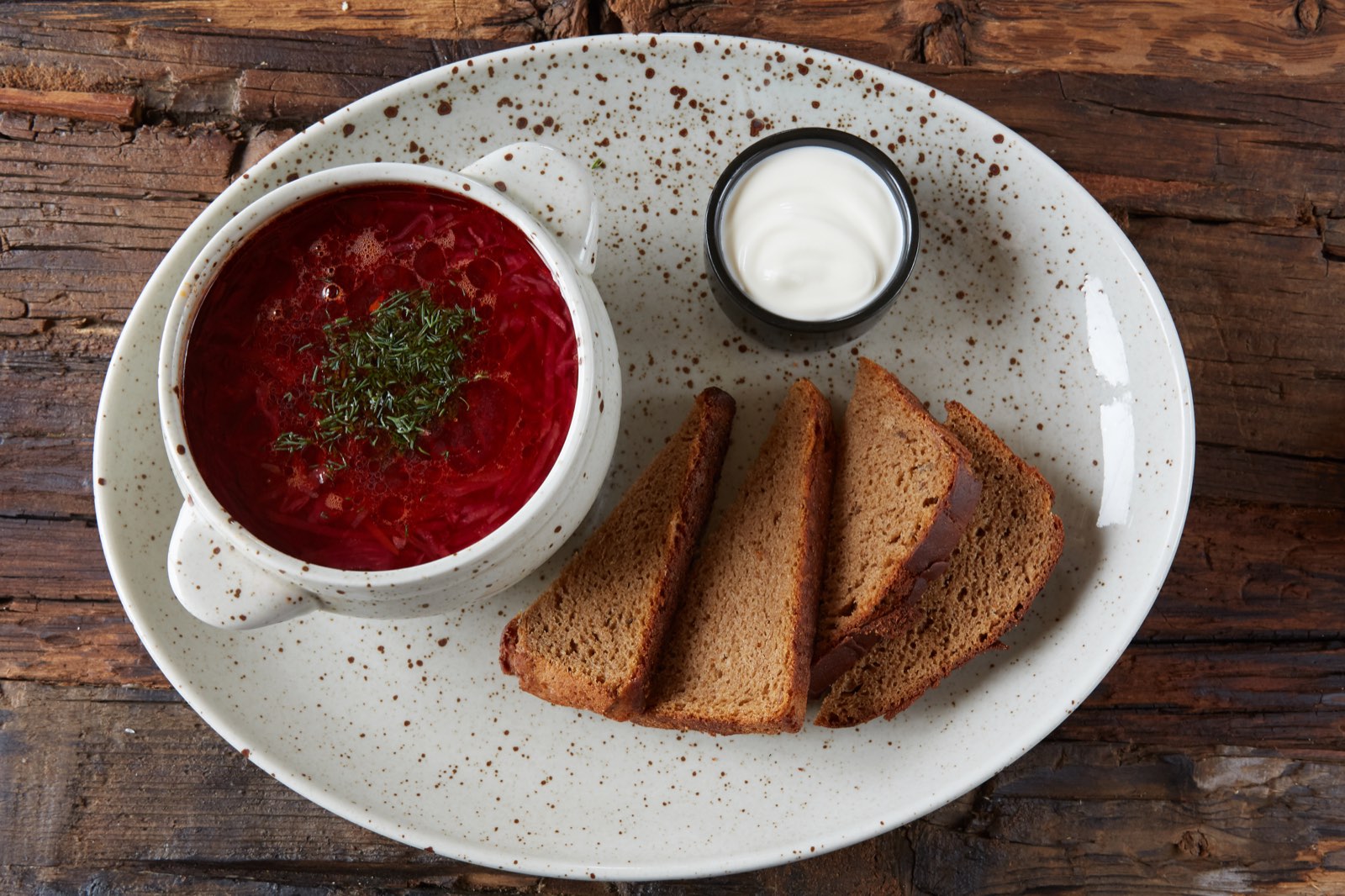
This is why bread is never an afterthought in a Slavic kitchen, and why the bulochki (soft, slightly sweet buns) at the festival matter so much to the volunteers who make them. On the Menu page you will find bulochki with cabbage, with farmer's cheese or with cherries for $10, made fresh on-site by the parish kitchen. They are not wedding loaves, but they come from the same tradition of soft, enriched dough shaped by hand and shared generously. Pair one with a bowl of borscht ($15), and you have a meal that would make any Ukrainian or Russian grandmother nod in approval.
Keeping the Tradition Alive in Central Florida
When families emigrate, they cannot bring the wheat fields or the clay ovens. What they bring is memory, a few recipes on yellowed cards, an embroidered towel folded in a suitcase, and the habit of greeting guests generously. In Central Florida, as in diaspora communities everywhere, bread and salt may appear at weddings, at housewarmings and at church celebrations when a bishop visits. Grandmothers teach grandchildren to braid dough on a Saturday afternoon.
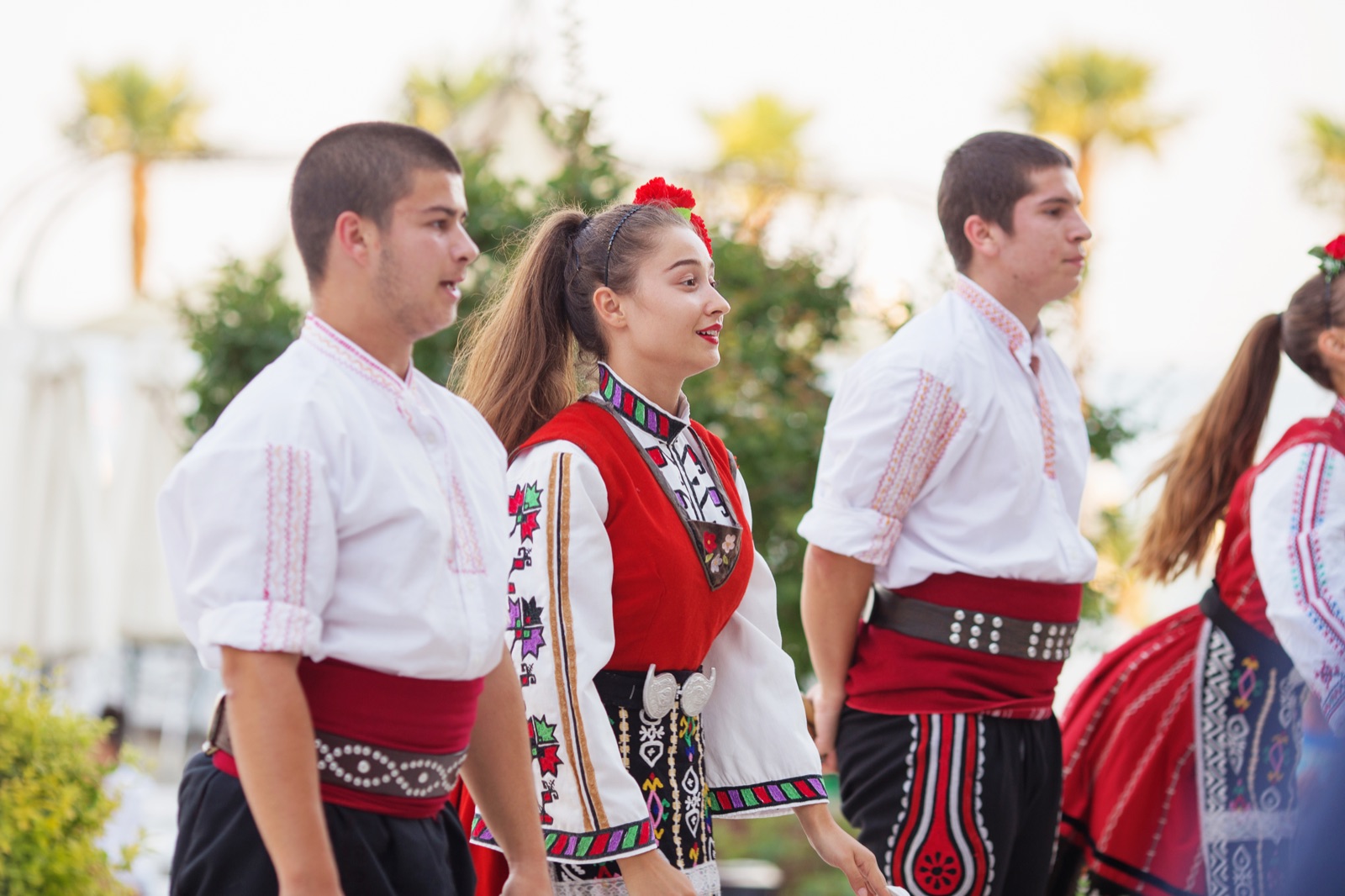
Community events give children a chance to see their heritage in public, not just at home. That is one reason the festival in Longwood matters to so many families. When the Children's Program opens the main stage from 10 AM to noon with children's songs and dances, featuring Elina Deyev, the Rodni Ritmi Dance Group and the Serbian Crown Folklore Group, kids get to show what they have learned in front of their neighbors.
Throughout the day the stage moves across the Slavic map. The Opening of the Festival runs from 12:00 to 12:30. The Russian Program, from 12:30 to 2:30, brings musical traditions with a children's chorus and folk ensemble. At 2:30, Cecilia Rokusek of the National Czech & Slovak Museum & Library takes the stage for half an hour. The Serbian & Bulgarian Program, with the Serbian Crown Folklore Group, runs from 3:00 to 4:00. The Ukrainian Program, with Dina Deyev singing Ukrainian songs, runs from 4:30 to 5:30, and the Polish & Croatian Program, with the International Folk Dance Group and the Florida Folk Dance Council, closes the stage from 5:30 to 6:30. The schedule is still being finalized and times may change, so check the Schedule page before you come. Many of these cultures share the bread and salt custom, and you may well see embroidered towels and costumes that echo the rushnyk.
If you want to experience the welcome from the other side, consider volunteering. The festival depends on people who chop cabbage, shape buns, stir enormous pots of borscht, pour kvass and greet guests. On the Volunteer page you can sign up for shifts, help with cooking or donate ingredients and supplies. There is no better way to understand Slavic hospitality than to be the one handing a warm bun to a hungry family.
Come Break Bread With Us in Longwood
The ritual of bread and salt has outlived empires, wars and migrations because it answers a simple human need: to feel welcome. You do not need to be Slavic to feel it, and you do not need to speak a word of Ukrainian, Polish or Serbian. You only need to show up hungry and curious.
The Slavic Food & Cultural Festival Orlando takes place on Saturday, February 27, 2027, from 10 AM to 8 PM at Reiter Park, 311 W Warren Ave, Longwood, FL 32750, just north of Orlando in Seminole County. Admission is free for all ages, no tickets required, and the festival goes on rain or shine. Pets are not allowed, though service animals are welcome, and cash and cards are accepted at the food stands and most vendor booths.
Come for the crepes ($15), the juicy grilled shashlik skewers ($25), the Bulgarian stuffed peppers ($15), the bulochki and the house-made kvass ($10). Ask for samovar tea or one of the vegetarian options mentioned in the FAQ. If you would rather skip the line, use Pre-order Food on slavicfoodfestival.com. Bring the kids to the crafts and activities in the kids' zone, wander through the vendor market, and settle in front of the main stage for songs and dances from across the Slavic world.
More than two thousand guests are expected, and every one of them will be treated the way a Slavic host treats someone who knocks on the door: with something good to eat and a warm word. We cannot wait to welcome you.