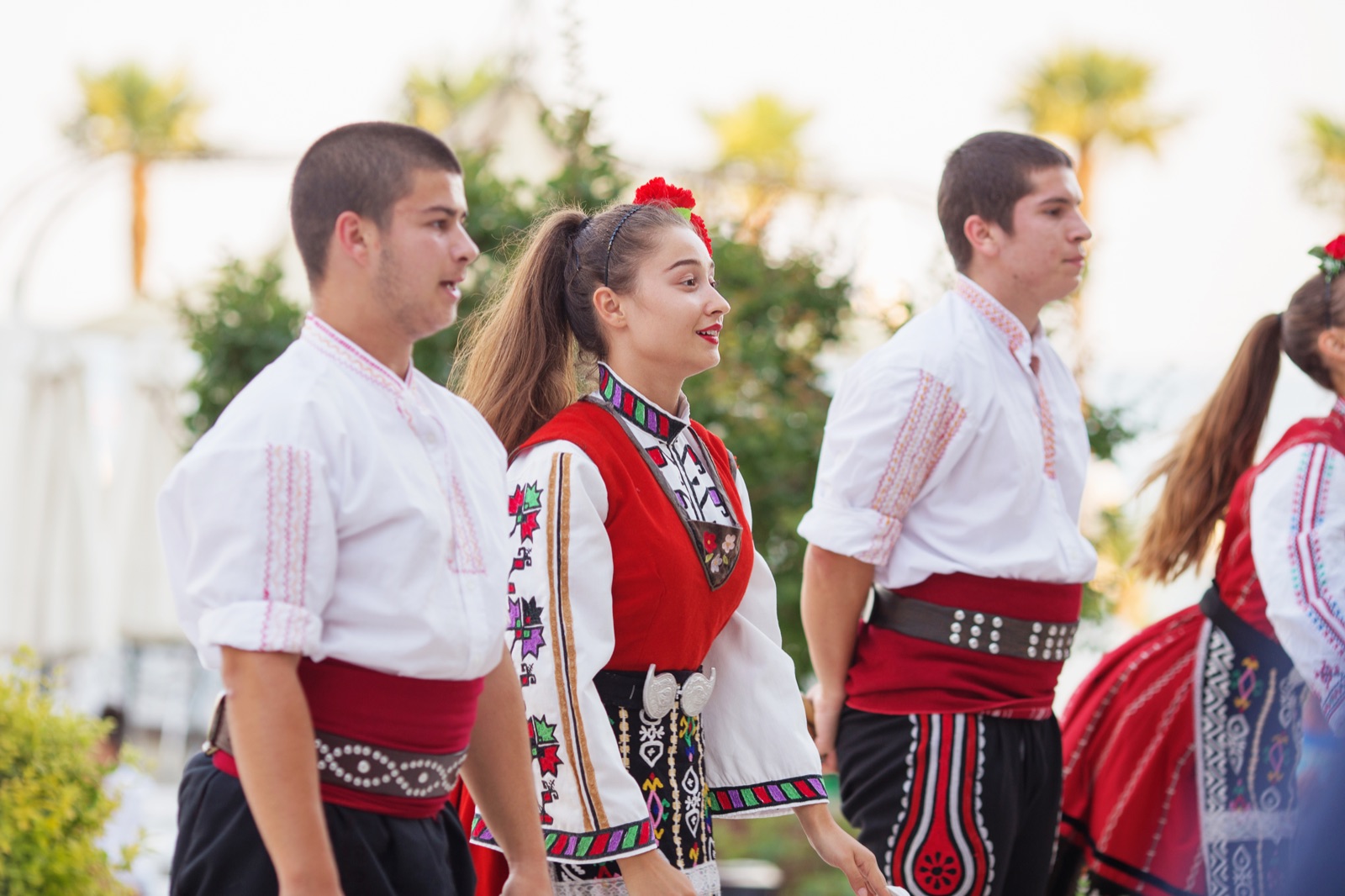
Picture a bright late-winter Saturday in Reiter Park, the kind that feels like spring in Florida. The grass is green, the smell of grilled shashlik drifts across the lawn, and imagine that somewhere near the main stage a young woman turns around in a skirt so wide and so layered with starched petticoats that it swings like a bell. Her sleeves are puffed white lace, her vest is embroidered with flowers in red, green and gold, and ribbons stream from her waist. If you come to the Slavic Food & Cultural Festival Orlando on Saturday, February 27, 2027, you will be standing in a crowd of more than two thousand Central Florida neighbors, and you may well see traditional dress from many Slavic lands. Few outfits, though, stop people in their tracks quite like the kroje of the Czech and Slovak peoples.
This year the festival program includes a half hour with the National Czech & Slovak Museum & Library, presented by Cecilia Rokusek, from 2:30 to 3:00 PM on the main stage. It is a rare chance in Seminole County to hear about an institution that has spent decades keeping Czech and Slovak memory alive in America. Before you settle onto the lawn with a plate of crepes, here is a little background on two of the most beloved symbols of that heritage: the kroj, the folk costume, and the fujara, the great shepherd flute of Slovakia.
What a kroj is, and why no two are alike
The word kroj (plural kroje) simply means folk costume in both Czech and Slovak. But calling a kroj a costume is a little like calling a wedding ring a piece of metal. For generations, what you wore told everyone around you where you came from, whether you were single or married, whether it was a weekday or a feast, and sometimes even how well off your family was. A trained eye at a village fair could look at a girl's headdress, the cut of her sleeves and the color of her apron and say not only which region she was from but often which village.
That is because kroje were never standardized. They grew out of local materials, skills and pride. In one valley the women embroidered in bold red cross-stitch; a few hills over, they favored white-on-white openwork or tiny black geometric patterns. When factory cloth, silk ribbons and glass beads arrived in the nineteenth century, many regions grew more elaborate rather than less, and some of the most dazzling kroje in old photographs date from that period.
A full festive kroj could take months to make and was often worth a small fortune. Pieces were handed down from mother to daughter, stored in painted chests and brought out for Easter, the harvest, church holidays and weddings. Ask anyone who has dressed a dancer in a Moravian kroj and they will tell you it is a team effort, with pins, ribbons and a good deal of laughter.
Moravian Slovácko: the land of ribbons and petticoats
If there is one region whose kroje have come to stand for Czech folk dress in the eyes of the world, it is Slovácko, in southeastern Moravia, near the borders with Slovakia and Austria. This is wine country, with rolling vineyards, painted cellars and villages that still hold their summer festivals in full traditional dress.
A woman's festive kroj from Slovácko typically begins with several starched underskirts, sometimes many of them, which give the skirt its famous width. Over these go a pleated skirt and an apron, a fitted vest often richly embroidered, and a blouse with full, puffed sleeves trimmed with lace or embroidery. Unmarried girls might wear a wreath or ribbons in their hair, while married women traditionally covered their hair with a cap or scarf. Colors and patterns shift from village to village, and locals take those differences very seriously.
The men are no less splendid. Depending on the village, a man might wear close-fitting trousers, sometimes embroidered, with tall black boots, a white shirt with wide sleeves, a decorated vest and a hat trimmed with feathers, flowers or ribbons. In some places young men add a sash or a wide belt. Watching a group of them dance the verbuňk, the improvised recruits' dance of Slovácko, is unforgettable: each man takes a turn to show off his leaps, stamps and slaps while the others sing. The verbuňk was inscribed on the UNESCO list of the intangible cultural heritage of humanity in 2005, and it is easy to see why.
Slovácko is also home to the Ride of the Kings, a Whitsun custom kept in villages such as Vlčnov and Hluk, in which a young boy dressed as a king rides through the village on a decorated horse, holding a rose in his mouth, escorted by riders in festive dress calling out humorous rhymes. It joined the UNESCO list in 2011. And artisans across the Czech and Slovak lands still practice modrotisk, the indigo blueprint dyeing used for everyday aprons and skirts, a craft shared with neighboring countries and inscribed by UNESCO in 2018.
Of course, Moravia is not all of the Czech lands. In Bohemia, the Chodsko region near the Bavarian border is famous for its bagpipe music and its own distinctive costumes, and every region has folklore ensembles devoted to its own dress, songs and dances.
Slovak kroje from Čičmany to Detva
Cross into Slovakia and the variety becomes, if anything, even greater. Slovakia is a country of mountains and valleys, and that geography kept villages relatively isolated for centuries, which is exactly the condition under which distinct local dress flourishes. Ethnographers have counted dozens of different kroj types in a country of about five and a half million people.
The village of Čičmany in northwestern Slovakia is famous for white geometric patterns painted on its dark wooden log houses. The same motifs, crosses, zigzags, little stars and stylized animals, appear in the embroidery of the local kroj. Walking among those houses is a bit like walking through an embroidered sampler.
In central Slovakia, the Detva region and the wider Podpoľanie area are known for bold men's dress: a short shirt with very wide sleeves, a broad leather belt sometimes decorated with brass, and a small hat. The image of the Slovak shepherd in this outfit, sometimes with a valaška (a long-handled shepherd's axe used as a walking stick and a symbol of manhood), is one of the classic pictures of Slovak folk culture. The Detva area is also where the fujara comes from, which we will get to in a moment.
Regions such as Liptov, Myjava and Terchová have their own styles, and the village of Východná has hosted one of Slovakia's oldest folklore festivals every summer since 1953, with ensembles from all over the country in regional dress.
One custom that appears in many Slovak regions is the čepčenie, the capping of the bride. At a traditional wedding, at a certain moment the bride's maiden wreath was removed and replaced with a married woman's cap, the čepiec, often while the women of the family sang songs both tender and teasing. From that moment on, her kroj told everyone that she was a wife. In some families in America, a version of this custom is still performed at weddings, sometimes with an heirloom cap.
The fujara: a shepherd's voice from the mountains
Now imagine a wooden flute so long that its player has to rest the bottom end near his knee or foot while blowing into a side pipe near his face. That is the fujara, the largest of the Slovak shepherd flutes and one of the most distinctive instruments in all of Europe. A typical fujara is around five to six feet long. It has a smaller air tube running alongside the main body, which carries the player's breath down to the sound mechanism, and only three finger holes near the bottom.
How do you play a melody with just three holes? The secret is overblowing. By changing the force of the breath, the player moves up and down the natural overtone series of the long tube, and the finger holes fill in the gaps. The result is a deep, breathy, haunting sound that seems to rise straight out of the mountain pastures. Traditional fujara music often opens with a characteristic rushing glissando called the rozfuk, a kind of musical sigh, before settling into a slow, meditative melody.
The fujara grew out of the life of shepherds in central Slovakia, especially in Podpoľanie around Detva. Shepherds spent long months alone with their flocks in the high pastures, and the fujara was both company and voice, its songs reflective and often melancholy. Making one is a craft in itself, done by hand from wood, often elder, then bored, tuned and decorated with carved or burned patterns.
In 2005 UNESCO proclaimed the fujara and its music a masterpiece of the oral and intangible heritage of humanity, and it was later included on the Representative List of the Intangible Cultural Heritage of Humanity. Today players and makers in Slovakia are joined by enthusiasts around the world, including in the United States, who fell in love with the sound after hearing it once. The fujara has relatives too: the koncovka, a simpler overtone flute with no finger holes at all, and the six-hole shepherd's pipe, which both still appear at Slovak folk gatherings.
Our stage schedule does not promise a fujara. But when you hear a slow folk melody on the main stage in Longwood, from the Serbian & Bulgarian Program at 3:00 PM to the Ukrainian Program at 4:30 PM, remember how deeply this music is rooted in shepherding and village life.
From the old country to Cedar Rapids, Texas and beyond
The story of Czech and Slovak heritage in America is a story of farmers, miners, steelworkers and dreamers. Large-scale Czech immigration began in the mid-nineteenth century, after the upheavals of 1848, and continued for decades. Czech families settled in Wisconsin, Nebraska, Iowa, Texas, Chicago and Cleveland. In Nebraska, the small town of Wilber proudly calls itself the Czech capital of the USA. In Texas, communities like West and Schulenburg kept Czech dances, polkas and baking alive so well that the kolache, a soft round bun filled with fruit or farmer's cheese, has become a beloved Texas breakfast food.
Slovak immigration peaked a little later, from the 1880s until the First World War, when hundreds of thousands of Slovaks came to work in the coal mines and steel mills of Pennsylvania, Ohio and the industrial Midwest. Pittsburgh and Cleveland became major centers of Slovak American life, with Slovak churches, fraternal societies, newspapers and choirs. Many families arrived with little more than a trunk, and in that trunk, very often, was a festive kroj or a piece of embroidery from home.
Cedar Rapids, Iowa, became one of the most important Czech centers in the country. Czech immigrants started arriving there in the 1850s and built a neighborhood still known as Czech Village. It was there that the National Czech & Slovak Museum & Library grew from a community effort begun in the 1970s into a nationally recognized institution. Its building was dedicated in 1995 in the presence of the presidents of the United States, the Czech Republic and Slovakia. In 2008 a devastating flood on the Cedar River severely damaged it, and in a remarkable feat of engineering the community moved the entire museum building to higher ground, then reopened it, expanded, in 2012. Today the museum holds large collections of folk costumes, textiles, documents and family stories from Czech and Slovak immigrants, and it reaches people far beyond Iowa through traveling exhibits and presentations.
That is why we are glad the museum, with Cecilia Rokusek, will be on the program in Longwood from 2:30 to 3:00 PM. Whether your grandparents came from Moravia, Bohemia or Slovakia, or you simply love history, it is a good half hour to spread a blanket near the stage.
Keeping kroje alive in American families
How do families in the United States keep something as delicate as a hundred-year-old kroj alive? Very carefully. Heirloom pieces are wrapped in tissue, kept out of sunlight and brought out only for special occasions. Some families have donated fragile pieces to museums like the one in Cedar Rapids; others have new kroje made from old photographs, or learn to embroider them themselves.
Folk dance groups play a huge role, teaching children the dances and songs of their ancestors and how to wear a kroj properly: how many petticoats, how to tie the ribbons, which way the apron folds. A child who learns the verbuňk in a church hall in Ohio or Texas is carrying something across oceans and generations.
Here in Central Florida, festivals like ours are where these traditions meet. Our performers come from Ukrainian, Russian, Serbian, Bulgarian, Polish, Slovak, Czech, Croatian and Greek communities, and you might see Slovak embroidery beside a Ukrainian vyshyvanka (embroidered shirt) or a Serbian vest. The patterns differ; the love behind them is the same.
If you have a kroj of your own, or a piece of folk embroidery from your family, consider wearing it on February 27. You will find plenty of people who will want to hear its story. And if your family has a dance group or musicians who perform Czech or Slovak music, take a look at the Artists page on our website, where singers, musicians and dance groups can apply to perform at future festivals.
A taste of Czech and Slovak kitchens at the festival
Folk costumes and music were always part of a larger celebration, and that celebration always involved food. Our parish kitchen at Saint Nina Mission cooks everything fresh on site, and several dishes on the festival menu have close cousins in Czech and Slovak homes.
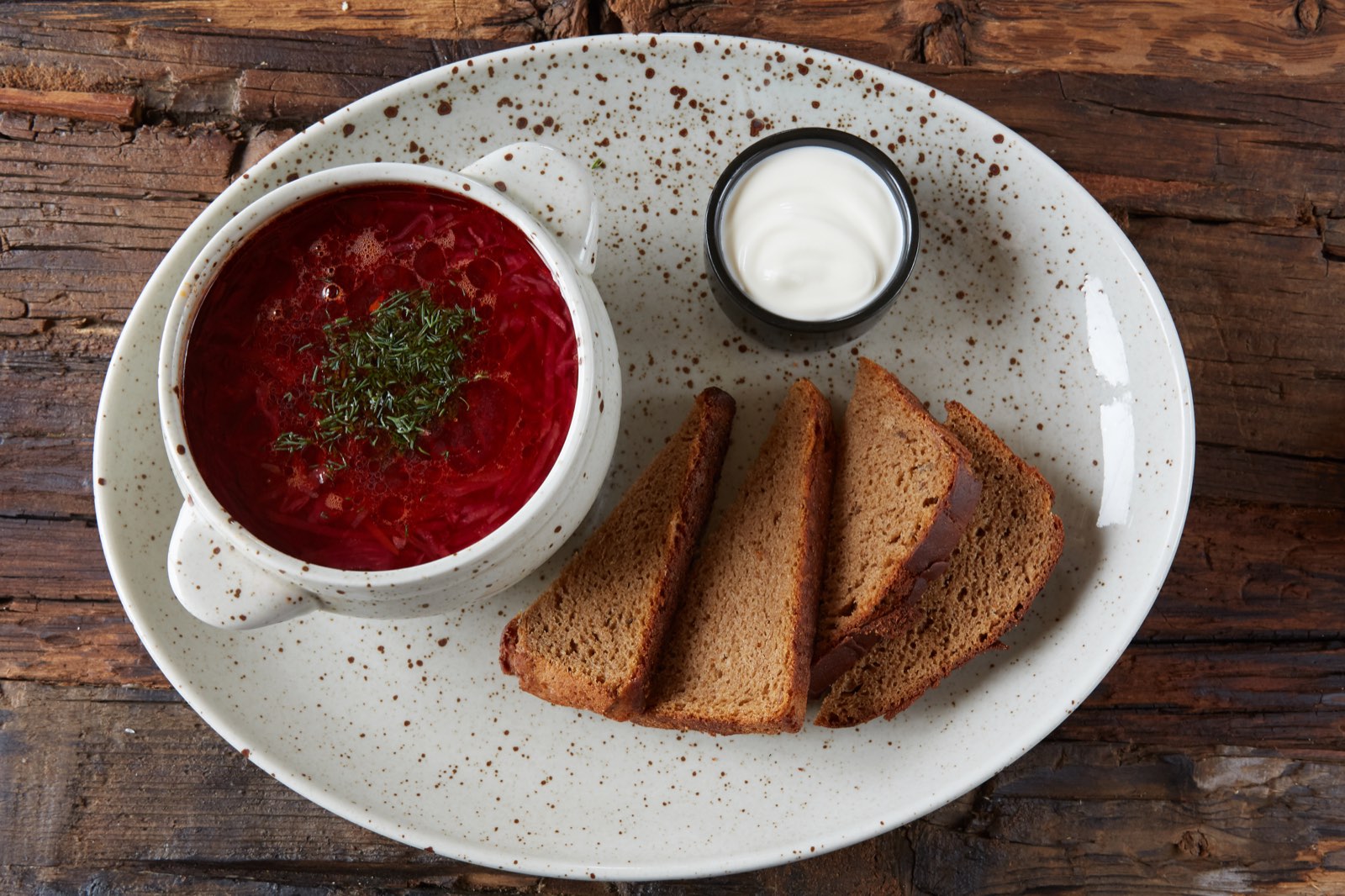
The crepes ($15) are a good example. In the Czech Republic and Slovakia they are called palačinky, and they are a favorite dessert, rolled around apricot jam, farmer's cheese or fruit and dusted with sugar. Our bulochki ($10), soft yeast buns filled with cabbage, farmer's cheese or cherries, will remind many Czech and Slovak visitors of buchty and koláče, the filled buns that every grandmother seemed to bake on Saturday mornings. And the borscht ($15), while most closely associated with Ukraine and its neighbors to the east, sits comfortably beside the hearty cabbage and potato soups of the Slovak mountains.
Add juicy grilled skewers ($25), Bulgarian stuffed peppers ($15) and a glass of house-made kvass ($10), and you have a feast worthy of a village fair. To skip the line, use the Pre-order Food page at slavicfoodfestival.com.
Join us in Longwood on February 27
The Slavic Food & Cultural Festival Orlando takes place on Saturday, February 27, 2027, from 10 AM to 8 PM at Reiter Park, 311 W Warren Ave, Longwood, FL 32750, just north of Orlando in Seminole County. Admission is free for all ages, no tickets needed, and the festival goes on rain or shine. Cash and cards are accepted at the food stands and most vendor booths.
Come early for the Children's Program at 10:00 AM, then stay for the opening at noon, the museum segment at 2:30 PM and the programs that follow into the evening. Times may still change, so check the Schedule page. Bring the kids to the crafts zone and wander the vendor market, where you might spot embroidery or folk-inspired gifts.
If you would like to help make the day happen, the Volunteer page lists ways to pitch in, from shifts on the day to cooking and donations. Businesses can apply for a booth on the Vendors page, and non-profits exhibit for free.
The people who sewed the first kroje in Moravian and Slovak villages never imagined their patterns turning heads in a Florida park. But that is what traditions do when families love them enough. Come see for yourself in Longwood this February.