There is a particular sound a good matryoshka makes when you open it: a soft wooden pop, then the light knock of the next doll inside. Children never get tired of it. Open, pop, knock, again and again, until a doll no bigger than a fingernail sits in the palm of a small hand, and the whole family of painted girls stands in a row on the table, smallest to largest.
At the Slavic Food & Cultural Festival Orlando on Saturday, February 27, 2027, you may well hear that sound somewhere in Reiter Park, maybe from a stroller near the kids' zone or from a table in the vendor market. The matryoshka is one of the most recognizable objects of Slavic culture, so famous that people who know nothing else about Russia or Eastern Europe know the nesting doll. Yet its history is younger and more surprising than most people expect. Let us open it up, one layer at a time.
A young doll with an old soul
The matryoshka looks ancient, like something peasants carved by firelight for centuries. In fact, the first set was made in Moscow at the very end of the nineteenth century, most often dated to around 1890 to 1892. It was born in the middle of a great revival of interest in Russian folk art.
At that time, many artists and wealthy patrons were looking back to village crafts for inspiration. The most famous of these patrons was the industrialist Savva Mamontov, whose estate at Abramtsevo, outside Moscow, became a gathering place for painters, sculptors and craftsmen who wanted to create a new art rooted in folk tradition. His brother's family, Anatoly Mamontov and his wife, ran a Moscow workshop and shop called Children's Education, which produced toys and books meant to bring Russian culture to children.
According to the most widely told story, someone in this circle brought back a Japanese nesting figure, often said to represent one of the Seven Lucky Gods, a set of wooden figures that fit one inside another. The idea sparked an experiment. A skilled toy turner, Vasily Zvyozdochkin, carved a set of nesting wooden blanks, and the artist Sergey Malyutin, associated with the Abramtsevo circle, designed and painted them. The first set had eight pieces: a round-faced girl in a sarafan (a sleeveless folk dress) and headscarf holding a black rooster, followed by alternating girls and a boy, and finally a tiny swaddled baby.
Historians argue about some details of this story, including exactly who brought the Japanese figure and exactly when, but the essential outline is widely accepted. What is certain is that the toy was a hit. A display of nesting dolls won a bronze medal at the 1900 World's Fair in Paris (the Exposition Universelle), and orders began to come in from abroad. Within a few years, workshops were turning out sets with more and more pieces, and the doll was on its way to becoming a symbol recognized far beyond Russia.
The name comes from Matryona, a common peasant name for women in old Russia, with the affectionate diminutive Matryoshka. The name itself traces back to the Latin word for mother, which feels just right for a doll that holds her children inside her. In the late nineteenth century, Matryona would have brought to mind a sturdy, rosy-cheeked country woman, the heart of a big family. Today the word is used in Russian for the doll, and in English we often hear matryoshka, matrioshka or simply "Russian nesting doll."
After the Children's Education workshop closed in the early 1900s, matryoshka production moved to Sergiev Posad, a town northeast of Moscow famous for its great monastery, the Trinity Lavra of St. Sergius. Sergiev Posad already had a long tradition of wooden toy making, and its craftsmen embraced the new doll. For decades it was the main center of matryoshka production, and the Sergiev Posad style became the classic look: a young woman in a sarafan and scarf, with an apron, often holding a basket, a sickle, a bundle of flowers or a loaf of bread, painted in warm, natural colors.
Over the twentieth century, matryoshka making spread to other regions, each developing its own personality. During the Soviet period, the doll became a national symbol and a favorite gift for foreign visitors, and factories as well as small workshops produced them by the thousands.
How a matryoshka is made
Behind every good set is a long, careful process that begins in the forest. The favorite wood is linden, called lipa in Russian: soft, light, with a fine, even grain that is easy to turn and takes paint beautifully. Birch, alder and aspen are also used. The trees are traditionally cut in early spring, when the wood is full of sap, then the logs are stripped of bark except for a few rings at the ends to keep them from cracking. The wood is left to dry, often outdoors under cover, for two years or more. Wood that is not dry enough will warp later, and the dolls will no longer close.
The turner does the next part, on a lathe, using sharp chisels and knives. Remarkably, the smallest doll is made first: the tiny solid one that does not open. Then the next one is turned around it, cut into a top and bottom, and hollowed out so the smaller doll fits inside. The turner works mostly by eye and touch, not with exact measurements, which is why a skilled master's dolls fit together so snugly and why the pieces of one set will not fit another. Each doll is turned in two halves that must meet perfectly, and the wood is often left for a while between steps to settle before the final fitting.
After turning, the blank dolls are sanded smooth and sometimes primed with a starch paste so the paint does not soak in. Then they go to the painter. Many painters have historically been women, often working from home. They sketch the face and outline with a pencil or brush, then paint with gouache, tempera, watercolor or oil, depending on the style. Faces are the hardest part: rosy cheeks, bright eyes and a little mouth must be painted with confidence, because a hesitant line shows. Finally, the dolls are varnished or lacquered, giving them their glossy shine and protecting the paint.
Styles from different towns
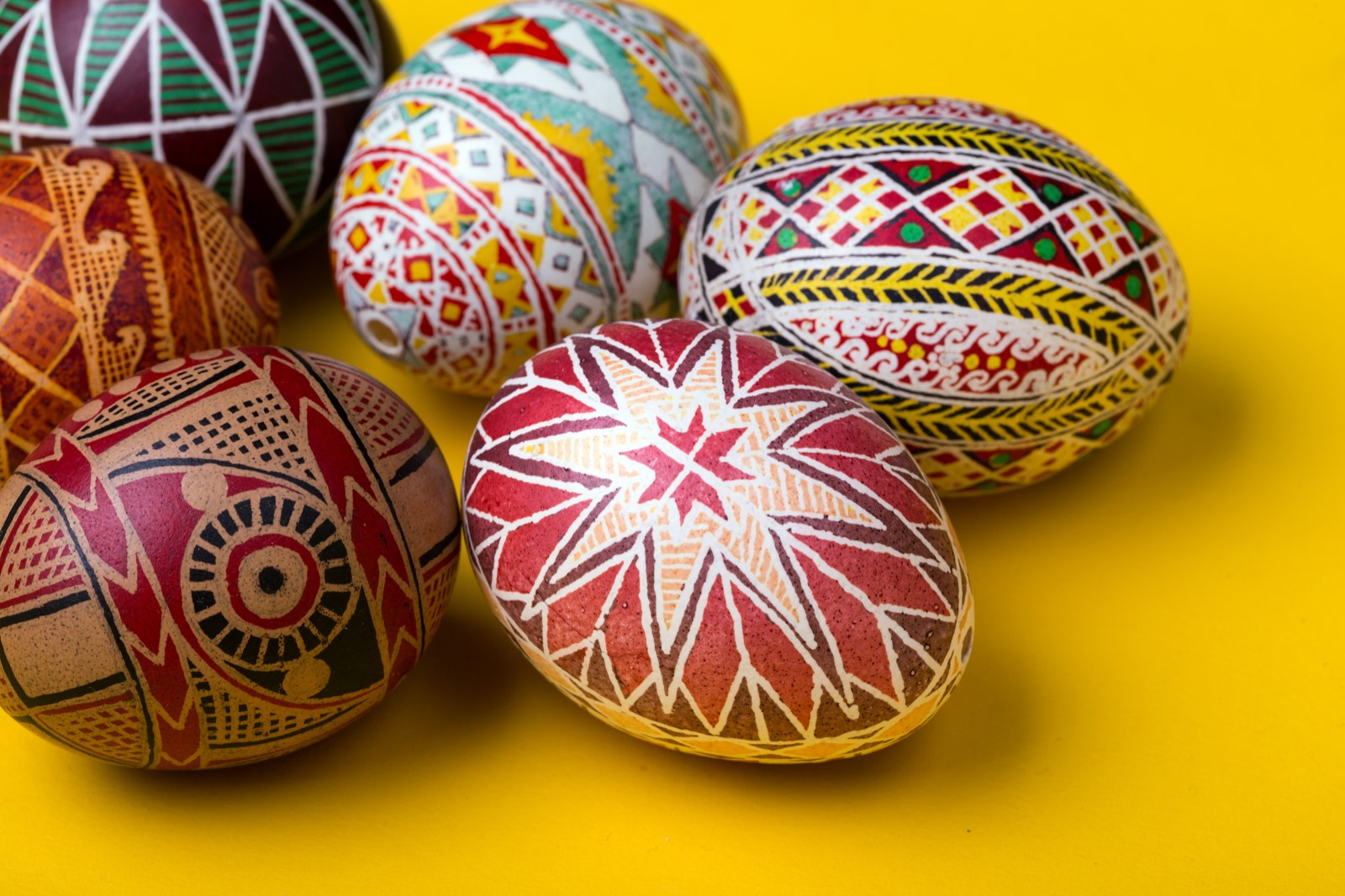
Like embroidery and painted eggs, matryoshkas tell you where they come from if you know how to read them.
The Sergiev Posad style is the classic: soft, natural colors, a woman with a scarf and sarafan, often with an object in her hands, painted with gouache and finished with varnish. It feels gentle and old-fashioned, like an illustration from a children's book.
The Semyonov style comes from the town of Semyonov in the Nizhny Novgorod region, a famous center of wooden crafts. Semyonov dolls are bright and cheerful, with lots of yellow and red, a big scarf, and a huge, lush bouquet of flowers painted on the apron. The shapes are a little slimmer, and the painting is bold and lively. Semyonov workshops are also known for making very large sets with many pieces.
The Polkhovsky Maidan style, from a village of the same name in the same region, has a striking look. The design is first outlined in black ink, then filled in with bright aniline colors: hot pinks, greens, violets and yellows. The dolls often have no arms painted at all, and the body is covered with a big rose or rosehip flower motif. They look almost like a stained-glass window turned into a doll.
Further north and east, the Vyatka style from the Kirov region shows a shy, blue-eyed northern girl and often uses inlay of straw, giving the doll a golden, woven texture. Tver and other regions have their own variations too. Today, artists across many countries paint nesting dolls, and some of the most beautiful modern sets are true works of fine art, with fairy tales, landscapes or whole villages painted across the curved surfaces.
How to tell a handmade doll
Walk into almost any souvenir shop and you will find nesting dolls. Some are lovingly handmade; others are mass-produced, with printed decals instead of painting. If you want a doll that will last and mean something, here is what to look for.
First, open and close every piece. A well-made set closes snugly, with a satisfying click, and does not wobble or fall open. The seam between top and bottom should line up so that the painted design continues smoothly across it. If the pattern is clearly misaligned on several dolls, the fit is probably careless.
Second, look at the smallest doll. In a quality set, even the tiniest one is carefully painted, with a recognizable face. In cheap sets, the last doll is often just a blob of color.
Third, examine the painting itself. Hand painting has small variations: brush marks, slightly different faces from doll to doll, colors layered by hand. Decals are often perfectly uniform, with sharp printed edges or a slightly shiny film that you can see at an angle. Run a finger along the edges of the design; a printed sticker may have a faint ridge.
Fourth, look inside and underneath. Clean, smooth wood inside with a visible grain is a good sign. Many artists sign the base of the largest doll, sometimes with the town, the date and the number of pieces. A signature is not a guarantee, but it is a nice clue.
Finally, consider the wood and the weight. A good linden doll feels light but solid and smells faintly of wood and lacquer. Rough edges, cracks or a very heavy coating of glossy varnish that hides poor painting are warning signs. And remember that price usually reflects time: a carefully hand-painted set takes many hours of work.
What the matryoshka means
Part of the doll's charm is that it is easy to understand and yet suggests something deep. Most people see the matryoshka as a symbol of motherhood and family: a mother holding her daughters, who hold their daughters, generation after generation. It is a picture of continuity, of the way grandmothers, mothers and children carry one another forward. Many families give matryoshkas to new babies, newlyweds or grandmothers for exactly this reason.
The doll has also become a metaphor used far beyond toy shelves. Writers and scientists talk about a "matryoshka effect" or "matryoshka principle" whenever something contains a smaller version of itself, layer within layer. Teachers use nesting dolls to explain sizes and numbers to small children, and to show the idea of order, from smallest to largest, in a way little hands can feel. Psychologists sometimes use them to talk about the many layers of a personality, with the smallest, truest self at the very center.
In the 1990s, the doll became a canvas for all kinds of painting, from famous faces to sports teams and cartoon characters, and collectors still trade those sets. But at the festival, we like the old meaning best: a family inside a family, a gift from a mother to a child.
The nesting doll is a Russian creation, but it has traveled widely and been adopted with affection throughout Eastern Europe and the diaspora. You may see nesting dolls painted with Ukrainian embroidery motifs, Polish folk flowers or other local designs, sold at craft fairs from Kraków to Chicago. Other Slavic countries have their own beloved wooden toys and painted crafts: Polish carved and painted boxes, Ukrainian Petrykivka floral painting, the red-and-gold Khokhloma tableware of Russia, Czech wooden toys and marionettes. The matryoshka belongs to this broader world of folk woodwork and painting, and it is a lovely doorway into it.
Looking for nesting dolls in Longwood
At Reiter Park on February 27, the outdoor vendor market is the place to browse. You might spot matryoshkas, painted wooden boxes, embroidery and other handmade crafts, depending on which artisans and businesses join us this year. Use the tips above, open the dolls gently, and do not be shy about asking a vendor where a set was made; most people who sell folk art love to talk about it. If you have a business with Slavic crafts, the Vendors page explains how to apply for a booth, and non-profits can have one for free.
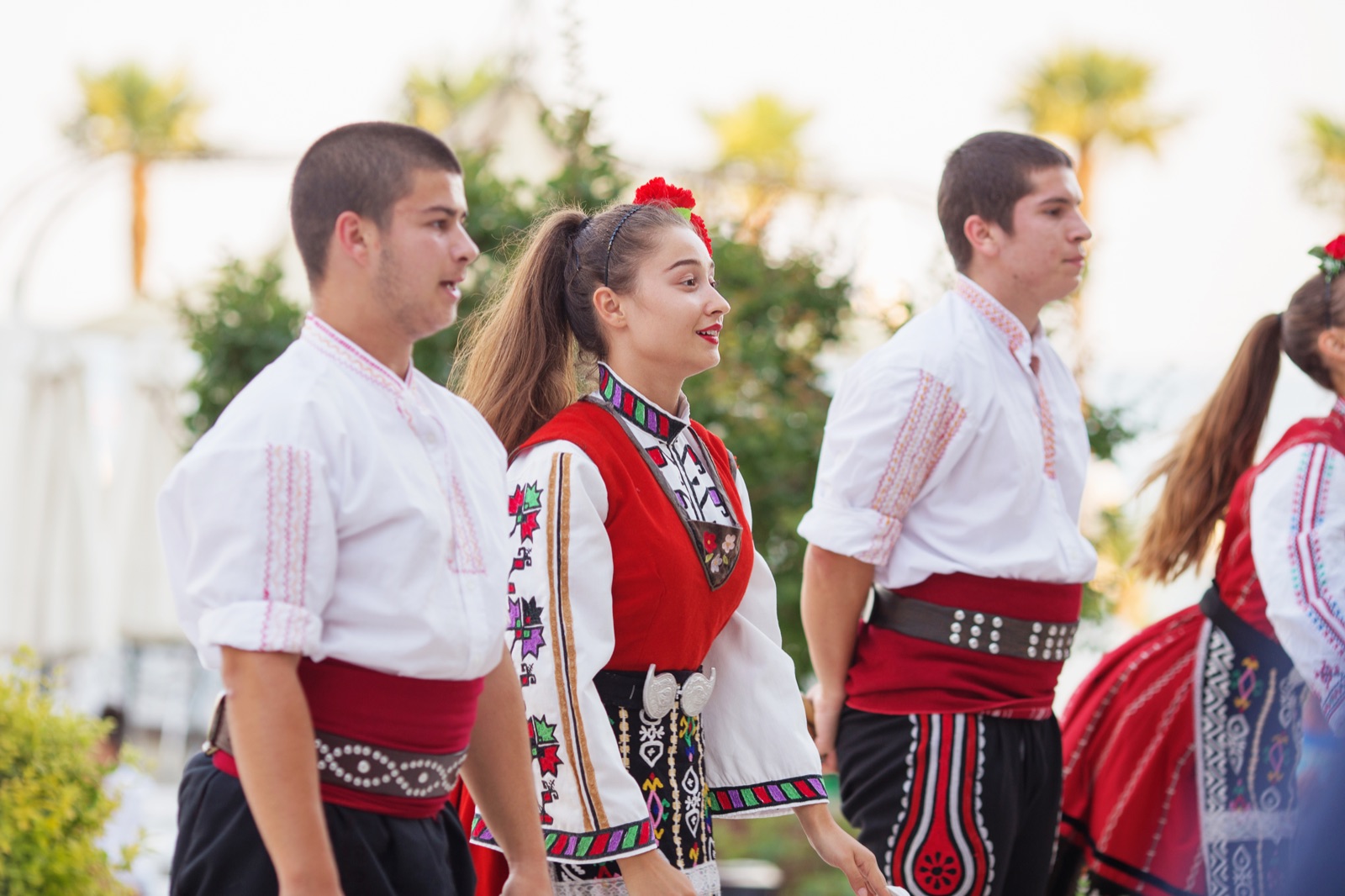
If you have children with you, the kids' zone with crafts and activities is a natural stop after the vendor market. Then head to the main stage. The Children's Program from 10:00 to 12:00 brings children's songs and dances, and you may well spot little performers in costumes that could have stepped straight off a matryoshka. The Russian Program from 12:30 to 2:30, with a children's chorus and folk ensemble, may bring the sarafans and scarves of the classic doll to life. Later come the Czech and Slovak heritage presentation at 2:30, the Serbian & Bulgarian Program at 3:00, the Ukrainian Program at 4:30 and the Polish & Croatian Program at 5:30. Times may change while the program is finalized, so check the Schedule page.
Food fit for a matryoshka's family
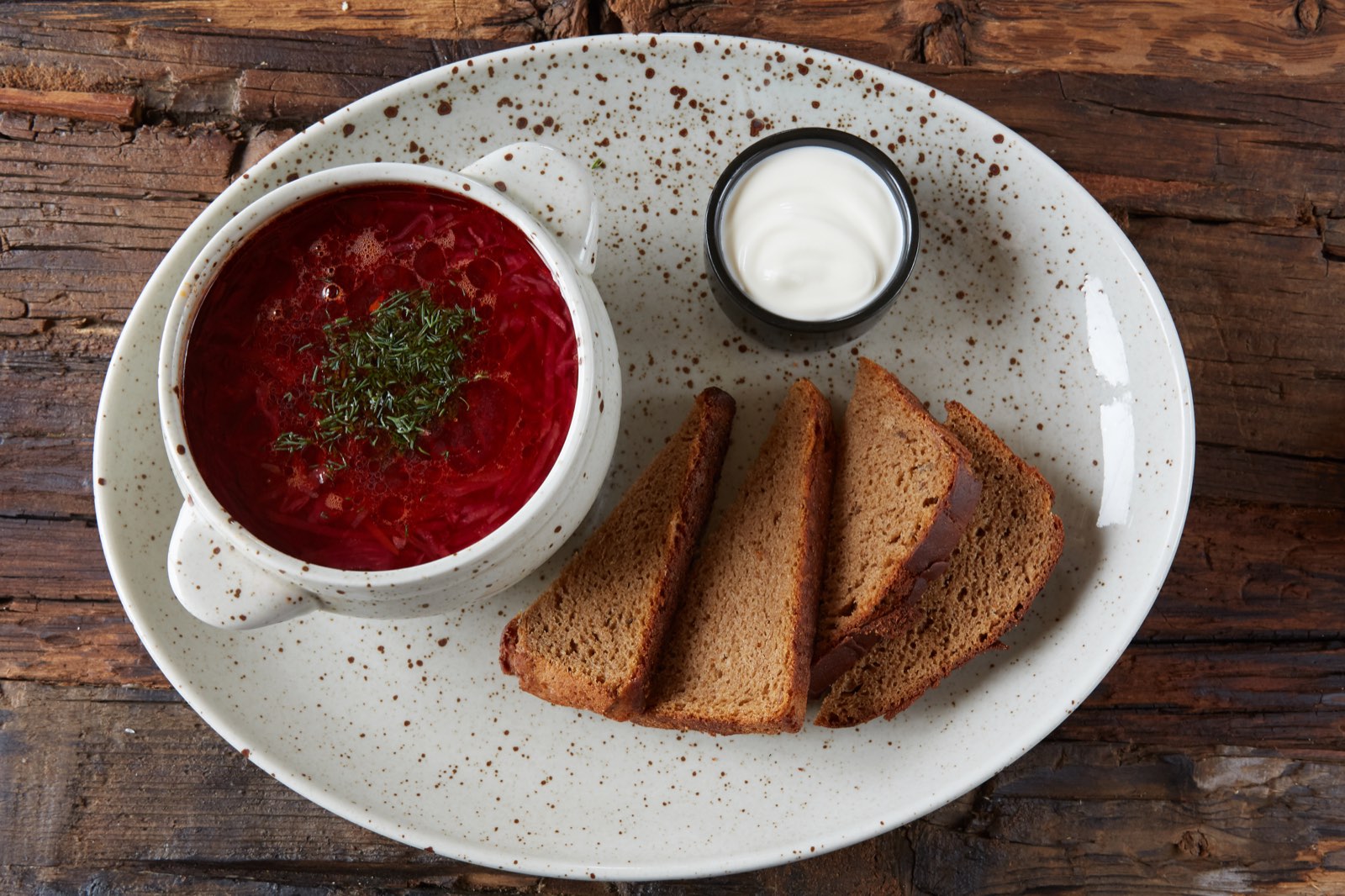
A matryoshka's family would be a hungry one, and the parish kitchen of Saint Nina Mission is ready. Everything is cooked fresh on-site: hearty borscht ($15), juicy grilled skewers or shashlik ($25), thin crepes ($15), Bulgarian stuffed peppers ($15), and bulochki ($10), soft buns filled with cabbage, farmer's cheese or cherries. Wash it down with house-made kvass ($10), soft drinks or a cup of samovar tea. There are vegetarian options as well. To save time, pre-order food online at slavicfoodfestival.com and skip the line.
Just as a matryoshka needs a turner, a painter and a lot of patience, the festival needs many helping hands. The Volunteer page lets you sign up for shifts, cooking or donations, and singers, musicians and dance groups can apply to perform on the Artists page.
See you at Reiter Park
The Slavic Food & Cultural Festival Orlando has been bringing Central Florida together for more than ten years. Join us on Saturday, February 27, 2027, from 10 AM to 8 PM at Reiter Park, 311 W Warren Ave, Longwood, FL 32750, in Seminole County just north of Orlando. Admission is free for all ages, with no tickets, rain or shine. Food stands and most vendor booths accept cash and cards. Pets are not allowed, but service animals are welcome.
Bring the whole family, from the biggest to the smallest, just like a set of nesting dolls. Somewhere between the music, the borscht and the dancing, you will hear that little wooden pop again, and a child will laugh as one more painted face appears.