Picture a long strip of white linen, its ends covered in red and black stitches so tiny and precise that you have to lean close to see where one cross ends and the next begins. A bird perches on a branch. A tree rises out of a vase. A woman stands with her arms raised toward the sky. Now picture that same cloth draped over a round loaf of bread with a little mound of salt on top, held out in welcome. That cloth is the rushnyk (an embroidered ritual towel), and when the Slavic Food & Cultural Festival returns to Reiter Park in Longwood on Saturday, February 27, 2027, it is exactly the kind of quiet, beautiful thing worth looking for among the music, the smoke from the grill and the crowds.
A rushnyk is not a towel in the American kitchen sense. It is a piece of cloth that marks the most important moments of a life: birth, marriage, prayer, farewell, homecoming. Ukrainians call it rushnyk, Belarusians say ruchnik, and in Russia the ritual towel is often called rushnik or polotentse. The traditions differ from village to village and country to country, but across much of the Eastern Slavic world the same idea holds: a hand-made, hand-decorated cloth carries blessing, memory and protection from one generation to the next.
Linen, Hemp and Patience: How a Rushnyk Is Made
The oldest rushnyky were made from cloth that a family produced entirely on its own. Flax or hemp was grown in the field, pulled by hand, soaked, dried, beaten and combed into fibers, then spun into thread on long winter evenings and woven on a home loom. The result was a narrow, sturdy piece of fabric, usually somewhere between one and four meters long. Only then could the decorating begin.
There are two great families of rushnyk. Woven rushnyky have their patterns built right into the fabric on the loom, usually in red thread against white. The town of Krolevets in northern Ukraine became so famous for its woven red rushnyky, with their stylized trees, birds and churches, that "Krolevets rushnyk" became a name of its own. Embroidered rushnyky, the more widely known kind, are decorated with needle and thread after weaving, and here the variety of techniques is dazzling. There is the familiar cross-stitch. There is nyzynka, a dense counted stitch worked from the back of the fabric, which produces solid bands of geometric color and is especially associated with western Ukraine. There is satin stitch, which lets embroiderers paint soft roses and leaves. There is cutwork, where threads are pulled or cut away to make lace-like openings. And in the Poltava region there is the famous white-on-white embroidery, where pale thread on pale linen creates patterns you see mostly by the play of light, almost like frost on a window.
Traditionally, girls learned to embroider as children, often from their grandmothers, and by the time they were of marrying age they were expected to have prepared a whole chest of rushnyky for their future household and wedding.
The decoration usually sits at the two ends, with the middle left plain. When a rushnyk is hung over an icon or a picture frame, the plain middle wraps around the top, and the embroidered ends hang down on either side where everyone can see them.
From the Cradle to the Wedding Path
In many Ukrainian villages a newborn was received from the midwife onto a rushnyk, so that the very first thing a child touched in this world was clean, blessed, hand-made cloth. At baptism, the godparents might carry the baby on a rushnyk to church, and they would be thanked with rushnyky of their own. The cloth was a way of saying: this new person belongs to a family, to a community and to God.
Nowhere does the rushnyk play a bigger role than at weddings. Traditions vary by region, but several are widespread. When matchmakers came to a girl's home to ask for her hand on behalf of a young man, she answered without words. If she agreed, she brought out rushnyky and tied them across the shoulders of the matchmakers, and sometimes gave the groom a decorated kerchief. If she refused, the matchmakers might be handed a pumpkin instead, a famously awkward way to go home.
On the wedding day, the bride and groom were often blessed by their parents with an icon and a loaf of bread on a rushnyk. In church, the couple stood on a special rushnyk spread before the altar, and in some places their hands were bound together with another cloth during the ceremony. A playful belief says that whichever of the two steps onto the rushnyk first will be the head of the household, so guests watch closely and laugh when one of them hurries. The round, richly decorated wedding bread, the korovai, was carried and presented on rushnyky too. After the wedding, those cloths were kept for the rest of the couple's lives.
Many Ukrainian-American and Ukrainian-Canadian families still do all of this today. A couple married in a church in Florida may stand on the very rushnyk their parents stood on decades ago in Lviv or Chicago, and a mother may embroider a new one for her daughter, working on it in the evenings for a year. Russian and Belarusian families have their own wedding customs with bread and salt on embroidered cloth, and the welcome with a loaf on a towel is shared across much of the region.
The Icon Corner, Bread and Salt, and the Long Road
In a traditional Eastern Slavic home, one corner of the main room was special. Ukrainians call it the pokuttia, Russians the krasny ugol, the "beautiful" or "red" corner, since in old Russian the words for red and beautiful were closely linked. There, high on the wall and facing the door, hung the family icons, draped with the family's finest rushnyky. Many Orthodox and Greek Catholic families in America keep this custom, with an icon of Christ, the Mother of God or a family's patron saint framed by an embroidered cloth. If you have ever visited the home of a Slavic friend and noticed a small shelf with icons and a red-and-white towel above a candle, you have seen it.
At Easter, the basket of paska bread, eggs, butter and cheese carried to church for the blessing is often covered with an embroidered cloth, and in many Ukrainian and Polish-American parishes you can still see rows of baskets with their bright covers on the Saturday before Easter.
Then there is the welcome. Offering bread and salt on a rushnyk is the classic gesture of hospitality across Ukraine, Russia, Belarus and beyond. Guests break off a piece of bread, dip it in the salt and eat it. Bread stands for abundance and salt for permanence and friendship, and the rushnyk beneath them shows that the hosts prepared with care.
The rushnyk also accompanied people on the road. A son leaving home for the army or for work far away might be given a rushnyk by his mother, as a protective token and a reminder of home. There is a famous Ukrainian song, "Pisnia pro rushnyk," known as the "Song of the Rushnyk," written in the 1950s with words by Andrii Malyshko and music by Platon Maiboroda. In it a mother gives her son an embroidered towel as he sets off into the world, and the cloth becomes a symbol of a mother's love and a child's roots.
Farewells and Remembrance
Because the rushnyk followed a person through all of life, it was also present at the end. Customs differ widely, so it is best not to generalize too much, but in many regions rushnyky were used to carry the coffin or to lower it into the grave, and a rushnyk was tied to the cross on the grave. In some villages a rushnyk was hung outside a window or on the gate of a home where someone had died. Later, rushnyky decorated the photographs of the departed at home and the icons used at memorial services.
Reading the Symbols: Trees, Birds and the Berehynia
Ask an embroiderer what the patterns on a rushnyk mean and you may get a long, loving answer, sometimes mixed with family legend. Meanings shifted over centuries and from village to village, but some symbols appear again and again.
The most famous is the tree of life, often shown growing from a vase or a little hill, with branches spreading symmetrically and birds sitting on them or flying toward it. It stands for the continuity of a family, the link between ancestors, the living and children yet to be born, and in Christian homes it is also read as a symbol of paradise and eternal life. Birds, often paired, suggest love, the soul and good news. On wedding rushnyky you will often see two birds facing each other, a hopeful picture of a couple.
Then there is the berehynia, a stylized female figure, usually with her arms raised, sometimes holding branches or birds. The word comes from the verb meaning "to protect" or "to keep." Today she is often described as a guardian of the home and the family, and many modern writers link her to very old images of a mother goddess, though scholars debate how ancient that reading really is.
Geometric motifs carry meaning too. The rhombus, especially one divided into four parts with dots inside, is often read as a sown field and a wish for fertility and a good harvest. Eight-pointed stars, rosettes and crosses suggest the sun, light and protection. Zigzags and wavy lines can represent water or the road of life. Oak leaves stand for strength, guelder rose berries (kalyna, a beloved Ukrainian symbol) for beauty and the homeland, grapes for family abundance, and lush roses, especially popular in central Ukraine, for love and beauty.
Colors matter as well. Red is the color of life, love and joy, and it dominates traditional rushnyky across most of Ukraine and Belarus. Black often appears with red, especially in Podillia and other regions, and it represents the earth, which in an agricultural world meant fertility and life, not sadness. White, the color of the linen itself, stands for purity. Brighter yellows, greens, blues and purples appear in the Carpathians and in later floral styles.
A Map Stitched in Thread: Regional Styles
One of the joys of rushnyky is that an expert can often tell where one was made just by looking at it. Ukraine alone has dozens of local styles, and the differences are as striking as regional accents.
In the Poltava region, as mentioned, the white-on-white technique reaches its peak, and the village of Reshetylivka became famous for its fine embroidery workshops. In Kyiv region and central Ukraine you often see red and black cross-stitch with flowing floral patterns, roses and grapevines. Chernihiv and the northern Polissia region keep some of the most archaic patterns, simple red geometric figures that look almost ancient, along with the woven rushnyky of Krolevets. Podillia in the west-central part of the country is known for dense, dark embroidery, sometimes almost entirely black with touches of red, built from striking geometric motifs.
Farther west, the Hutsul people of the Carpathian Mountains favor bright, multicolored geometric designs in orange, yellow, green and red, and the region of Bukovyna is known for rich, dense stitching with beads and metallic threads. In Slobozhanshchyna in the east, around Kharkiv, floral embroidery in bright colors is common.
Beyond Ukraine, Belarusian ruchniki are typically white linen with red woven or embroidered geometric patterns, often very elegant and restrained, and they play a similar role in weddings, the home and the icon corner. In northern Russia, particularly around Arkhangelsk and Vologda, ritual towels were decorated with red embroidery showing ancient-looking figures: women, horses, birds and trees of life, sometimes finished with lace.
Keeping the Thread Alive in Central Florida
For many Slavic families who have settled in Seminole County and all across Central Florida, a rushnyk is one of the few objects that made the journey from the old country. It may hang over the icons in a living room in Sanford, cover the Easter basket in Winter Park, or lie on the table under the bread at a christening in Orlando.
And the craft itself has not disappeared. Embroidery circles meet in parish halls and community centers across America. Grandmothers teach granddaughters, and increasingly grandsons too. A rushnyk made today in Florida is part of the same story as one made in Poltava a century ago.
This is exactly the spirit of the Slavic Food & Cultural Festival, hosted by Saint Nina Mission, which has been bringing Central Florida's Slavic communities and their neighbors together for more than ten years. Over 2,000 guests are expected at Reiter Park, and for one day the park becomes a place where Ukrainian, Russian, Belarusian, Polish, Serbian, Bulgarian, Czech, Slovak, Croatian and other traditions sit side by side, just as different embroidery styles sit side by side in a museum case.
See It, Taste It, Hear It on February 27
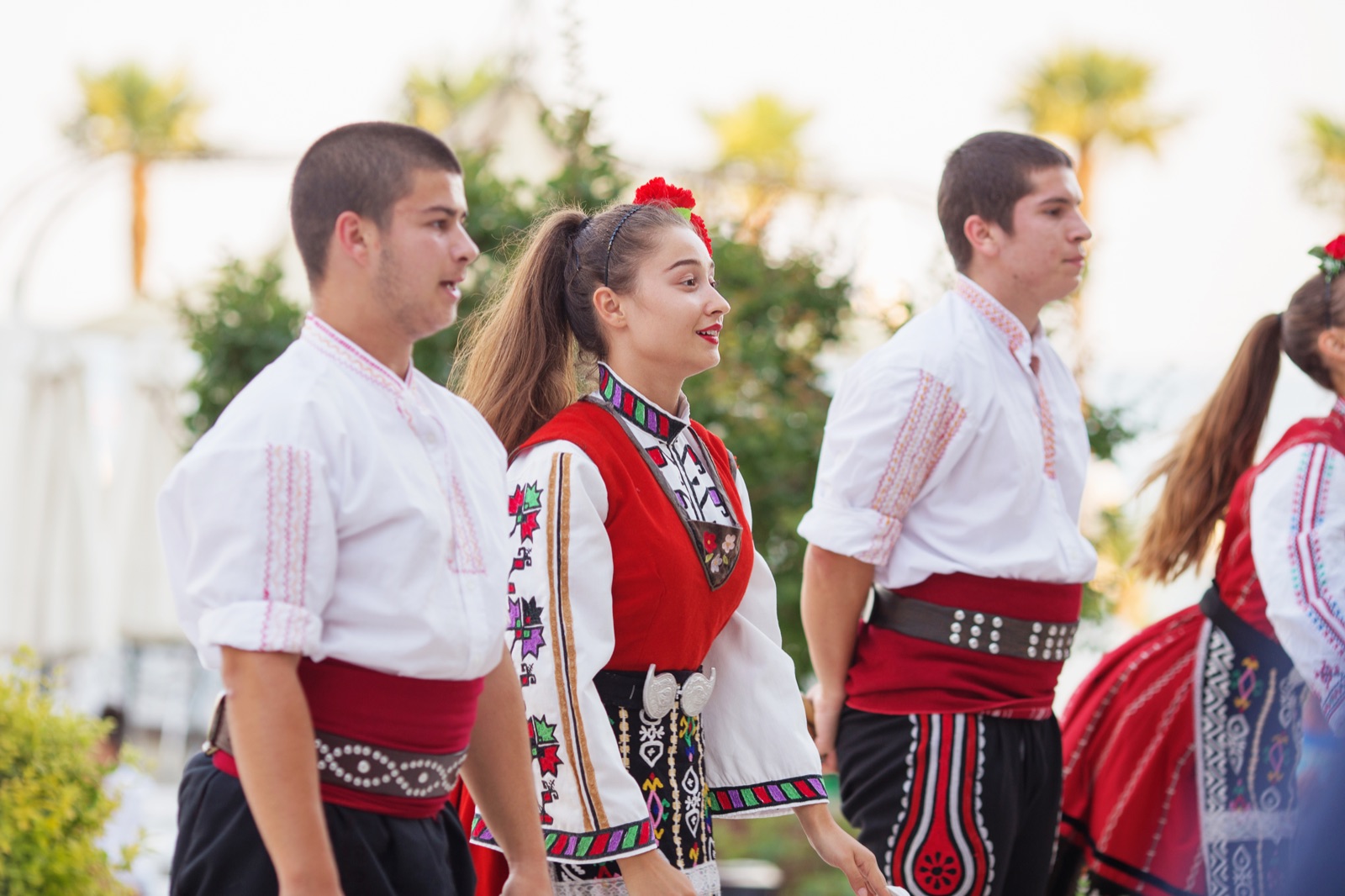
So how can you meet the spirit of the rushnyk at the festival? Start by keeping your eyes open. Traditional costumes and embroidered shirts tend to come out for a festival like this, both on stage and in the crowd, so look closely at sleeves, collars and hems and see if you can spot a tree of life, a pair of birds or the red and black of Podillia. In the outdoor vendor market you might spot embroidered pieces, folk crafts or gifts among the booths, and if you do, ask the person behind the table where the pattern comes from.
Then follow the program on the main stage. The Russian Program runs from 12:30 to 2:30 with a children's chorus and folk ensemble from Musical Traditions, and the Ukrainian Program, from 4:30 to 5:30, features Dina Deyev singing Ukrainian songs. Ukrainian folk songs are full of mothers, homes and long roads, the same feelings the rushnyk was stitched to hold. The day opens at 10 AM with the Children's Program, and the official Opening of the Festival takes place from 12:00 to 12:30. Check the Schedule page on the festival website, since times may still shift a little as the program is finalized.
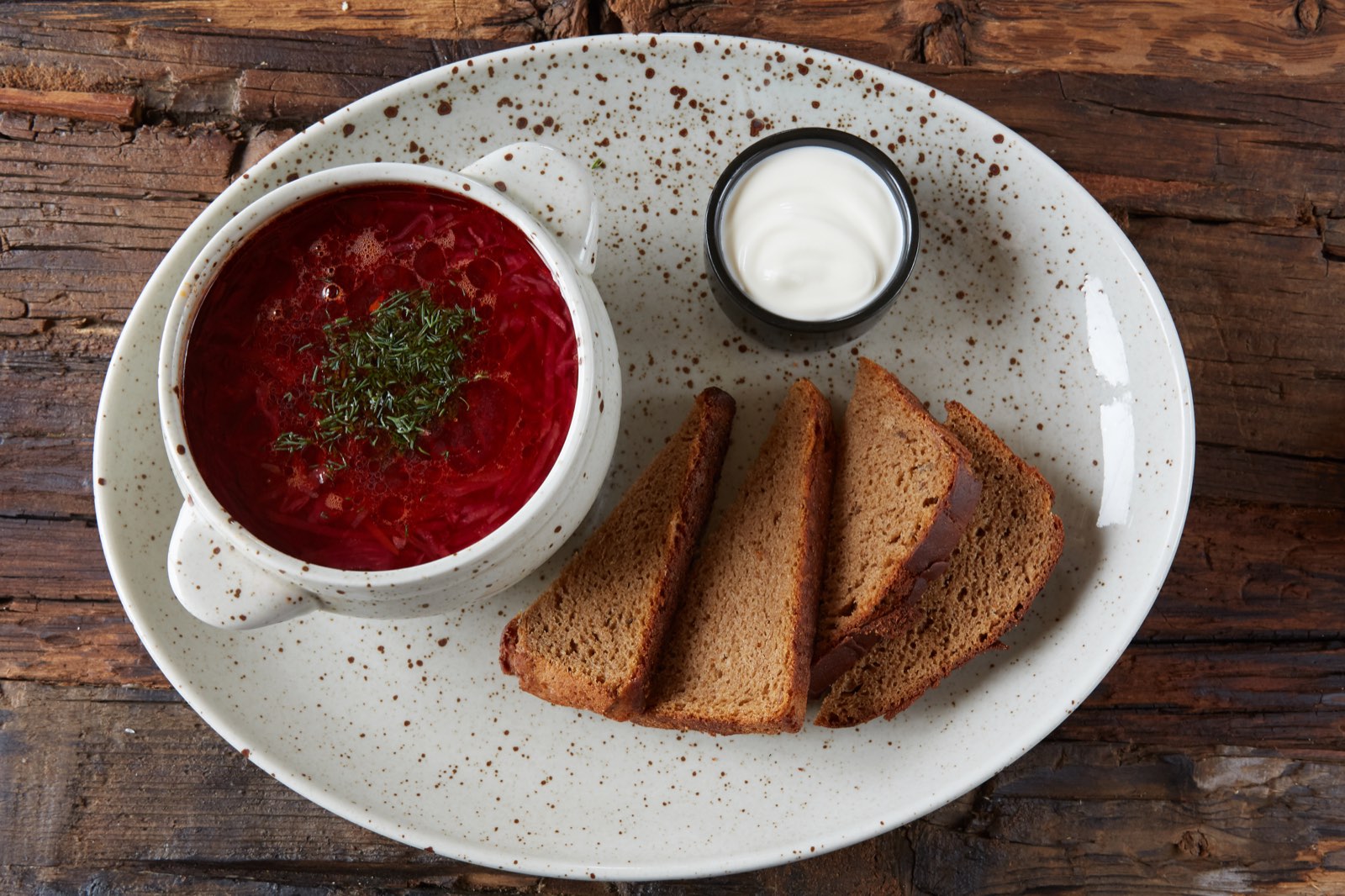
And of course there is the food that a rushnyk was made to sit beneath. The parish kitchen will be cooking all day: bulochki, the soft buns filled with cabbage, farmer's cheese or cherries, for $10, a steaming bowl of borscht for $15, Bulgarian stuffed peppers for $15, crepes for $15, juicy grilled shashlik skewers for $25, and house-made kvass for $10 to wash it all down. If you want to skip the line, use the Pre-order Food page on the website before you come. Families with children should head to the kids' zone for crafts and activities, a perfect place for young hands to try making patterns of their own.
If this article has made you want to be part of the tradition, consider signing up on the Volunteer page. The festival runs on the help of people who cook, set up, serve and clean up. Embroiderers, folk artists and small businesses can apply for a booth on the Vendors page, and non-profits can take part free of charge.
Here are the details. The Slavic Food & Cultural Festival Orlando takes place on Saturday, February 27, 2027, from 10 AM to 8 PM at Reiter Park, 311 W Warren Ave, Longwood, FL 32750, just north of Orlando. Admission is free for all ages, and no tickets are needed. The festival happens rain or shine, cash and cards are accepted at the food stands and most vendor booths, and pets are not allowed, though service animals are welcome.
Bring your family, bring your friends, and if you have a rushnyk at home that your grandmother stitched, maybe tell its story to someone new. That is how a thread stays unbroken. We will be waiting for you in Longwood with bread, salt and an open table.