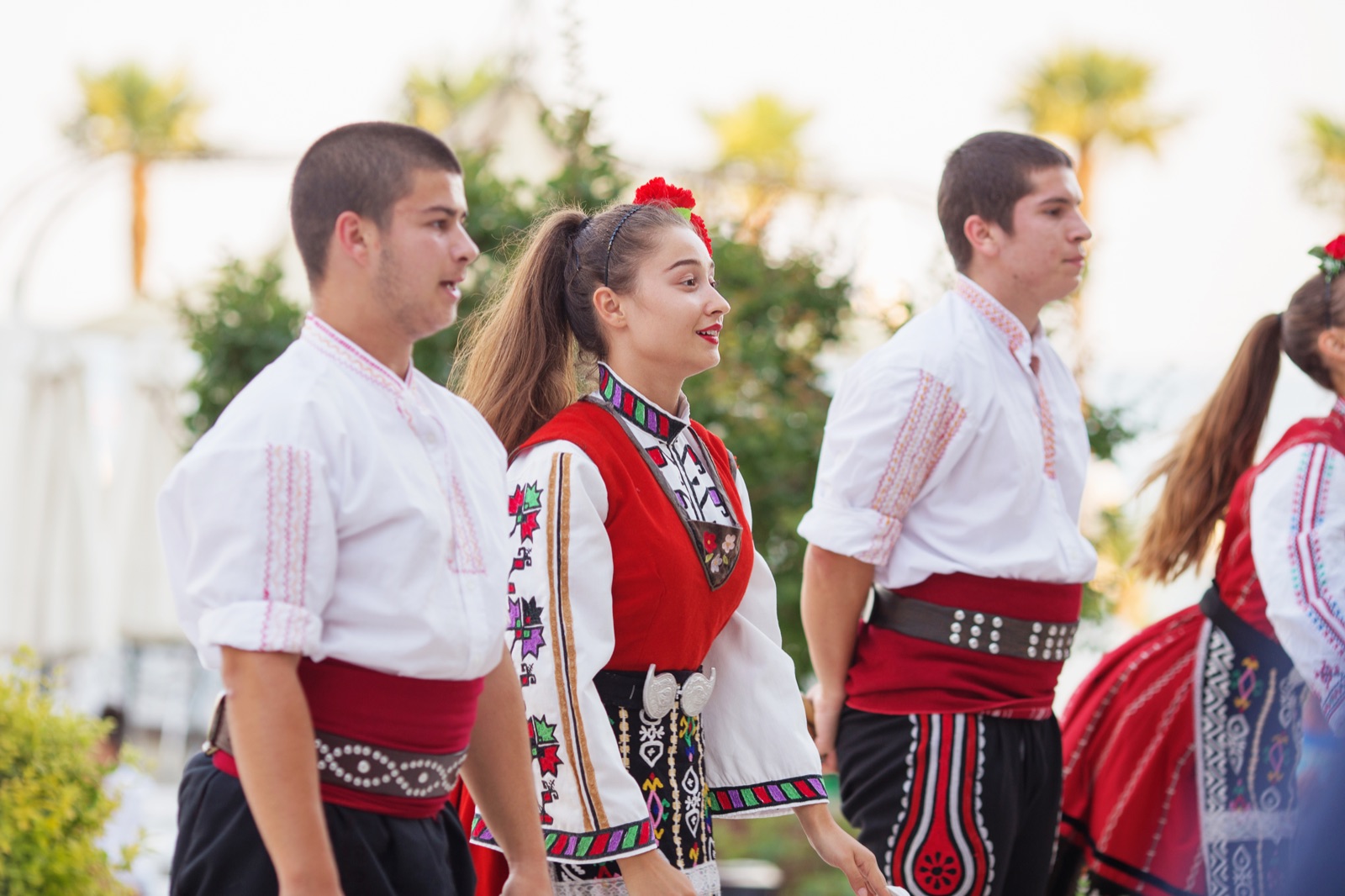
Walk through Reiter Park in Longwood on festival day and count the embroidered shirts. You will lose track before lunch. There will be grandfathers in white linen with red crosses at the collar, teenage girls in modern dresses with a band of black and red across the sleeves, little boys whose shirts are buttoned crooked because they were too excited to stand still, and dancers on the main stage whose costumes glitter with beads. For one Saturday in February, a corner of Seminole County looks like a living museum of Slavic embroidery.
The Slavic Food & Cultural Festival Orlando comes back on Saturday, February 27, 2027, from 10 AM to 8 PM, and if you have ever wondered why so many people dress up in stitched shirts for the day, this article is for you. We will look at the Ukrainian vyshyvanka, its cousins in Belarus, Russia, Poland and the Balkans, the meanings hidden in the patterns, and the many ways families wear these garments today, from village weddings to Florida backyards.
What is a vyshyvanka?
The word vyshyvanka comes from the Ukrainian verb vyshyvaty, "to embroider." Strictly speaking it simply means an embroidered shirt, and the traditional word for the garment is sorochka (shirt). For centuries it was everyday and festive clothing for both men and women in Ukrainian villages. A woman's sorochka was long, often reaching the ankles, and worn with a skirt, apron or wraparound wool skirt on top. A man's shirt was shorter, tucked in or worn loose with a sash.
The cloth was usually homemade linen or hemp, spun and woven by the women of the family. The embroidery was concentrated in certain places: the collar, the cuffs, the chest opening, the shoulders and the hem. Folklorists often explain this as protection. In the old way of thinking, the openings of a garment were where a person was most vulnerable, so they were guarded by protective patterns, like a border around a field. Whether or not every embroiderer thought of it that way, the effect is beautiful: the stitching frames the face and hands and draws the eye to the person wearing it.
A girl would begin embroidering early, and a young woman was expected to prepare shirts and rushnyky (embroidered ritual towels) for her wedding and her future household. A rushnyk is a long, narrow cloth with embroidered ends, used to cover icons, to bind the hands of bride and groom, to carry the wedding bread, to welcome guests with bread and salt, and to mark every important moment of life from birth to burial. Shirts and rushnyky together made up a family's textile memory.
Many people today picture vyshyvanka embroidery as cross-stitch, little X's in red and black. Cross-stitch did become the most popular technique in the nineteenth and twentieth centuries, helped along by printed pattern books and cheap cotton threads. But older Ukrainian embroidery used a remarkable range of stitches, and masters today are reviving them.
There is nyzynka, a counted stitch worked from the back of the fabric that produces dense geometric bands. There is lyshtva, which fills shapes in a smooth, shimmering way. There are satin stitches, stem stitches and chain stitches. There is vyrizuvannia, a cutwork technique in which threads are cut and pulled from the linen and the openings are bound into delicate lace-like grids. And there is the famous white-on-white embroidery, bilym po bilomu, where white thread on white linen creates patterns that only appear when light falls across them. It is perhaps the most refined of all, and it was especially loved in the Poltava and Chernihiv regions.
Each technique gives a different texture, and a skilled embroiderer might combine several in one shirt. When you look closely at an old sorochka, you can sometimes count a dozen different stitches in a single sleeve.
A map in thread
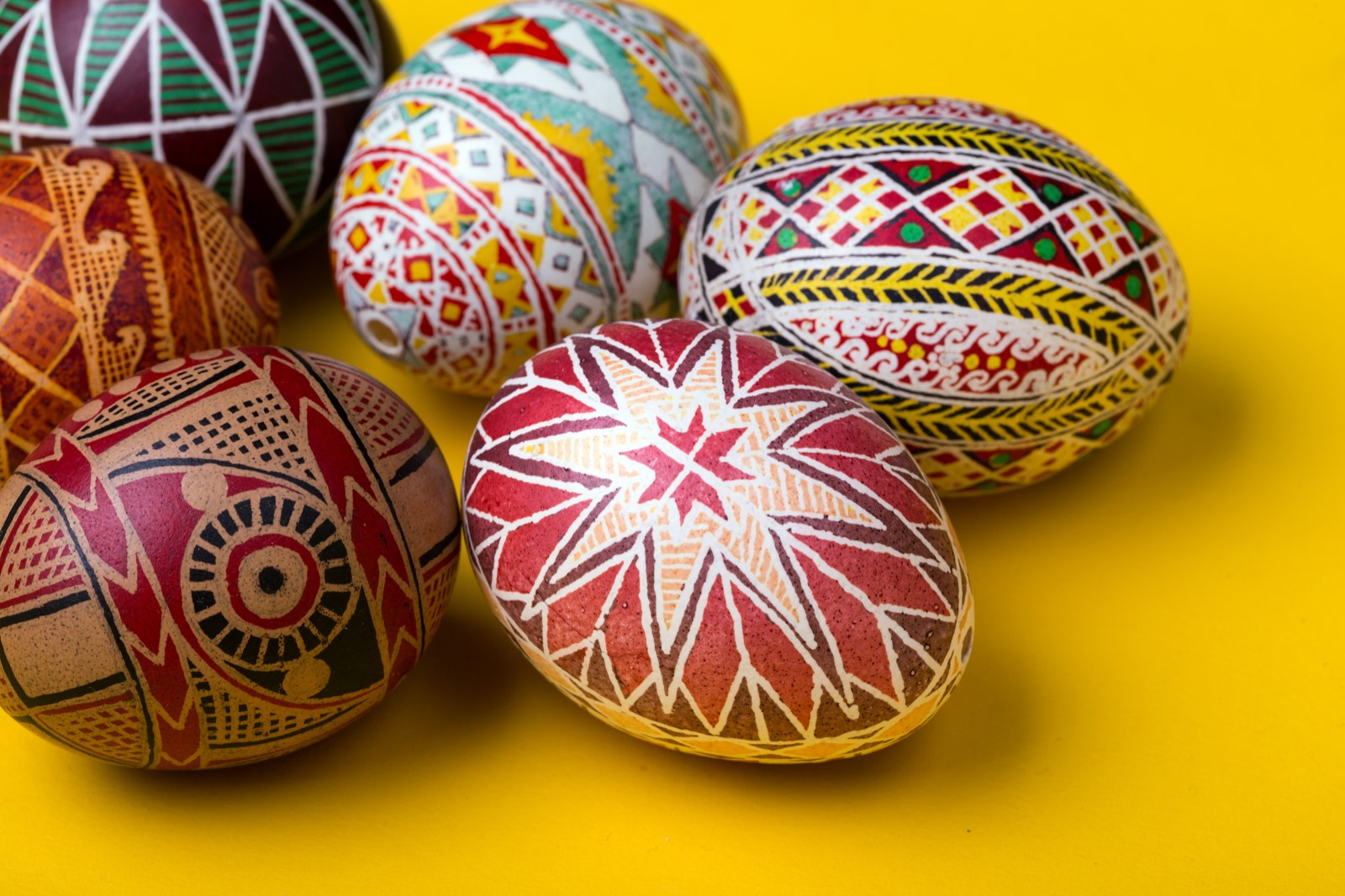
Just like pysanky, vyshyvanky change from region to region, and experts can often tell where a shirt comes from by its colors and patterns alone. Ukraine has dozens of local styles, but a few are especially well known.
Poltava is famous for elegance and restraint: white on white, or soft blues and pale reds, with plant motifs and delicate geometry. Chernihiv and parts of the north share this love of white thread and fine openwork. The Kyiv region is known for bold red and black, with flowers, vines and the classic rhombus patterns that many people picture first.
In the west, the Carpathians burst into color. Hutsul shirts are bright and confident, with oranges, yellows, greens and deep reds in dense geometric patterns. Bukovyna adds sparkle: beadwork in gold, silver and many colors, sometimes covering a whole sleeve, along with metallic thread. Boyko and Lemko shirts from other mountain areas have their own sharper, sparer looks.
One of the most striking styles comes from Borshchiv, in the Ternopil region, where women's shirts are embroidered almost entirely in black wool, so densely that the sleeves look like velvet. A well-known local legend says the black began as mourning after a terrible raid in which many men of the area were killed, and the women vowed to wear black embroidery for generations. Historians are not sure the legend is literal, but it shows how deeply people connect their clothing with their memory. Volyn and Polissia in the north favor red geometric patterns on white, simple and strong, while Podillia often works with darker, rich colors and dense ornament.
Reading the patterns
Embroidery, like pysanky, is a language, and the same symbols appear again and again across the Slavic world. Meanings differ by village and by teller, so take these as a gentle guide.
The rhombus, or diamond, is one of the oldest motifs of all. A rhombus with a dot in each quarter is often read as a sown field, a symbol of fertility and plenty. A rhombus with hooks or rays can represent the sun. Zigzags and wavy lines may mean water or the road of life. The eight-pointed star appears everywhere, a symbol of light and order.
The tree of life is a beloved motif, especially on rushnyky: a central trunk with branches, leaves, flowers and sometimes birds, connecting heaven, earth and the roots below. Sometimes the tree turns into a stylized female figure with raised arms, which many modern writers call the berehynia, a protective figure in folk imagination. Birds can mean the soul, love or the coming of spring.
Plants carry their own messages. Kalyna (the red viburnum berry) is one of the best-loved symbols in Ukrainian culture, standing for beauty, love and home, and it appears in songs as often as in embroidery. Oak leaves mean strength and are often found on men's shirts. Grapevines suggest family and abundance. Lush roses and lilies became fashionable in the nineteenth century, many of them borrowed from printed patterns, and they have been embroidered so long that they now feel completely traditional.
Colors matter as well. Red is life, love and joy, and also protection. Black is not only mourning: it is the color of rich, fertile soil and often of wisdom. White is purity. Gold and yellow suggest the sun and harvest, blue the sky and water, and green spring and youth. Put red and black together and you have the classic combination many people instantly recognize as Ukrainian.
Cousins across the Slavic world
The Ukrainian vyshyvanka is the best known embroidered shirt today, but it has many relatives, and the festival in Longwood is a wonderful place to notice the family resemblance.
Belarusian embroidery is often red on white, built from crisp geometric shapes: rhombuses, crosses, stars and stylized trees. Belarusian ruchniki (as the ritual towels are called there) are treasured family heirlooms, and the red-and-white pattern work is so central to Belarusian identity that you can spot it on modern clothing, bags and home goods.
In Russia, the traditional men's shirt is the kosovorotka, a long shirt with a collar opening off to one side rather than at the center. It was often red or white, embroidered at the collar, cuffs and hem, and worn with a woven belt. Women wore long embroidered shirts under the sarafan (a sleeveless jumper dress). Northern Russia is known for its red-on-white embroidery full of ancient motifs, while towns like Torzhok became famous for gold embroidery and others for fine white satin stitch. Russian folk ensembles still dance in brightly stitched shirts and sarafans.
Poland has strong regional traditions: the floral embroidery of the Kashubian region with its many shades of blue, the bold flowers of Łowicz, and the highlander costumes of Podhale with their embroidered vests and trousers. Slovak and Czech costumes vary almost from valley to valley, with rich embroidery, lace and ribbons. In the Balkans, Serbian, Croatian, Bulgarian, Macedonian and Slovenian costumes are covered in vivid embroidery, often red-dominated, sometimes with coins, beads and gold thread, each region instantly recognizable to those who know.
This shared language makes sense. Slavic peoples lived side by side, traded, married and borrowed from each other for centuries. Each nation polished the tradition into its own form, and the result is a family of styles that are clearly related yet proudly distinct.
Vyshyvanka Day and the shirt in modern life
In the twentieth century, embroidered shirts never fully disappeared, but for many city dwellers they became something you saw mainly in museums and folk ensembles. That changed dramatically in the early 2000s. In 2006, a university student in Chernivtsi, Lesia Voronyuk, suggested that her classmates all wear embroidered shirts on one day in May. The idea spread from campus to campus and city to city, and today Vyshyvanka Day is celebrated every year on the third Thursday of May. Office workers, schoolchildren, politicians, athletes and grandparents all put on embroidered shirts, and diaspora communities around the world join in, from Toronto to Melbourne to Florida.
At the same time, designers began to rethink the vyshyvanka. You can now find embroidered dresses for evening events, minimalist linen shirts with a single band of stitching, embroidered jackets and even sneakers. Traditional masters, meanwhile, research old shirts in museums and recreate them stitch by stitch. Both approaches are alive, and many families own a little of each: a precious heirloom shirt for Easter, a wedding or a christening, and a modern machine-embroidered one for picnics and festivals.
Wearing an embroidered shirt in the diaspora carries a special feeling. For a grandmother who left her village decades ago, it is a thread back home. For a child born in Orlando, it is a way of saying "this is part of me too." And for neighbors with no Slavic roots who simply love the beauty of it, wearing one respectfully is a warm gesture of friendship. If you are buying one, look for natural linen or cotton, ask where it was made, and treasure the handwork. Hand embroidery takes weeks or months, and a real hand-stitched shirt is a work of art.
Spotting embroidery at the festival
On February 27, you are likely to see embroidery in many places at Reiter Park. Start at the main stage, where the day opens at 10:00 with the Children's Program, featuring young singers and dancers including Elina Deyev, the Rodni Ritmi Dance Group and the Serbian Crown Folklore Group. After the official opening at 12:00, the Russian Program from 12:30 to 2:30 brings a children's chorus and folk ensemble, perhaps a chance to see sarafans and embroidered shirts in motion. At 2:30 the National Czech & Slovak Museum & Library, represented by Cecilia Rokusek, shares Czech and Slovak heritage.
The Serbian & Bulgarian Program follows from 3:00 to 4:00 with the Serbian Crown Folklore Group, often a feast of Balkan costume. From 4:30 to 5:30 the Ukrainian Program features Dina Deyev singing Ukrainian songs, and from 5:30 to 6:30 the Polish & Croatian Program brings the International Folk Dance Group with the Florida Folk Dance Council. The schedule is still being finalized and times may change, so check the Schedule page before you go. As you watch, try to spot the differences between costumes: the colors, the placement of the stitching, the beads and ribbons. It is like reading a map of Europe in thread.
Then wander the outdoor vendor market. You might spot embroidered shirts, scarves, linens or other handmade goods from local artisans and small businesses, depending on who joins us this year. If you run a business with Slavic crafts, the Vendors page explains how to apply for a booth, and non-profits can have one for free. Bring the children to the kids' zone for crafts and activities; little hands that start with simple crafts sometimes grow into hands that embroider.
A shirt, a meal and a song
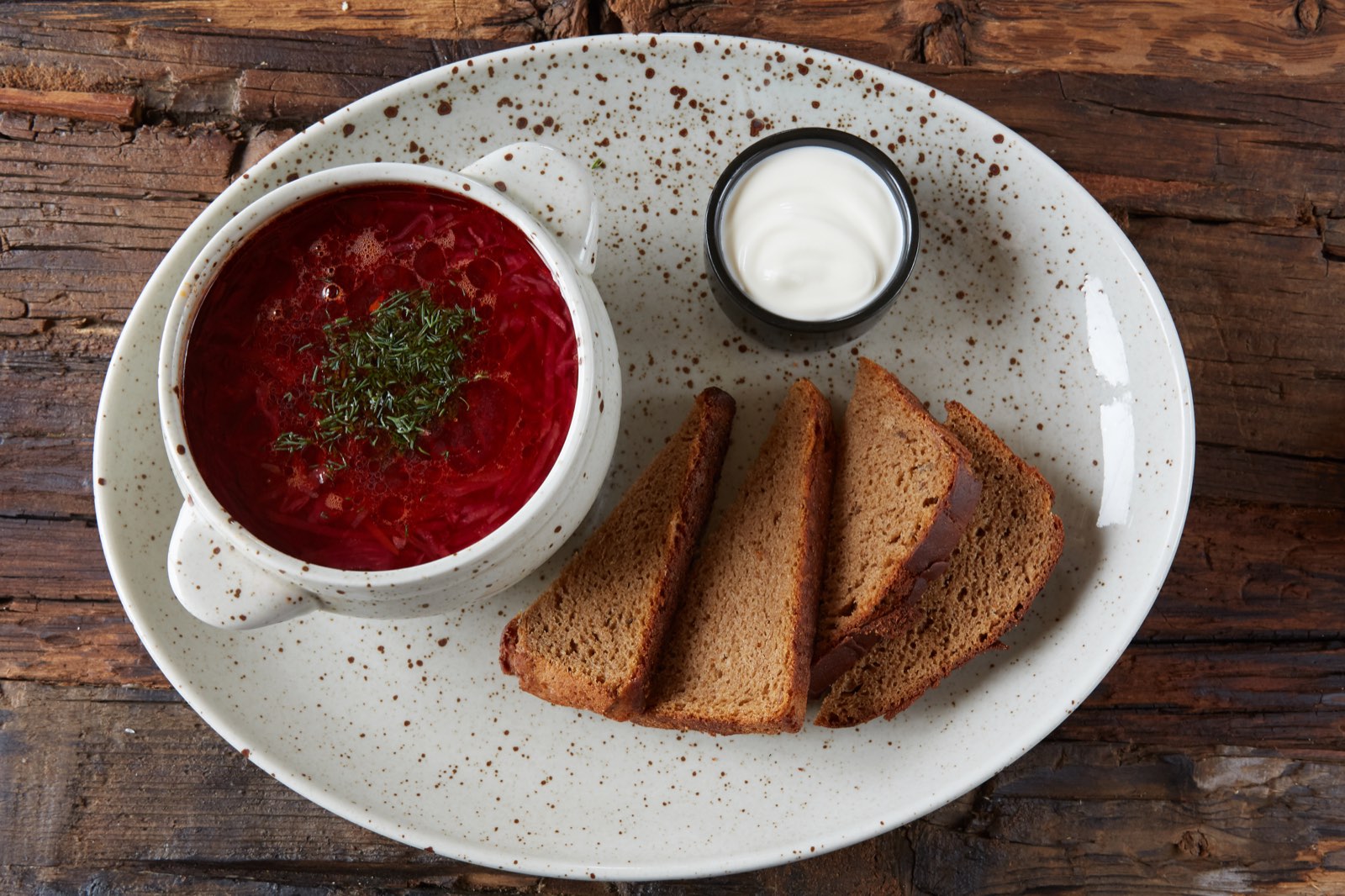
Embroidered shirts were always made for celebrations, and celebrations always come with food. At the festival, the parish kitchen of Saint Nina Mission cooks everything fresh on-site. Try a bowl of borscht ($15), the dish that has fed embroiderers through long winter evenings for generations, or Bulgarian stuffed peppers ($15) to go with the Balkan dancing. Juicy grilled skewers ($25) are perfect after an afternoon on your feet, crepes ($15) and bulochki ($10) with cabbage, farmer's cheese or cherries are easy to share, and a cup of house-made kvass ($10) or samovar tea rounds it all out. Vegetarian options are available too. Pre-order food online at slavicfoodfestival.com if you would like to skip the line, and just be careful with that borscht if you are wearing white linen.
Like a hand-stitched rushnyk, the festival is made by many hands. The parish relies on volunteers for shifts, cooking and donations, and you can sign up on the Volunteer page. Singers, musicians and dance groups who would like to perform can apply on the Artists page.
Join us in Longwood
The Slavic Food & Cultural Festival Orlando, hosted by Saint Nina Mission and celebrated in Central Florida for more than ten years, takes place on Saturday, February 27, 2027, from 10 AM to 8 PM at Reiter Park, 311 W Warren Ave, Longwood, FL 32750. Admission is free for all ages, no tickets required, rain or shine. Food stands and most vendor booths accept cash and cards. Pets are not allowed, but service animals are welcome.
So pull out the embroidered shirt your grandmother made, or the one you bought on a trip, or the one you have been saving for a special day. Wear it proudly to Longwood. Somebody will stop you to ask where it comes from, and before you know it you will be telling the story stitched into its sleeves.