Every Slavic grandmother seems to know the same opening line, give or take a few words: "Once upon a time, in a certain kingdom, in a certain land..." And every Slavic child knows that what follows will probably involve a dark forest, a clever youngest son or a brave girl, a talking animal, and somewhere among the trees, a strange little hut standing on chicken legs. On Saturday, February 27, 2027, the Slavic Food & Cultural Festival Orlando opens at 10 AM in Reiter Park with the Children's Program, two hours of children's songs and dances on the main stage. It is the perfect moment to talk about the stories that so many of those songs, costumes and dances grew up alongside: the folk tales of the Slavic peoples.
These tales were told for centuries by firelight in villages from the Carpathians to the Volga, from the Baltic to the Balkans. They traveled to America in the memories of immigrants and still live on in bedtime stories in Seminole County homes today. Here is a guide to their most famous characters, where the stories come from, and how families keep them alive.
A hut on chicken legs at the edge of the forest
Imagine you are lost in a deep forest. Night is falling. Suddenly you come to a clearing, and in it stands a small wooden hut, slowly turning around on a pair of enormous chicken legs. Around it is a fence made of bones, topped with skulls whose eye sockets glow in the dark. You know the words you must say: "Little hut, little hut, turn your back to the forest and your front to me." The hut creaks, turns, and the door opens.
Inside lives Baba Yaga, the most famous figure in all of Slavic folklore. She is old, bony and fearsome, with a long nose and, in Russian tales, a "bony leg." She does not fly on a broomstick like a Western witch. Instead she rides in a giant mortar, pushing herself along with a pestle and sweeping away her tracks with a broom. Her name appears in slightly different forms across the Slavic world: Baba Yaga in Russian, Baba Yaha in Ukrainian, Baba Jaga in Polish, and Ježibaba in Czech and Slovak. "Baba" means grandmother or old woman; the origin of "Yaga" is still debated by scholars.
The hut on chicken legs has fascinated people for generations. Some folklorists connect it with old forest storehouses raised on tree stumps to keep animals out, which from a distance could look as if they were standing on legs. Others see in it a doorway between the world of the living and another, more mysterious world. Whatever its origins, it is unforgettable. The composer Modest Mussorgsky gave it a movement of its own, "The Hut on Hen's Legs (Baba Yaga)," in his piano suite "Pictures at an Exhibition" in 1874, later orchestrated by Maurice Ravel. If you have ever heard its thundering, galloping music, you have heard Baba Yaga flying through the forest in her mortar.
Baba Yaga: villain, helper, or both
What makes Baba Yaga so interesting is that she is not simply evil. In some tales she is a terrifying threat who wants to cook and eat children. In others she is a wise, gruff helper who tests the hero and rewards those who are kind, polite and brave. In many stories she is both at once.
Take "Vasilisa the Beautiful," one of the best-loved Russian tales. Vasilisa's mother, dying, gives her a little doll and tells her to feed it and ask its advice whenever she is in trouble. Later, her cruel stepmother sends Vasilisa into the forest to fetch fire from Baba Yaga, hoping she will never return. On the way Vasilisa sees three horsemen: one all in white, one all in red and one all in black. Baba Yaga later explains that they are her servants, the bright day, the red sun and the dark night. Baba Yaga sets Vasilisa impossible chores, sorting grain, cleaning, cooking, and the little doll quietly helps her finish them. In the end Baba Yaga sends her home with a glowing skull on a stick as her light. The old versions end harshly for the stepmother and stepsisters, and parents today tend to soften that part at bedtime.
In other tales, the hero arrives at the hut tired and hungry, and Baba Yaga growls that she smells a Russian soul. The hero answers boldly: first feed me, give me something to drink and let me rest, and then ask your questions. Surprisingly, she does, and then she gives directions, a magic ball of yarn that rolls ahead to show the way, or advice on how to defeat a much more dangerous enemy.
The lesson children take away is a very old one: be respectful, work hard, think for yourself, and do not be afraid to speak up. Baba Yaga respects courage and good manners, even when she frightens everyone else.
In twentieth-century Russian films, Baba Yaga became a beloved comic villain. In several fairy tale films by director Aleksandr Rou she was played, memorably, by a male actor, Georgy Millyar, and many immigrant parents still show those films to their kids.
The Firebird and the grey wolf
If Baba Yaga is the darkness of the forest, the Firebird is pure light. In Russian it is called zhar-ptitsa, the "heat bird" or "glowing bird." Its feathers shine like fire, so bright that a single one can light up a dark room. In the stories, catching the Firebird is nearly impossible, and the quest to find it leads the hero into one adventure after another.
The classic tale is "Ivan Tsarevich, the Firebird and the Grey Wolf." A tsar has a garden with a tree of golden apples, and every night someone steals them. He sends his three sons to keep watch. The two older brothers fall asleep, but the youngest, Ivan, stays awake and sees the thief: the Firebird. He grabs at it and is left holding just one glowing feather. The tsar sends his sons off to catch the bird, and Ivan's journey begins.
At a crossroads, a grey wolf eats Ivan's horse, then, feeling sorry for him, offers to carry him instead. From that moment the wolf becomes Ivan's loyal and clever companion. Together they win the Firebird, a horse with a golden mane and the beautiful princess Elena, though Ivan nearly loses everything several times by not listening to the wolf's advice. When his jealous brothers kill him, the wolf brings him back to life with the water of death and the water of life, two magical waters that appear in many Slavic tales. Good triumphs, the wolf says farewell, and Ivan lives happily ever after.
Some versions of the story are told in Ukraine, Belarus and other Slavic lands too, and magical glowing birds appear across Eastern European folklore. The Firebird's beauty has inspired painters, poets and composers. In 1910, Igor Stravinsky's ballet "The Firebird" premiered in Paris, produced by Sergei Diaghilev's Ballets Russes with choreography by Michel Fokine. It made the young composer famous overnight. In the ballet, Prince Ivan captures the Firebird and lets her go in exchange for a magic feather, which later saves him from the villain of our next section.
Koschei the Deathless and the needle in the egg
Every good fairy tale needs a villain, and Slavic tales have one of the best: Koschei the Deathless, a gaunt, skeletal old sorcerer who kidnaps princesses and cannot be killed by any ordinary means. In Stravinsky's ballet he appears as the wicked Kashchei, with an army of monsters, and the Firebird's magic forces them into a frantic "Infernal Dance" before lulling them to sleep.
Why can't Koschei die? Because he has hidden his death far away, in one of the most famous nesting riddles in folklore. In a well-known version, his death is at the tip of a needle; the needle is inside an egg; the egg is inside a duck; the duck is inside a hare; the hare is inside an iron chest; and the chest is buried under an oak tree on a faraway island. Only a hero who finds the island, digs up the chest and catches the hare, the duck and the egg, often with the help of animals he once spared, can break the needle and end Koschei's power.
Children love this part of the story. It is a puzzle, a treasure hunt and a lesson in kindness all at once, because the hero only succeeds thanks to the bear, the falcon or the pike he once chose not to harm. In the tale of "Marya Morevna," Ivan marries a warrior princess, foolishly frees Koschei from a locked room by giving him water, and must then win a magical horse from Baba Yaga herself to rescue his wife. Once again, Baba Yaga stands between the hero and his goal, and once again, kindness to animals makes the difference.
Afanasyev and the tale collectors
How do we know these stories in such detail? For most of history they were passed on by word of mouth, told by grandmothers, soldiers, peasants and wandering storytellers, and they changed a little with every telling. In the nineteenth century, inspired partly by the work of the Brothers Grimm in Germany, scholars across the Slavic world began writing them down.
The most famous Russian collection was published by Alexander Afanasyev between 1855 and 1863. His "Russian Folk Tales" gathered around six hundred tales from many regions, collected by himself and others, and it remains the foundation of Russian folklore studies. Many of the stories in this article, along with dozens of others about clever peasants, talking animals and foolish tsars, come down to us through Afanasyev.
Other Slavic peoples had their own great collectors. In Serbia, Vuk Karadžić, best known for reforming the Serbian language and alphabet, gathered epic songs and folk tales. In the Czech lands, Božena Němcová and Karel Jaromír Erben collected fairy tales, and in Slovakia Pavol Dobšinský did the same. Ukrainian, Polish, Bulgarian and Belarusian folklorists were busy too, recording thousands of tales in their own languages. At the turn of the twentieth century, the artist Ivan Bilibin created illustrations for Russian fairy tales, full of decorative borders, embroidered costumes and wooden carvings, that still define how many people picture Baba Yaga and the Firebird today.
Tales from Ukraine, Poland and the wider Slavic world
The Slavic storytelling tradition is wonderfully varied, and every country has favorites its children grow up with.
In Ukraine, one of the best-known tales is "The Mitten" (Rukavychka): an old man drops his mitten in the snowy forest, and one by one a mouse, a frog, a rabbit, a fox, a wolf, a boar and finally a bear squeeze inside to keep warm, until the mitten bursts. Many American children know it too, through the picture book "The Mitten" by Jan Brett, adapted from the Ukrainian folk tale. Ukrainian children also love Kotyhoroshko, a hero born from a pea who grows up to fight a dragon, and Ivasyk-Telesyk, a little boy who outwits a witch and is rescued by a flock of geese. A similar story, "The Swan Geese," is told in Russia, with Baba Yaga's geese carrying off a little boy whose sister must bring him home.
Some tales belong to several neighbors at once. "Kolobok," the round little bun that rolls away from the old couple who baked it and escapes the hare, the wolf and the bear before meeting a sly fox, is told in Russia, Ukraine and Belarus. "The Giant Turnip" (Repka), where grandpa, grandma, granddaughter, dog, cat and finally a mouse pull together to get a huge turnip out of the ground, teaches toddlers that everyone's help counts.
In Poland, the most famous legend is the Wawel Dragon of Kraków, a monster that lived in a cave under Wawel Hill and terrorized the city until a clever young shoemaker fed it a sheep stuffed with sulfur. The burning dragon drank from the Vistula River until it burst. Today a metal dragon statue at the foot of the hill breathes real fire for delighted visitors. Polish children also know Baba Jaga well, along with many tales of kings, clever peasants and enchanted forests.
Czech and Slovak tales are full of water sprites, kind-hearted princesses and the friendly devil who is often more foolish than frightening. Serbian, Croatian and Bulgarian tales add their own dragons, fairies called vilas, and clever heroes who win by wit rather than strength.
Bedtime stories in immigrant families
For families who came to America from Slavic countries, folk tales are often the very first piece of heritage passed to children. Long before kids learn about history or politics, they learn about Baba Yaga and Kolobok, usually in their grandmother's voice, at bedtime, in Russian, Ukrainian, Polish, Serbian or Bulgarian.
In many homes it goes like this: English at work and at school, but at bedtime the old language comes back. A grandmother tells "The Mitten" in Ukrainian while the children giggle at the animals' voices. A father reads Afanasyev to his daughter, explaining the words she does not know. Old illustrated books, carried across the ocean in suitcases, are read until their covers fall apart. Animated films and recordings of tales fill the gaps when grandparents live far away.
These stories do more than entertain. They carry the sounds of a language, the rhythms of its songs and the values of the people who told them: hospitality, courage, cleverness, respect for elders and kindness to animals. A child who knows that you must be polite to Baba Yaga and share your bread with a hungry stranger has learned something worth keeping.
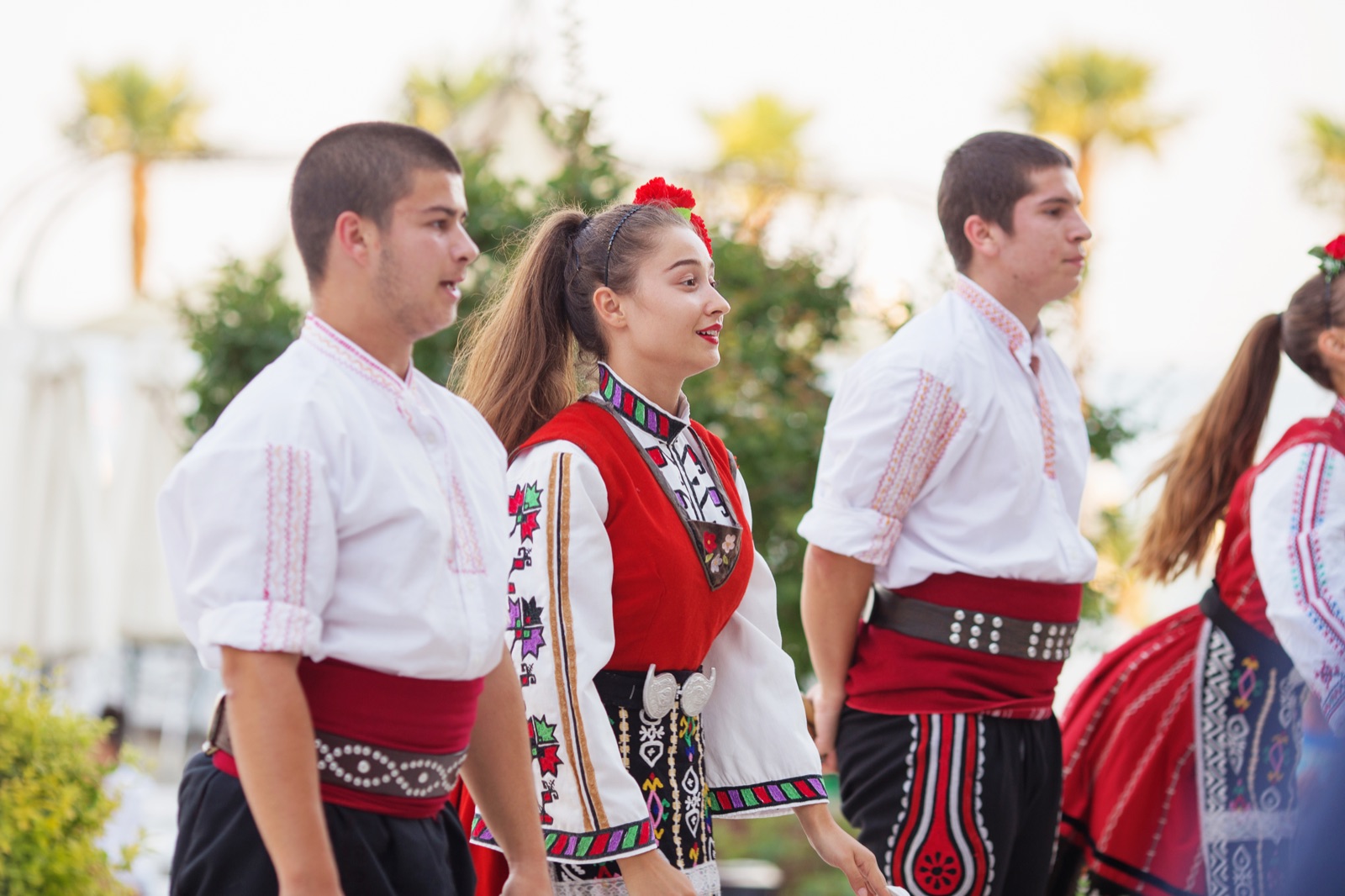
At the festival, you may notice how many of the children's songs and dances have the same spirit. The Children's Program from 10:00 AM to noon features Elina Deyev, the Rodni Ritmi Dance Group and the Serbian Crown Folklore Group, and young performers in folk costume can look as if they stepped right out of a Bilibin illustration.
Bring your little storytellers to Longwood
The Slavic Food & Cultural Festival Orlando takes place on Saturday, February 27, 2027, from 10 AM to 8 PM at Reiter Park, 311 W Warren Ave, Longwood, FL 32750, just north of Orlando in Seminole County. Admission is free for all ages, no tickets required, and the festival goes on rain or shine.
Come early for the Children's Program at 10:00 AM, then head to the kids' zone for crafts and activities. Afterward, stay for the opening at noon and the full afternoon of music and dance, from the Russian Program at 12:30 PM to the Ukrainian Program at 4:30 PM and the Polish & Croatian Program at 5:30 PM. Times may change, so check the Schedule page before you come. Take a stroll through the outdoor vendor market too; you might spot books, toys or crafts inspired by these old tales.
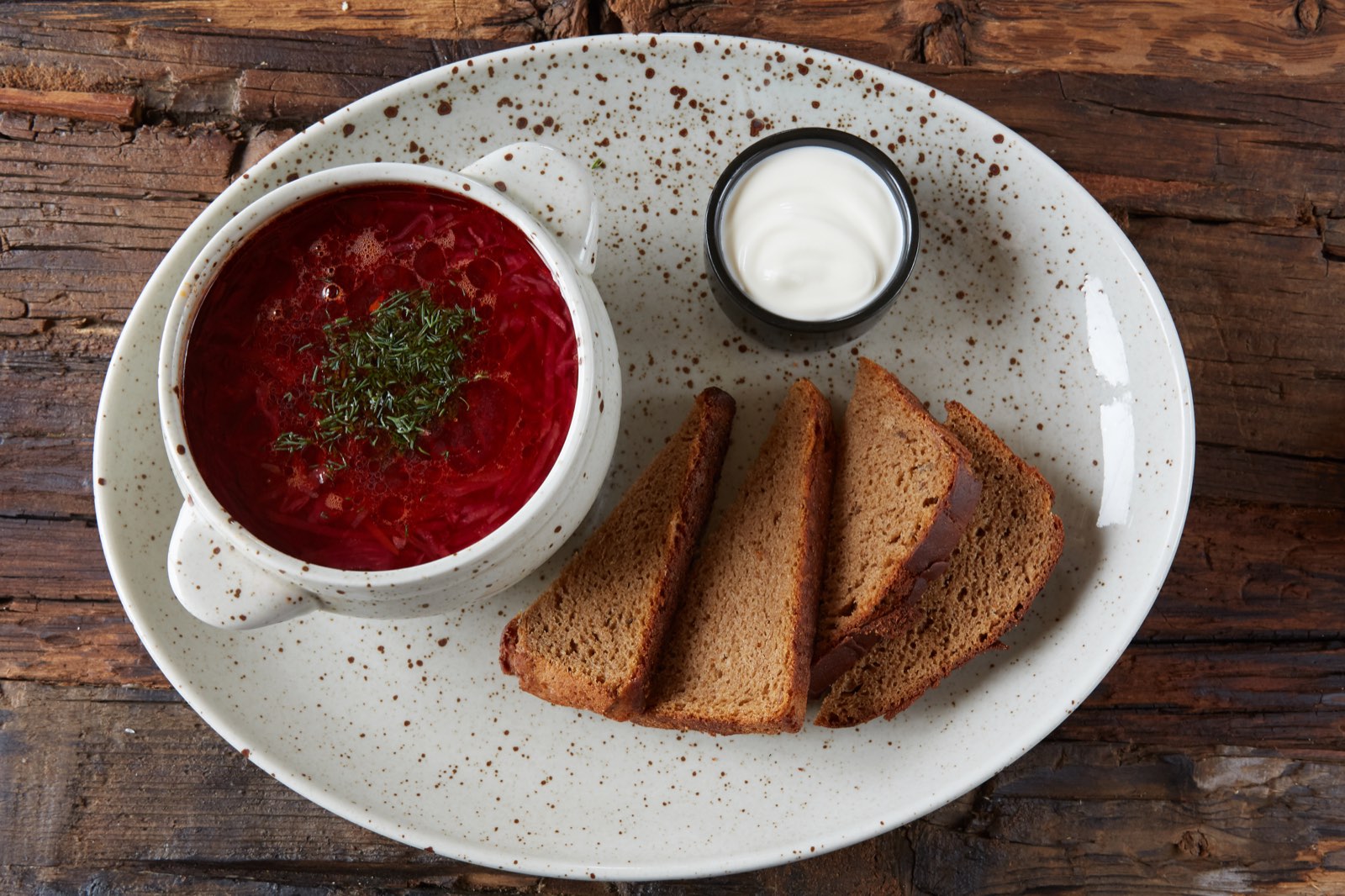
And of course, there is food fit for a fairy tale feast, cooked fresh on site by the parish kitchen of Saint Nina Mission. Kids tend to love the crepes ($15) and the soft bulochki ($10), buns filled with cabbage, farmer's cheese or cherries, which look a lot like Kolobok before he rolled away. Grown-ups can try the borscht ($15), juicy grilled skewers ($25), Bulgarian stuffed peppers ($15) and house-made kvass ($10). You can pre-order food online at slavicfoodfestival.com to skip the line.
If you would like to help, the Volunteer page lists ways to pitch in, and dance groups or singers who would like to perform can apply on the Artists page.
Many Russian tales end with a playful formula: "I was there too, I drank mead and beer; it ran down my mustache but never got into my mouth." Come to Longwood on February 27, and we promise the kvass will get into your mouth just fine. And who knows: maybe your children will go home with a new favorite story to ask for at bedtime.