It usually starts with just a few people. The accordion begins a quick, bouncing tune, someone grabs a friend by the hand, and the two of them start stepping sideways. A third person joins, then an aunt, then a cousin, then a little boy who has clearly done this a hundred times. Within a minute, a long chain of people is winding around the room, hands linked, feet moving in a pattern that seems complicated until suddenly it isn't. That is the magic of the kolo and the horo, the circle dances of the Balkans, and on Saturday, February 27, 2027, the Serbian & Bulgarian Program at the Slavic Food & Cultural Festival in Reiter Park, Longwood, will bring that energy to a Central Florida stage.
Circle and chain dances are among the oldest forms of dance in Europe, and they live on with special vigor in Southeastern Europe. Serbs and Croats call their dance kolo, which means "wheel" or "circle." Bulgarians call theirs horo. Macedonians say oro. Romanians dance the hora and Greeks dance the horos, and the family resemblance among all these words is no accident. They share a common heritage that goes back many centuries, and they continue to be danced at weddings, village fairs, church feasts, and on any evening when the music is good and the company is better.
The Serbian Kolo: A Wheel of Community
In Serbia, the kolo is far more than a dance. It is a way of being together. Traditionally, the kolo was danced on the village square after church on Sundays and holidays, at the sabor (a village fair, often held on the feast day of the local church), at weddings and at family celebrations. It was where young people met, where neighbors caught up, and where everyone, from grandparents to small children, took part in the same activity at the same time.
In 2017, UNESCO recognized "Kolo, traditional folk dance" from Serbia on its Representative List of the Intangible Cultural Heritage of Humanity. The inscription describes the kolo as a collective dance performed by people holding hands in a circle or a chain, usually accompanied by music, and emphasizes that it is open to everyone and helps bring communities together. That inclusive spirit is exactly what makes the kolo so special.
There are hundreds of different kolos across Serbia, each with its own steps, rhythm and regional flavor. Some of the best known include Moravac, from the Morava river valley, with its lively shuffling steps; Užičko kolo, from the area around Užice in western Serbia, famous for its fast pace and energetic jumps; and simple social kolos that almost anyone can pick up in a minute. In the northern province of Vojvodina, kolos are often accompanied by tamburica orchestras with their bright, plucked strings, while in central and southern Serbia the accordion reigns, often joined by brass bands, especially in the south.
Serbian brass music deserves a special mention. Every summer the village of Guča in western Serbia hosts the Dragačevo Trumpet Festival, which has been held since the early 1960s and draws enormous crowds who dance kolo for days to roaring trumpets and drums. It is one of the liveliest celebrations in the Balkans and a wonderful example of how traditional dance can feel thoroughly modern.
At the head of the kolo there is often a leader, called the kolovođa, who sets the direction and may wave a handkerchief, call out changes or add flourishes to the basic steps. The best dancers are often found near the front, and newcomers usually join near the end, where they can watch the people beside them and follow along.
The Bulgarian Horo and Its Famous Odd Rhythms
Bulgaria's horo is a close cousin of the kolo, but Bulgarian dance music has one feature that never fails to amaze first-time listeners: its rhythms. While most Western popular music is built on beats grouped in twos, threes and fours, Bulgarian folk music often uses what are called asymmetric or "limping" meters, known in many Balkan languages by the Turkish-derived word aksak. Beats are grouped into short and long units, creating patterns that feel thrilling and slightly off-balance, like a dancer who seems about to stumble and then lands perfectly on the beat.
The most famous example is the rachenitsa, a lively dance in 7/8 time. If you count it, you can think of it as "one-two, one-two, one-two-three," or "quick, quick, slow." The rachenitsa is danced at weddings, often by couples or soloists showing off their skill, as well as in lines. Then there is daychovo horo in 9/8, counted "one-two, one-two, one-two, one-two-three," with a characteristic bounce at the end of each phrase. Kopanitsa is in 11/8, counted "one-two, one-two, one-two-three, one-two, one-two." There are even dances in 13/8 and longer meters. For many Bulgarians, these rhythms feel completely natural, because they grew up hearing them at every celebration. Foreign musicians, on the other hand, often need a lot of practice before their fingers and feet agree.
Not every horo is complicated, though. The most popular and widespread Bulgarian dance is pravo horo, which simply means "straight dance." It has a steady, easy rhythm and a short pattern of steps that repeats over and over, moving slowly to the right. At any Bulgarian wedding or village festival, pravo horo is the dance that pulls everyone in, and it is the perfect first horo for beginners.
Bulgaria's regions each have their own style. In the Shopluk region around Sofia, dances are fast, sharp and energetic, with small, quick steps. In Thrace, in the south-east, dances tend to be smoother and more grounded. In the Rhodope Mountains, the pace is often slower and more stately, and the music is accompanied by the deep sound of the large Rhodope bagpipe. In Dobrudzha in the north-east, the dances have strong, stamping movements. Traditional Bulgarian instruments include the gaida (bagpipe), the kaval (a long end-blown shepherd's flute), the gadulka (a bowed string instrument) and the tapan (a large two-sided drum), and their combined sound is unforgettable.
Macedonian Oro, Croatian Kolo and Other Cousins
The circle stretches beyond Serbia and Bulgaria. In North Macedonia, the dance is called oro, and it is just as rich in rhythm. Lesnoto oro, meaning "the easy dance," is in 7/8 time but counted "one-two-three, one-two, one-two," the reverse of the rachenitsa, and it is the most common social dance at Macedonian celebrations. Teshkoto, meaning "the heavy one," is a slow, dignified men's dance accompanied by the drum and the zurla (a loud folk oboe), and it is regarded as one of the most powerful symbols of Macedonian folk culture. In 2014, UNESCO also recognized Kopachkata, a social dance from the village of Dramche in the Pijanec region of North Macedonia.
In Croatia, the kolo takes many forms. One of the most remarkable is the nijemo kolo, the "silent circle dance" of the Dalmatian hinterland, performed without any music at all. Dancers move in a circle to the sound of their own steps and the jingling of their costumes, and the men lead the women in vigorous, spontaneous spins. Nijemo kolo was added to the UNESCO Representative List in 2011. In Slavonia, in eastern Croatia, kolos are accompanied by tamburica music, much like in neighboring Vojvodina.
Bosnia and Herzegovina, Montenegro and Slovenia have their own circle and chain dances too, as do Greece, Romania, Albania and Turkey. Greek communities dance the syrtos and the kalamatianos, the latter also in 7/8 time, at every wedding and festival. These traditions influenced one another through centuries of shared life, so when you see the dancers on stage, you are watching a story that is bigger than any single country.
How the Circle Works: Holds, Steps and Etiquette
One of the best things about Balkan circle dances is that you do not need a partner. You just need two neighbors. The dancers link up in a line or a broken circle, and the way they hold hands depends on the dance. In some dances, people hold hands down low at their sides. In others, they hold them at shoulder height with elbows bent, forming a W shape. In some Bulgarian dances, dancers grab hold of each other's belts, a hold called na lesa, which creates a tight, powerful line. In a few dances, dancers put their hands on each other's shoulders.
Most lines move to the right, counterclockwise around the room, with the leader at the right end. The leader often holds a handkerchief in the free hand and may twirl it, wave it to signal a change, or perform extra steps and jumps. The person at the other end may also have a free hand and plenty of freedom to improvise. When the music speeds up, as it often does toward the end of a dance, the steps get smaller and quicker, and the whole line seems to pulse together.
Want to try a few steps before February? The basic pattern of pravo horo, as it is commonly taught to beginners, is a good place to start. Facing the center with hands joined low, step to the right with your right foot, then bring your left foot across or behind it as you keep traveling right. Step right again with the right foot and lightly lift the left. Then step back onto the left foot and lightly lift the right. That is the whole thing: a little journey to the right, a pause, a sway back, repeated again and again. Villages and families have their own variations, of course, but once your feet know this pattern, you can follow along in a surprising number of Balkan lines. Many kolos are built on a similar idea of traveling steps plus a small back-and-forth, which is why beginners pick them up faster than they expect.
Etiquette is simple. If you want to join, do not break into the line between two people holding hands unless they invite you. Instead, join at the end of the line, which is usually the left end. If you are a beginner, try to stand next to someone who knows the dance and watch their feet. Do not worry about mistakes. In a Balkan circle, enthusiasm counts more than perfection, and someone will almost always help you with a smile. And when the dance ends, everyone usually laughs, catches their breath and waits for the next tune.
Circle Dances in America
Balkan immigrants brought their dances to America more than a century ago, and they are still going strong. Serbian, Croatian, Bulgarian and Macedonian churches and cultural centers across the United States often have folklore groups where children, teenagers and adults learn the dances of their ancestors, rehearse every week and perform at church festivals, picnics and holidays. Many of these groups have colorful regional costumes and live musicians, and some travel across the country for folklore festivals. For young people born in America, learning the kolo or horo is often the moment when their grandparents' homeland stops being a story and becomes something they can feel in their own feet. And at Serbian, Bulgarian and Macedonian weddings in the United States, the circle still forms the moment the band strikes up, pulling in bride, groom, guests in suits and children in their Sunday best alike.
Balkan dances also captured the imagination of Americans with no family ties to the region. Starting in the mid-twentieth century, the international folk dance movement spread across the United States, with clubs on college campuses and in community centers. Balkan dances, with their exciting rhythms and welcoming lines, became a particular favorite. Today, folk dance clubs in many American cities, including groups in Florida, still meet regularly to dance kolos, horos and oros alongside dances from Greece, Israel, Romania, Poland and beyond.
Feel the Rhythm at Reiter Park
So where can you experience this at the festival? Mark your calendar for the Serbian & Bulgarian Program on the main stage from 3:00 to 4:00 PM, featuring the Serbian Crown Folklore Group. This is your chance to see Balkan dance, costumes and music up close. If you arrive early, the group is also part of the Children's Program from 10:00 to 12:00, along with Elina Deyev and the Rodni Ritmi Dance Group, a great way to start the day with the kids.
Later in the afternoon, the Polish & Croatian Program from 5:30 to 6:30 brings the International Folk Dance Group with the Florida Folk Dance Council to the stage, a perfect fit for anyone who has caught the folk dance bug. In between, the Ukrainian Program runs from 4:30 to 5:30 with Dina Deyev singing Ukrainian songs, and earlier the Russian Program from 12:30 to 2:30 features a children's chorus and folk ensemble from Musical Traditions. Check the Schedule and Music pages on the festival website for updates, since times may still change. And if a line of dancers ever winds out toward the crowd, as Balkan lines love to do, you will know exactly where to join: at the end.
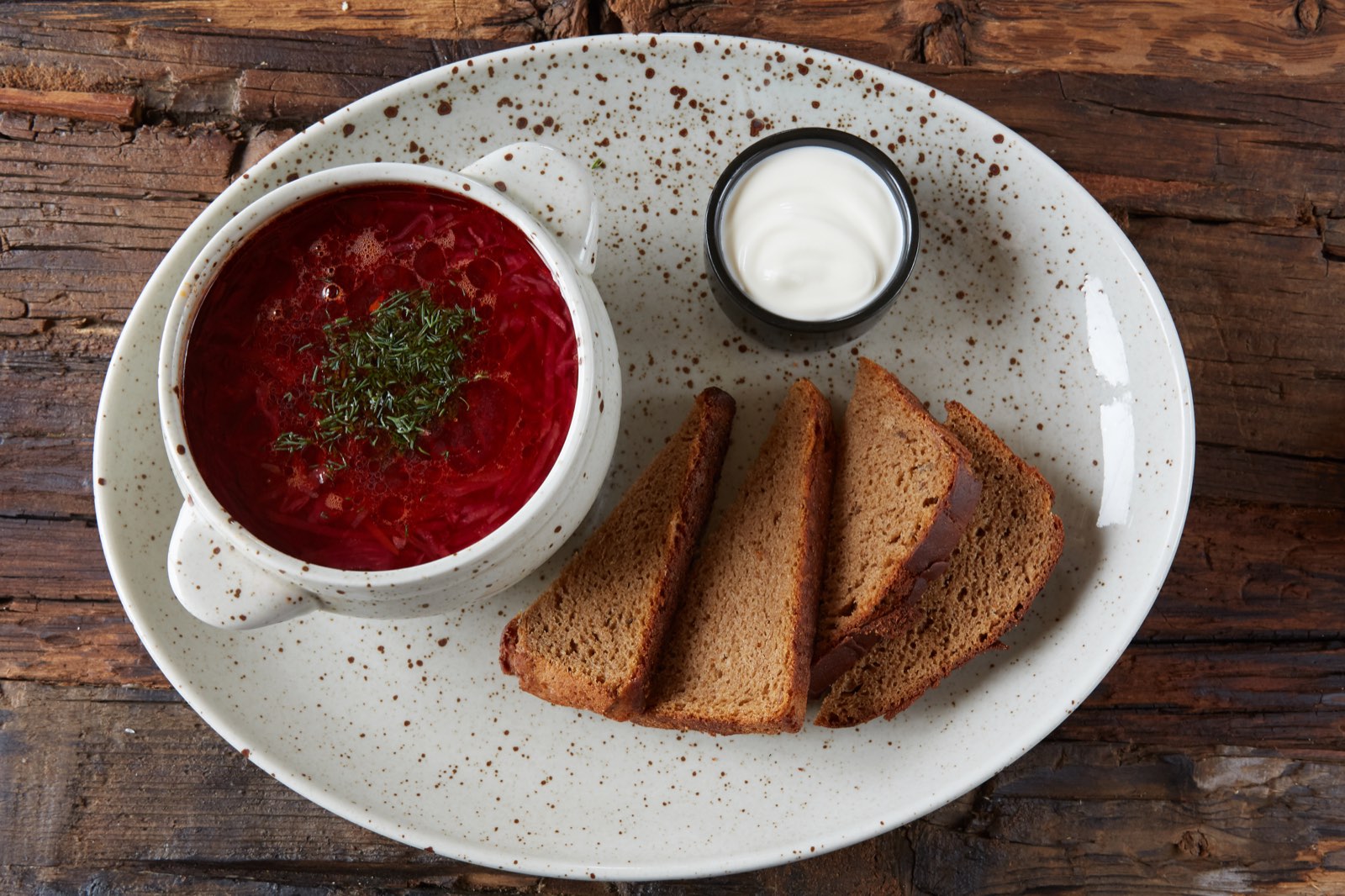
All that dancing works up an appetite, and the parish kitchen will be ready. Try the Bulgarian Stuffed Peppers for $15, a true Balkan favorite, or the juicy grilled shashlik skewers for $25. There is also borscht for $15, crepes for $15, bulochki (buns filled with cabbage, farmer's cheese or cherries) for $10, and house-made kvass for $10. To save time for dancing, use the Pre-order Food page on slavicfoodfestival.com and skip the line.
Kids can burn off their own energy in the kids' zone with crafts and activities, and everyone can wander the outdoor vendor market between performances. If you sing, play or dance with a folk group, take a look at the Artists page, where performers can apply to take part. And if you would like to help the festival happen, the Volunteer page has shifts, cooking and donation opportunities.
Join the Circle on February 27
The Slavic Food & Cultural Festival Orlando, hosted by Saint Nina Mission, has been celebrating Slavic cultures in Central Florida for more than ten years. Performers come from Ukrainian, Russian, Serbian, Bulgarian, Polish, Slovak, Czech, Croatian and Greek communities, and over 2,000 guests are expected.
The festival takes place on Saturday, February 27, 2027, from 10 AM to 8 PM at Reiter Park, 311 W Warren Ave, Longwood, FL 32750, in Seminole County just north of Orlando. Admission is free for all ages, no tickets are needed, and the festival goes on rain or shine. Cash and cards are accepted at the food stands and most vendor booths. Pets are not allowed, but service animals are welcome.
The circle is always open. Come to Longwood, listen for the accordion and the drum, and let the rhythm of seven, nine or eleven beats pull you in.