Late in the afternoon on Saturday, February 27, 2027, the light over Reiter Park will turn golden, the grills of the parish kitchen will still be smoking, and the main stage of the Slavic Food & Cultural Festival Orlando will turn to Ukraine. From 4:30 to 5:30 PM, the Ukrainian Program brings Dina Deyev singing Ukrainian songs to the crowd in Longwood. For many Ukrainian families in Central Florida, that hour is a homecoming: songs their grandparents sang, melodies they heard at weddings and in church, lyrics they never forgot even after decades in America.
Behind so many of those songs stands a remarkable instrument and a remarkable group of people. The instrument is the bandura, with its shimmering cascade of strings. The people are the kobzars, the wandering, often blind singers who for centuries carried Ukraine's history, faith and humor from village to village. Before you find your spot on the lawn for the Ukrainian Program, here is their story.
An instrument like no other
If you have never seen a bandura up close, picture something between a lute and a harp. It has a rounded, deep wooden body, traditionally carved from a single block of wood such as willow, and a short neck set slightly off to one side. Across the body runs a wide fan of strings, and that is where the bandura's magic lies.
The longer strings running along the neck are the basses, used for harmony and rhythm. The many shorter strings strung across the edge of the body, called prystrunky, carry the melody. A modern concert bandura can have somewhere around 55 to 65 strings, while older folk instruments had far fewer, often around twenty or thirty. The player holds the instrument upright on the lap and plucks with the fingertips of both hands, producing a sound that can be bright and bell-like one moment and deep and rolling the next. Some people compare it to a harp, others to a harpsichord, but anyone who has heard a skilled bandurist knows it sounds like nothing else.
The bandura has an older relative called the kobza, a lute-like instrument with a longer neck and fewer strings. For a long time the two names were used almost interchangeably, and the singers who played them were called kobzars or bandurists. Over the centuries, as more and more strings were added, the bandura gradually took over, and today it is one of the national instruments of Ukraine.
There are two main playing styles. In the Kyiv style, the player holds the instrument fairly upright, with the left hand mostly on the bass strings and the right on the treble. In the Kharkiv style, developed in the early twentieth century, the instrument is held more to the side, and both hands can range freely over all the strings. Each style has its devoted teachers and students, and both are heard today in Ukraine and abroad.
One more thing sets the bandura apart from many other folk instruments: it is first of all an instrument for accompanying the voice. A bandurist almost always sings while playing, and the strings weave around the words, answering a line of text with a ripple of notes, pausing for a dramatic phrase, swelling under a chorus. Tuning all those strings takes real patience before every performance. When a whole ensemble of banduras plays together, though, the effect is breathtaking, a shimmering wall of sound that seems to fill the air like bells.
Cossacks and court musicians
The bandura's golden legend is bound up with the Cossacks, the free warrior communities of the Ukrainian steppes in the sixteenth to eighteenth centuries. One of the most famous images in Ukrainian folk art is "Cossack Mamai," a Cossack sitting cross-legged under an oak tree, his horse beside him, playing a kobza or bandura. Versions of this painting hung in countless Ukrainian homes, and it captures something people still feel: the bandura as a companion for long journeys, quiet evenings and songs of freedom and longing.
Bandurists were not only found around campfires. In the seventeenth and eighteenth centuries, Ukrainian bandura players were prized musicians, and some were employed at the courts of nobles and even royalty in neighboring countries. Their skill, and their distinctive repertoire, made them welcome guests in palaces as well as villages.
But the most important keepers of the tradition were not court musicians. They were humble, often blind, wanderers who spent their lives on the road.
The blind kobzars and their brotherhoods
For centuries, a blind boy in a Ukrainian village faced a hard future. One of the few respected paths open to him was to become a kobzar or a lirnyk. The lirnyk played the lira, a hurdy-gurdy, a stringed instrument sounded by turning a wooden wheel with a crank. The kobzar played the kobza or the bandura. Both earned their living by traveling from village to village, singing at markets, fairs, church holidays and outside churches, and receiving food, coins and lodging in return.
Becoming one was not simple. Kobzars and lirnyks were organized into brotherhoods, sometimes compared with craft guilds, attached to particular churches and regions. A boy would be apprenticed to a master for several years, often three or more, learning not only to play and sing but also the rules of the road, the prayers and religious songs, and even a secret professional slang that outsiders could not understand. At the end of his apprenticeship came a kind of graduation ceremony, after which he could perform on his own.
Kobzars were treated with respect and a little awe. They were seen as people who carried both memory and blessing. Their songs reminded listeners of their history and of God, and many villagers believed it was a good deed to feed and shelter them. Because they traveled so widely, kobzars also brought news, stories and songs from distant places, helping to create a shared culture across Ukraine's many regions.
Dumy: the epic songs of Ukraine
The crown of the kobzar's repertoire was the duma (plural dumy), a long epic song, half sung and half chanted, in free rhythm without a regular verse structure. Dumy are among the most precious treasures of Ukrainian oral literature.
Many dumy tell of the Cossack era: battles on the steppe, storms on the Black Sea, the death of a Cossack far from home, and especially the suffering of Ukrainians taken captive and sold into slavery across the sea. One famous duma, "Marusia Bohuslavka," tells of a Ukrainian girl from the town of Bohuslav who was captured and became the wife of a Turkish pasha, and who one Easter frees the Cossack prisoners while sadly knowing she cannot return home herself. Others are about family: a widow abandoned by her sons, brothers fleeing captivity, a mother's blessing.
The performance itself was unlike ordinary singing. A kobzar would often begin with a long, wordless opening, a kind of musical sigh, and then deliver the story in a flowing, heightened recitation, with the bandura or kobza punctuating and supporting the words. Listeners described being moved to tears. In the nineteenth century, scholars and writers began traveling to hear kobzars and write down their dumy before they disappeared. One of the most celebrated was Ostap Veresai, a blind kobzar from the Poltava region, whose performances for scholars in Kyiv in the 1870s brought him wide fame and helped convince educated society that this tradition was a national treasure.
At the beginning of the twentieth century, the new technology of sound recording arrived just in time. The poet Lesya Ukrainka, one of the great names of Ukrainian literature, helped fund an expedition led by the musicologist Filaret Kolessa to record dumy from living kobzars on phonograph cylinders. Those fragile recordings, made in the years around 1908 to 1910, preserved voices and playing styles that would otherwise have been lost forever.
Kobzars also sang lighter songs, humorous and satirical ones, dance tunes, and a great many religious songs and psalms. Their repertoire was a whole world in itself.
Shevchenko, the Kobzar
In 1840, a young poet named Taras Shevchenko published his first collection of poems in St. Petersburg. He called it "Kobzar." Shevchenko had been born a serf in central Ukraine in 1814 and had been freed from serfdom only in 1838, with the help of friends and admirers of his talent as a painter. His little book, written in the Ukrainian language at a time when it was rarely used in literature, became one of the founding works of modern Ukrainian culture.
Why name it after a wandering minstrel? Because Shevchenko saw himself in that tradition: a voice of the people, singing their history and their hopes. In poems like "Perebendia," he painted a portrait of an old blind kobzar who sings for the crowd at the village and then goes out alone to the steppe to sing to the wind and the sky. Over time Shevchenko himself came to be called simply "the Kobzar," and his book is still found in Ukrainian homes around the world, often next to the family icons and embroidered towels. Many Ukrainian families in America own a well-worn copy carried from the old country.
Shevchenko's words also became songs. The best known is probably "Reve ta stohne Dnipr shyrokyi" ("The wide Dnipro roars and moans"), set to music from the opening lines of one of his early poems. It is sung at concerts, at community gatherings and around family tables wherever Ukrainians live, and it has been arranged countless times for choir and bandura.
Loss and survival in the twentieth century
The twentieth century was a hard one for the kobzars. The bandura itself flourished in a new way, with professional ensembles, conservatory classes and new instruments with more strings, often played by women as well as men. Hnat Khotkevych, a writer, scholar and bandurist, worked tirelessly to teach and modernize the instrument and helped develop the Kharkiv style.
But the old wandering minstrels did not fit into the world that the Soviet authorities wanted to build. In the 1930s, many kobzars, lirnyks and bandurists were persecuted. Some were arrested, others were executed, and the traditional brotherhoods and the itinerant way of life were effectively wiped out. Hnat Khotkevych himself was shot in 1938. A widely repeated account of a gathering of kobzars in Kharkiv that ended in mass execution is still discussed by historians, who note the lack of firm documents, but the broader loss of the tradition in that decade is not in doubt. By mid-century, the authentic kobzars who had learned in the old way were almost gone.
Thanks to recordings, written collections and a handful of dedicated musicians, however, the tradition did not vanish. In recent decades, players in Ukraine have revived the older kobzar repertoire and instruments, building replicas of traditional banduras and kobzas and learning the dumy from archives and old recordings. Today you can again hear dumy sung in the old manner, at concerts, in churches and at festivals.
The bandura in America
Some of the most important chapters of bandura history were written far from Ukraine. During and after the Second World War, many Ukrainians ended up as displaced persons in Western Europe, and among them were musicians who kept playing in the camps. One of the best-known ensembles, the Ukrainian Bandurist Chorus, whose roots go back to Kyiv in 1918, came to the United States in 1949 and settled in the Detroit area. Under conductors such as Hryhory Kytasty, the men's chorus of singers playing banduras toured North America and the world, recorded albums and inspired generations of young players. Often called the Ukrainian Bandurist Chorus of North America, it remains one of the most recognizable sounds of the Ukrainian diaspora.
Across the United States and Canada, bandura schools, church ensembles and summer camps have taught thousands of children to play, many of them grandchildren of immigrants who had never seen Ukraine. A bandura is not a cheap or easy instrument, and families often pass one down or share it within a community. Picture a teenager in Ohio or New Jersey practicing dumy her great-grandparents might have heard in a village square, and you begin to see why so many Ukrainian Americans treasure the instrument.
The newest wave of Ukrainian families in America has brought fresh energy too, and in many communities musicians who studied the bandura in Ukraine now teach classes and perform at community events.
We cannot promise a bandura on the main stage this year, since the program is still being finalized. But if you are a bandurist yourself, or know a Ukrainian ensemble that would love to perform, please visit the Artists page on our website, where singers, musicians and dance groups can apply. And the Music page describes the live music and folk dance traditions you can expect.
Listen for the kobzars in Longwood on February 27
The Slavic Food & Cultural Festival Orlando takes place on Saturday, February 27, 2027, from 10 AM to 8 PM at Reiter Park, 311 W Warren Ave, Longwood, FL 32750, in Seminole County just north of Orlando. Admission is free for all ages, no tickets needed, and the festival goes on rain or shine.
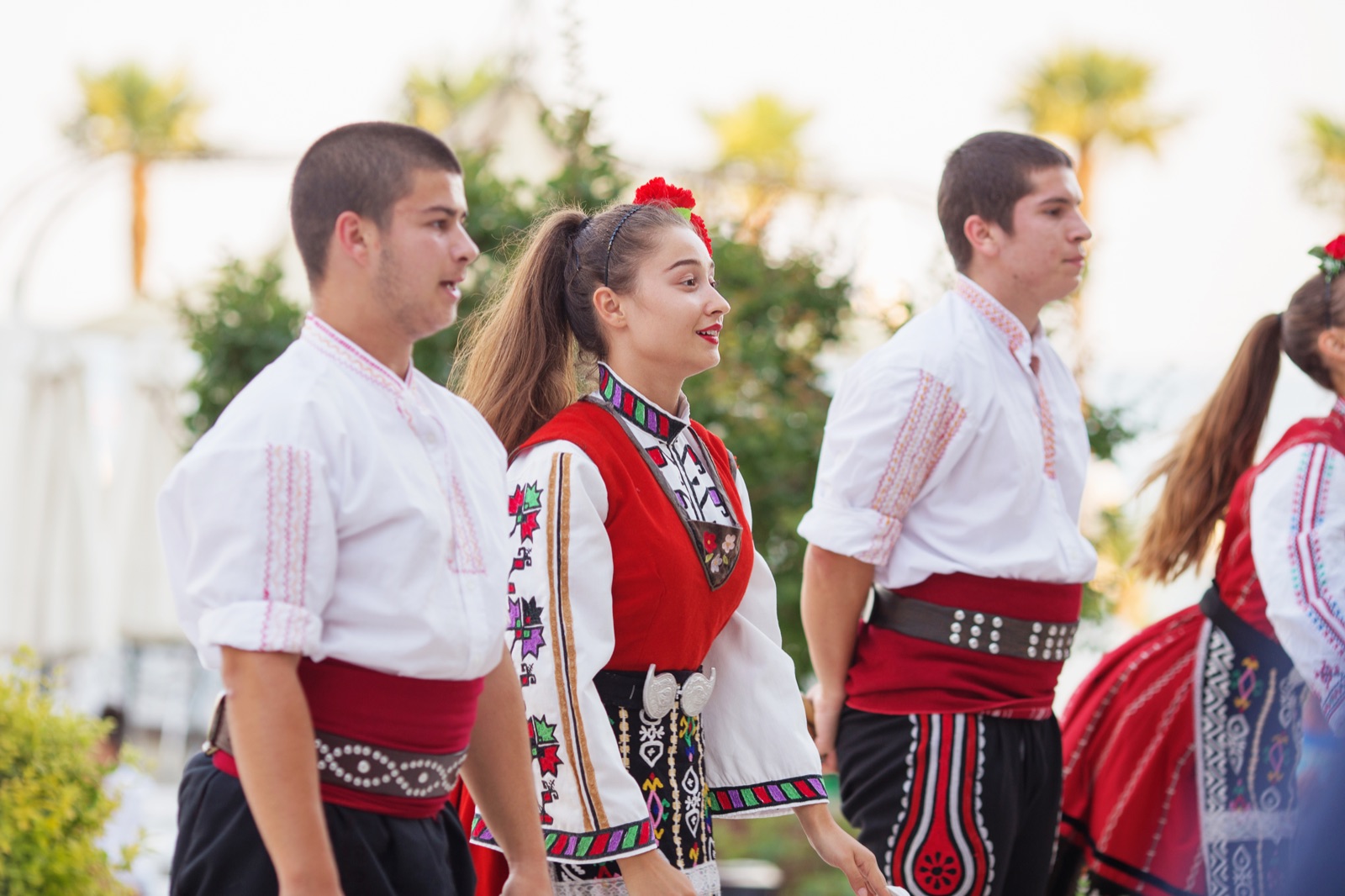
The Ukrainian Program with Dina Deyev runs from 4:30 to 5:30 PM. Earlier in the day you can enjoy the Children's Program at 10:00 AM, the opening at noon, the Russian Program at 12:30 PM, the National Czech & Slovak Museum & Library at 2:30 PM and the Serbian & Bulgarian Program at 3:00 PM, and afterwards stay for the Polish & Croatian Program at 5:30 PM. Times may change, so check the Schedule page. Bring the kids to the crafts zone, and take a walk through the outdoor vendor market, where you might spot embroidered shirts or folk art.
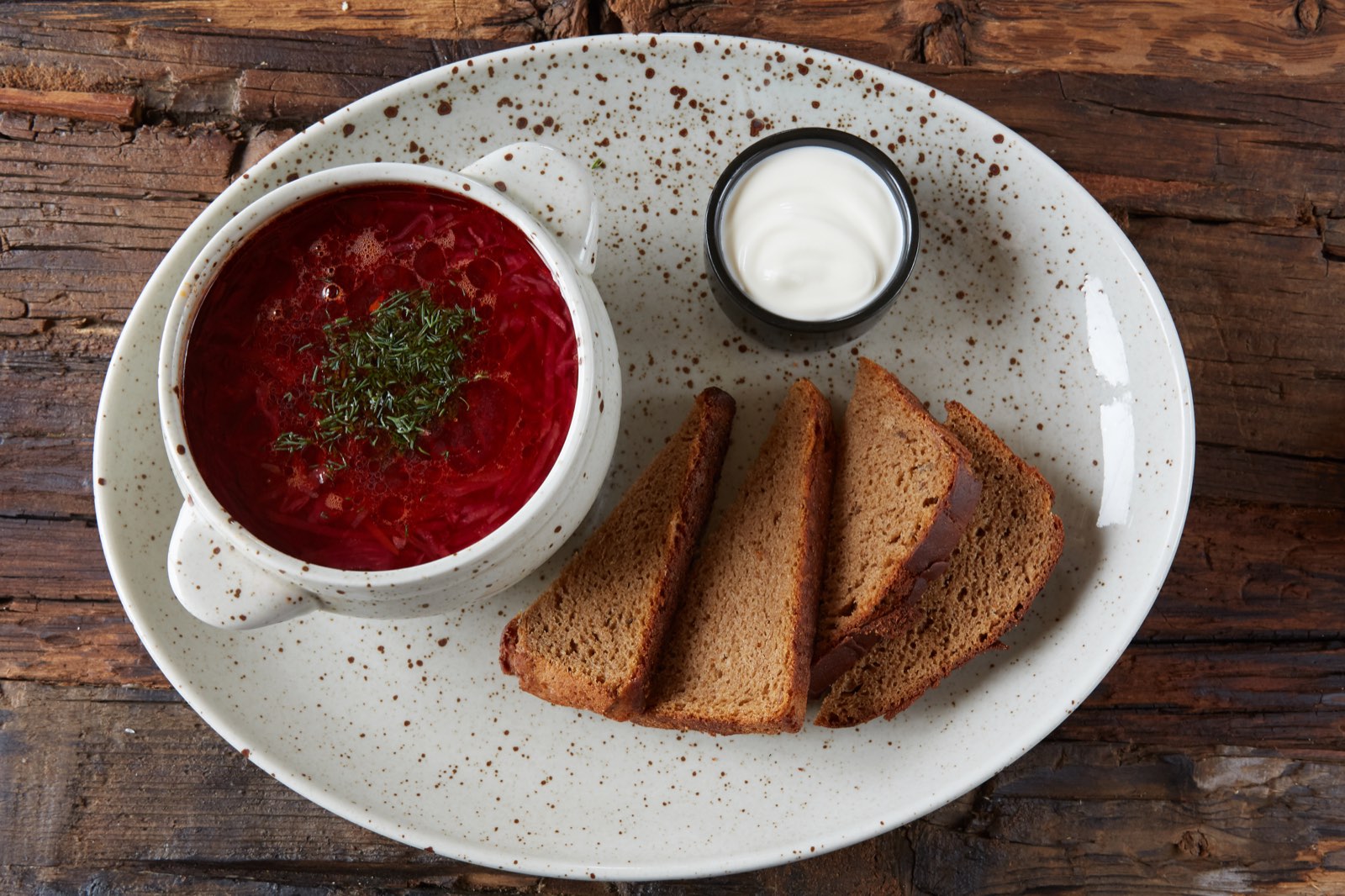
Before the Ukrainian songs begin, treat yourself to a bowl of borscht ($15), the beet soup Ukrainian families cherish, cooked fresh by the parish kitchen of Saint Nina Mission, with juicy grilled skewers ($25), Bulgarian stuffed peppers ($15), crepes ($15), bulochki with cabbage, farmer's cheese or cherries ($10) and house-made kvass ($10). Pre-order food online at slavicfoodfestival.com to skip the line, and if you'd like to help, the Volunteer page lists shifts, cooking and donations.
The old kobzars sang so that people would remember who they were. Come to Longwood, listen to the songs, and remember with us.