Our festival at Reiter Park falls on Saturday, February 27, 2027. Two days later, on the morning of March 1, millions of people in Bulgaria will wake up, greet each other with "Chestita Baba Marta!" and tie little red-and-white tassels around the wrists of their children, parents, friends and coworkers. Shop windows in Sofia will already be full of them. Bulgarian grandmothers in Chicago, Toronto and right here in Central Florida will be twisting yarn at their kitchen tables. If you visit the Slavic Food & Cultural Festival Orlando in Longwood that weekend, you may well spot a few of these threads on wrists in the crowd, worn a couple of days early by someone who simply could not wait.
The custom is called the martenitsa, and the character behind it is Baba Marta, Grandmother March. Together they make up one of the most charming spring traditions anywhere in Europe. Here is the story, how it is done, how it differs among neighbors, and how families in America keep it alive.
Who is Baba Marta?
In Bulgarian folklore, Baba Marta is a grumpy, unpredictable old woman who personifies the month of March. If you have ever lived through a European March, you understand why: one day the sun is warm and the almond trees bloom, the next a cold wind blows in and it snows again. In Bulgaria people explain it with Baba Marta's mood. When she smiles, the sun shines. When she is angry, she brings frost, wind and sleet.
There are many versions of her story. In one of the best known, Baba Marta has two brothers, Big Sechko and Little Sechko, who stand for January and February (sechko comes from the word for cutting, as in the cutting cold). In others she is a sister, a housewife or an old shepherdess, and the tales explain her temper by quarrels with her brothers or with a stubborn old shepherd who boasted too early that winter was over. The details change from village to village, but the lesson stays the same: do not anger Grandmother March, and do your best to make her smile.
That is where the martenitsa comes in. On the first day of her month, people wear red and white, the colors she loves, to cheer her up and to ask for health, strength and good fortune for the coming year. Traditionally, housewives would also clean the house thoroughly before March 1, because Baba Marta was said to dislike a messy home, and some hung a red cloth or red yarn outside a window or on a fruit tree to welcome her.
Many families also keep a little fortune-telling game connected with Grandmother March. In the first days of the month, each person secretly picks one day, their own "baba." If the weather on that day turns out sunny and mild, they can expect a good, cheerful year; if it is cold and stormy, well, they had better be patient with life, just as everyone is patient with Baba Marta. Children love it, and adults tend to play along with a smile, checking the forecast with more interest than usual.
The greeting "Chestita Baba Marta" means "Happy Grandma March," and you will hear it everywhere in Bulgaria on March 1: at home, at school, at work, on the radio and among friends meeting in the street.
What a martenitsa is and what it means
At its simplest, a martenitsa is two threads twisted together, one red and one white, usually wool or cotton yarn. It can be a plain bracelet tied around the wrist, a little tassel pinned to a coat, or a pair of small dolls attached to a cord. Children often wear several at once, given by parents, grandparents, teachers and friends, and it is not unusual to see a child with a wrist completely covered in red and white.
The two colors carry meanings that people explain in different ways. White is usually linked with purity, long life, snow and the old man's white beard; red with health, blood, life, the sun and the rosy cheeks of a healthy young woman. Together they are thought to protect the wearer from illness and misfortune during the changeable early-spring weeks. Many families still say the martenitsa is for "health and happiness," and that is how it is given: tied on with a hug and a wish.
The most famous form is a pair of little yarn dolls named Pizho and Penda. Pizho is the male figure, usually mostly white, and Penda is the female figure, usually mostly red, often with a little skirt. They are sold everywhere in Bulgaria in the days before March 1, and many children learn to make them at home or at school by wrapping yarn around a piece of cardboard, tying off a head, splitting the strands into arms and legs, and adding a skirt for Penda.
Today martenitsi come in every form imaginable. Alongside the classic yarn tassels and dolls you will find bracelets of red and white beads, brooches, earrings, keychains, little hearts and flowers, and even tiny martenitsi tied to car mirrors and office doors. In the weeks before March 1, street stalls appear in every Bulgarian town, and schools, community centers and charities make and sell them to raise money. Yet the simplest version, two twisted threads, is still the one people feel most deeply.
An important rule: a martenitsa is given, not bought for yourself. It is a gift of good wishes, and its value comes from the person who ties it on you. Grandmothers, in particular, take this seriously, and in many families the first martenitsa of the morning comes from the oldest woman in the house.
When to take it off: storks, swallows and blossoming trees
Once you put on a martenitsa, you do not just take it off when you get bored with it. Tradition says you wear it until you see the first sign of spring: a stork, a swallow, or a tree in blossom. Since storks return to Bulgaria from Africa in March, many people watch the sky and the rooftops for the first one. In some families the date is set differently, and people keep the martenitsa on until the end of March, or until a particular spring holiday.
When the moment comes, you take off your martenitsa and tie it to the branch of a blossoming tree, often a fruit tree, so that the tree will bear fruit and the good luck will carry on. In some regions people place it under a stone instead, and in some villages the kind of insect or creature found under that stone a few days later was said to predict the year's luck. By April the trees of Bulgarian parks and village gardens are hung with faded red-and-white threads, a quiet record of all the wishes made that spring.
Here in Florida, where trees blossom early and storks are not exactly common, families adapt. Some wait for the first blooming tree in their neighborhood, others for an azalea or citrus blossom, and some simply choose a sunny day near the end of March. The point is the same: a small, joyful act of welcoming spring and saying thank you.
For Bulgarian families in the United States, the martenitsa is often one of the first customs children learn about their heritage. Grandmothers in Bulgaria still mail them across the ocean in envelopes every February, so that grandchildren in Florida or Illinois will have one on March 1. Bulgarian Sunday schools and church communities make them with the children, and many parents send a handful to school with their kids to give to classmates and teachers, along with a short explanation. More than one American teacher has learned the words "Chestita Baba Marta" that way.
Legends behind the threads
Like many old customs, the martenitsa has a story about where it came from, and Bulgarians love to tell it. The most popular legend links it with the founding of the Bulgarian state in the seventh century and Khan Asparuh. According to the tale, Asparuh's sister Huba and brother Bayan were held captive, and when they managed to escape, they sent word to Asparuh by tying a white thread to the leg of a falcon. The bird was wounded on the way, and the thread arrived stained with blood, red and white together. In memory, the story goes, the people began wearing red and white threads.
Historians treat this as a legend rather than history, and folklorists point out that red-and-white threads to protect against illness and evil are very old indeed, probably older than the Bulgarian state, and connected with ancient ideas about welcoming spring and protecting people and animals at the turning of the seasons. In some places martenitsi were traditionally tied not only on people but also on animals, especially young lambs and calves, and on doors and fruit trees.
Whatever its origins, the martenitsa is today a symbol of Bulgarian identity loved by people of all ages, and something many Bulgarians abroad wear as a quiet sign of home.
Neighbors who share the custom: mărțișor, martinka and martis
Bulgaria is not alone in tying red and white on March 1. In 2017 UNESCO added "cultural practices associated to the 1st of March" to its list of the intangible cultural heritage of humanity, as a joint inscription by Bulgaria, North Macedonia, Moldova and Romania.
In Romania and Moldova, the custom is called mărțișor. It is a red-and-white string, often with a small trinket or charm attached, a flower, a ladybug, a four-leaf clover or a little heart. Traditionally mărțișoare are given especially to women and girls on March 1, though in some regions the custom is reversed and women give them to men. People wear them for a few days, a week or the whole month, depending on the family, and then, as in Bulgaria, often hang them on a tree.
In North Macedonia it is called martinka, and children tie it on their wrists for health. In Greece, the martis (from the Greek word for March) is a red-and-white bracelet worn by children from March 1 to protect them from the strong spring sun, then left on a branch for the swallows to carry to their nests. Since Greek performers are part of our festival's community too, you may find neighbors from Greek, Romanian and Moldovan families nodding in recognition when they see a martenitsa.
Further north, among East and West Slavs, March 1 does not carry this custom, but many Slavic peoples have their own ways of welcoming spring: Maslenitsa (the Butter Week before Lent) in Russia, Ukraine and Belarus, with pancakes and the burning of a straw figure; the drowning of the winter figure Marzanna in Poland; or the Czech and Slovak custom of carrying Morena out of the village. The themes are remarkably similar: send winter away and welcome the sun.
Making a martenitsa at home with your kids
One of the nicest things about this tradition is how easy it is to share with children. You need only red and white yarn, a pair of scissors and a little patience. Many families in America turn it into an evening activity in late February.
For a simple bracelet, cut a piece of red yarn and a piece of white yarn about twice the length of the child's wrist. Knot them together at one end, then twist them tightly, either by hand or by having one person hold the knot while the other twists. When the strands are wound, let them twist back on themselves into a cord, tie it around the wrist with a double knot and trim the ends. That is it.
For Pizho and Penda, wrap white yarn about thirty times around a piece of cardboard four or five inches long, slide it off, and tie a thread near the top to form a head. Separate a few strands on each side for arms and tie them at the wrists, then tie a waist and split the remaining strands into two legs. Make a second doll in red, give her a fuller skirt by leaving the strands below the waist untied, and connect the two with a twisted red-and-white cord. Children usually love naming them, and many end up giving them to a grandparent or teacher.
If you are coming to the festival on February 27, bring the kids to the crafts zone for activities through the day, and then try making martenitsi together at home that weekend so they are ready on Monday, March 1. It is a lovely way to stretch the festival feeling into the week, and to explain where Bulgaria is on the map.
Bulgarian flavors and music at the festival
The martenitsa is only one of many things Bulgarian families bring to Central Florida, and on festival day you can enjoy several others.
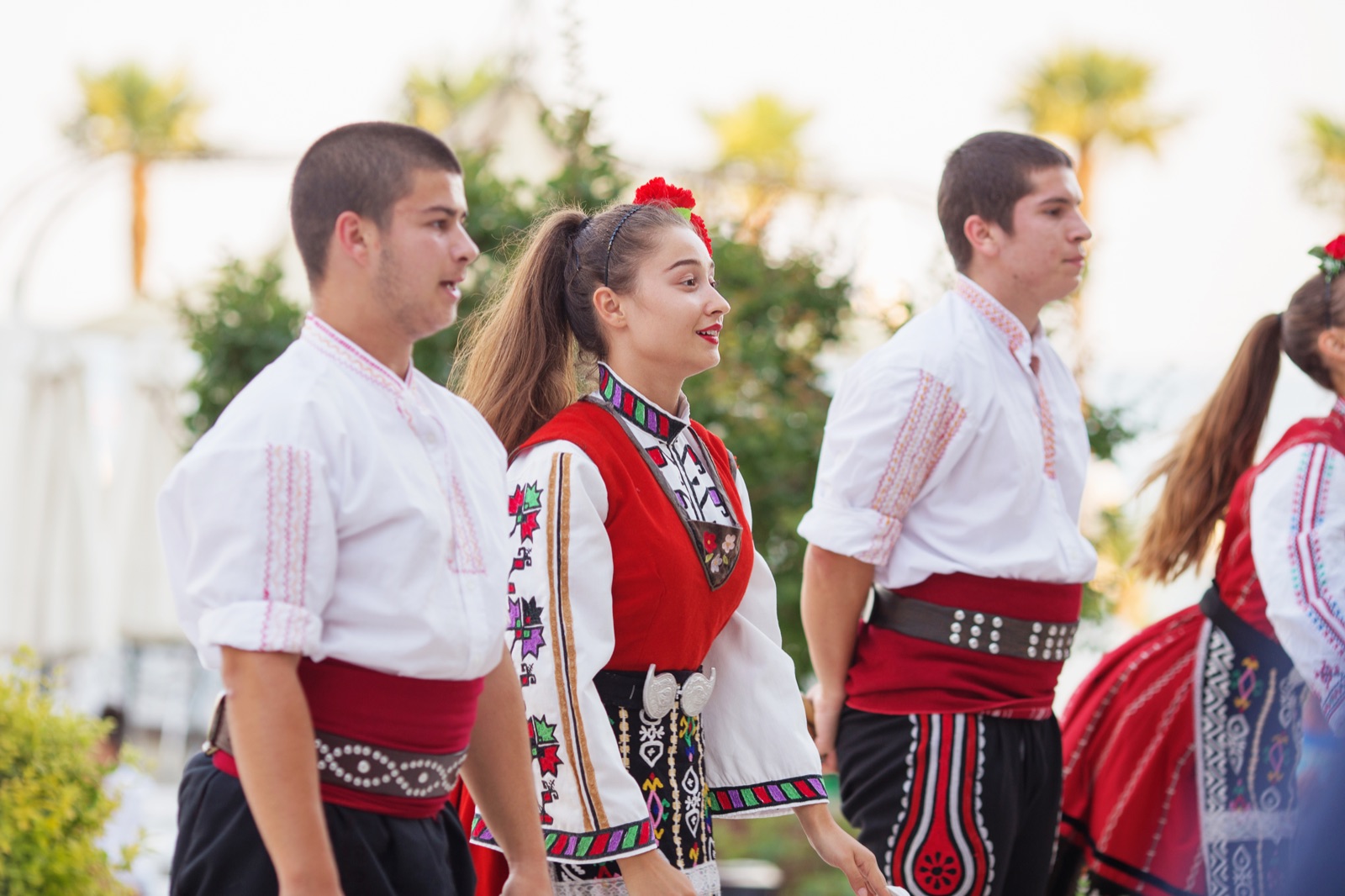
At 3:00 PM the main stage turns to the Serbian & Bulgarian Program, featuring the Serbian Crown Folklore Group. Balkan music, with its irregular rhythms and lively line dances, is a highlight of the afternoon for many guests, and it is hard to stand still when a horo or kolo starts (the horo is the Bulgarian circle or line dance, a close relative of the Serbian kolo). If a line of dancers ever forms near you, watch the feet for a minute and then join at the end. Nobody minds a beginner.
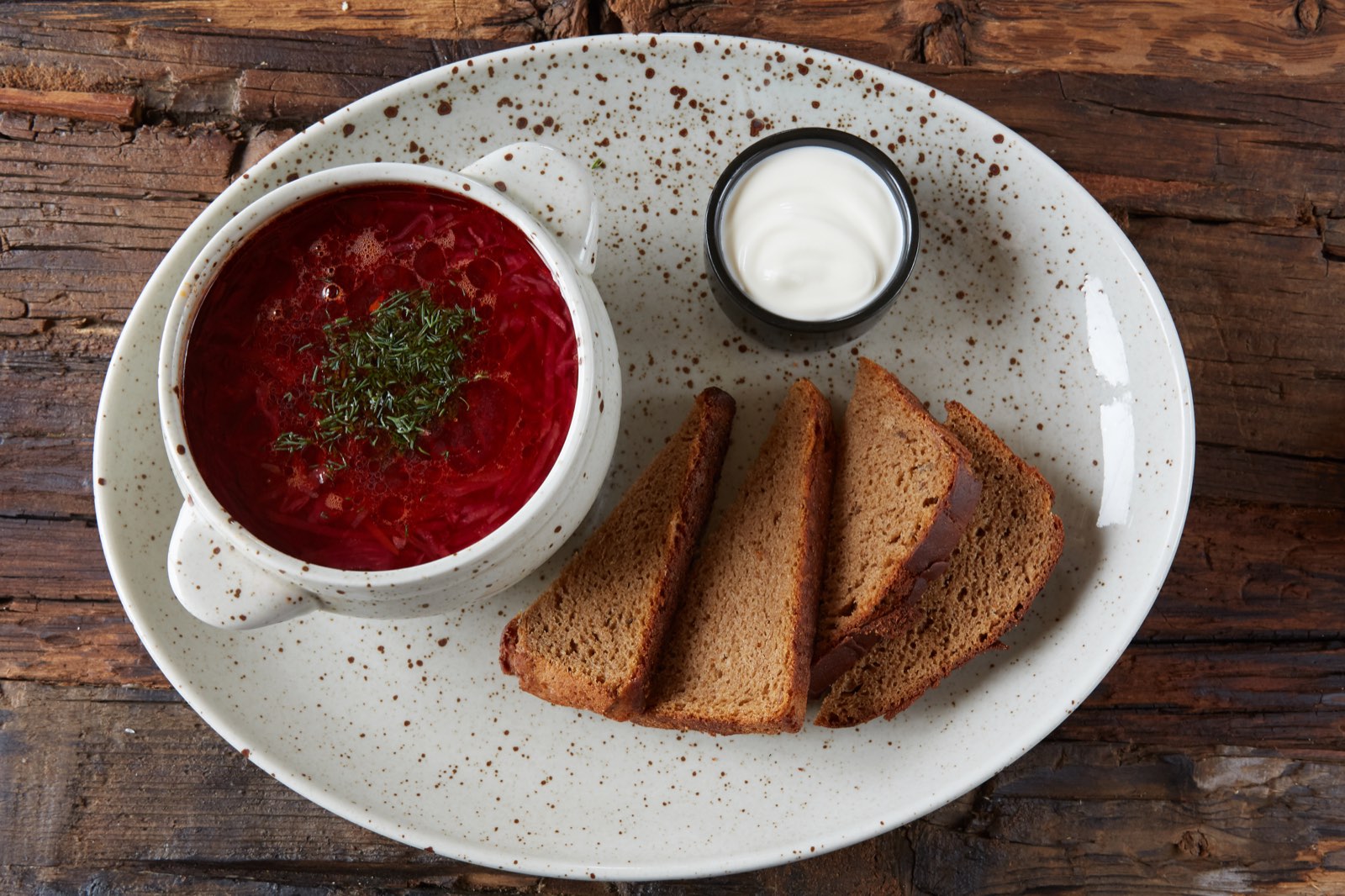
On the menu, look for the Bulgarian stuffed peppers ($15), cooked fresh by the parish kitchen of Saint Nina Mission. Peppers filled with rice and meat or vegetables, then baked or simmered until tender, are a beloved home dish across Bulgaria and the Balkans, and every family has its own version. Pair them with a bowl of borscht ($15), juicy grilled skewers ($25) or a sweet crepe ($15), and finish with a bulochka ($10), a soft bun with cabbage, farmer's cheese or cherries. To wash it all down, there is house-made kvass ($10) and samovar tea. If you want to save time, the Pre-order Food page at slavicfoodfestival.com lets you order ahead and skip the line.
Afterwards, take a walk through the outdoor vendor market. Booths change from year to year, and you might spot folk crafts, embroidery or gifts from different Slavic and Balkan countries. If you do find a martenitsa, remember the rule: buy it for someone else.
Come welcome spring with us in Longwood
The Slavic Food & Cultural Festival Orlando takes place on Saturday, February 27, 2027, from 10 AM to 8 PM at Reiter Park, 311 W Warren Ave, Longwood, FL 32750, in Seminole County just north of Orlando. Admission is free for all ages, no tickets needed, and the festival happens rain or shine. Cash and cards are accepted at the food stands and most vendor booths. Pets are not allowed, though service animals are welcome.
The day starts with the Children's Program at 10:00 AM, followed by the opening at noon, the Russian Program at 12:30 PM, the National Czech & Slovak Museum & Library at 2:30 PM, the Serbian & Bulgarian Program at 3:00 PM, the Ukrainian Program at 4:30 PM and the Polish & Croatian Program at 5:30 PM. Times may change, so check the Schedule page before you come.
If you would like to be part of the team, the Volunteer page lists ways to help, from shifts on the day to cooking and donations. Bulgarian singers, musicians or dance groups who would like to perform can apply on the Artists page, and local businesses can apply for a booth on the Vendors page.
So come to Longwood on Saturday, two days before Grandmother March arrives. Eat, dance, listen and meet your neighbors. And on Monday morning, wherever you are, tie a red-and-white thread on someone you love and say it with us: Chestita Baba Marta!