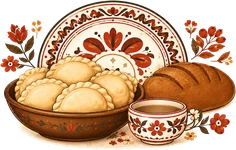
There is a sound every Slavic grandmother knows: the soft slap of dough on a floured table, followed by a dozen hands reaching for the rolling pin at once. Somebody is cutting circles with an upside-down glass. Somebody else is spooning out filling. A child is sneaking cherries from the bowl. In an hour there will be hundreds of little dumplings lined up in rows on every flat surface in the kitchen. As the Slavic Food & Cultural Festival gets ready to welcome Central Florida to Reiter Park in Longwood on Saturday, February 27, 2027, it seems like the perfect moment to talk about the most beloved family of foods in the Slavic world: the dumplings.
Ask ten people from Eastern Europe what to call them and you may get ten answers. Poles say pierogi. Ukrainians say varenyky, or in some western regions and in much of the diaspora, pyrohy. Russians make both vareniki and pelmeni and will happily explain, at length, that they are not the same thing. Slovaks have pirohy, Belarusians have kalduny, and Americans in Pittsburgh, Cleveland or Chicago simply say "pierogies" and mean all of the above. Let us untangle the family tree.
Same Dough, Different Personalities
At the simplest level, all of these are pockets of unleavened dough wrapped around a filling and boiled. The dough is usually just flour, water or milk, sometimes an egg, a pinch of salt and occasionally a spoonful of sour cream or oil for tenderness. The differences come in the shape, the size, the filling and the attitude.
Pierogi and varenyky are close cousins, so close that many cooks treat the words as two languages naming the same dish. Both are usually half-moons, made by folding a circle of dough over a generous spoonful of filling and pinching the edges shut, sometimes with a decorative crimped edge. The fillings are often already cooked: mashed potatoes, cabbage, mushrooms, farmer's cheese, or fruit. They are boiled until they float, then served with melted butter, fried onions, sour cream or, for sweet ones, sugar and cream. Leftovers are fried in a pan the next morning until golden, and many people secretly prefer them that way.
The word varenyky comes from the Ukrainian verb meaning "to boil," so the name literally describes how they are cooked. Pierogi traces back to an old Slavic root connected with feasting, the same root that gives Russian its words for a feast, pir, and a baked pie, pirog.
Pelmeni are a different creature. They are small, often no bigger than a walnut, and usually filled with raw minced meat, traditionally a mix of beef and pork, sometimes with lamb, venison or elk in Siberia, plus onion, salt and pepper. The meat cooks inside the dumpling as it boils, so the filling stays juicy. Pelmeni are typically folded into a half-moon and then the two corners are pinched together, giving them a round shape that people often compare to a little ear. That comparison is old: the name is generally traced to languages of the Komi and Udmurt peoples of the Ural region, where a similar word means "ear of bread." Pelmeni are served in their own broth, with sour cream, with butter, or with a splash of vinegar and black pepper, depending on the family and the region.
A Tour of the Fillings
If dough is the body of a dumpling, the filling is its soul, and every region and household has its favorites.
In Poland, the most famous are pierogi ruskie, filled with potato, farmer's cheese and fried onion. Despite how it sounds to modern ears, the name does not mean "Russian." It refers to historic Red Ruthenia, a region that today lies largely in western Ukraine, where the recipe is believed to have come from. Other Polish classics include sauerkraut with wild mushrooms, a must on Christmas Eve, meat pierogi made with leftover roast, and in summer, sweet pierogi stuffed with blueberries or strawberries and served with sweetened sour cream.
In Ukraine, varenyky with potato, with cabbage, or with farmer's cheese are everyday comfort food. But the dish that makes Ukrainians close their eyes and smile is varenyky with sour cherries, served with sour cream and a drizzle of the dark red juice that leaks out while they boil. Cooks often toss the pitted cherries with a little sugar and let them drain first, so the juice doesn't burst the dough. There are also varenyky with mashed beans, with buckwheat, with poppy seed and with liver, and in the Carpathian region, with bryndza, a tangy sheep cheese.
Ukrainians love varenyky so much that they appear all over the culture. In Nikolai Gogol's story "The Night Before Christmas," a character named Patsiuk sits with his mouth open while varenyky jump by themselves out of a bowl, flip through the sour cream and fly straight into his mouth. The city of Cherkasy put up a monument to varenyky, and across the ocean the village of Glendon, Alberta, home to many Ukrainian-Canadian families, built a giant pyrohy on a fork that has become a beloved roadside attraction.
In Slovakia, bryndzové pirohy, filled with potato and sheep cheese and topped with bacon, sit next to the national dish of bryndzové halušky. In Belarus and Lithuania, kalduny are popular, often filled with meat or mushrooms, and some versions use a dough made from grated potato. Russian vareniki follow many of the same patterns as their Ukrainian cousins, with potato, cabbage, farmer's cheese and cherries all common.
Pelmeni fillings stay closer to meat, though modern cooks make them with fish, mushrooms or even cabbage. In Siberia, fish pelmeni made with salmon or pike are a regional specialty.
Siberian Pelmeni and the Natural Freezer
The pelmeni story is inseparable from winter. In Siberia and the Urals, temperatures can sit far below zero for months, and that cold turned pelmeni into the perfect food for long journeys and hard seasons.
Families would make pelmeni by the hundreds or even thousands in late autumn, once the frost had settled in. The finished dumplings were laid out on boards or trays and carried outside, where they froze solid in minutes. Then they were poured into cloth sacks or wooden boxes and kept in an unheated storeroom or simply in the snow until spring. A traveler heading out by sleigh across the frozen country could take a sack of frozen pelmeni, and at every stop all he needed was a pot of boiling water. A hot, meaty meal was ready in a few minutes. Hunters, coachmen and traders all relied on them.
That habit has never really gone away. Ask anyone who grew up in Russia and they will probably remember a freezer full of homemade pelmeni, and supermarket freezers from Moscow to Brooklyn to Orlando are full of the store-bought kind. Some people even swear the dumplings taste better after a spell in the freezer. Historians debate exactly how pelmeni arrived in Siberia, and many believe they are related to dumplings from China and Central Asia that traveled along trade routes, while others see them as a local invention of the Ural peoples. Either way, the dumpling made itself completely at home in the snow.
Pinching Parties: Many Hands, One Table
No one makes pelmeni alone. Well, some brave people do, but the tradition is a group activity. In Russian there is a special word for it: you don't just "cook" pelmeni, you "sculpt" them, and families gather to sculpt pelmeni together the way American families gather to decorate cookies.
It works like an assembly line. One person mixes and kneads the dough. Another rolls it thin. Someone cuts circles with a glass or uses a metal pelmeni mold with dozens of honeycomb holes. Others fill and pinch. Children are given scraps of dough and inevitably invent their own odd shapes. Grandparents tell stories, and the conversation flows as fast as the work.
There are games built into the tradition too. In some Russian families, one pelmen (that is the singular) is filled with something surprising, like a coin, a peppercorn or a little ball of dough, and whoever finds it is promised good luck, or at least a good laugh. Ukrainian families have similar customs with varenyky on holidays like Christmas Eve and Malanka, the New Year's Eve celebration, when varenyky filled with surprises such as salt, pepper, a button or a coin are used for playful fortune telling.
Making varenyky together is also tied to the great holidays. On Ukrainian Christmas Eve, Sviat Vechir, families traditionally serve twelve meatless dishes, and varenyky with potato or cabbage are almost always among them. Polish families serve sauerkraut and mushroom pierogi at the Wigilia supper on Christmas Eve, also a meatless meal. Preparing all that food takes days, and it is done together, which is half the point.
Kraków's Pierogi Festival and Pittsburgh's Racing Dumplings
Poles love their pierogi so much that they hold festivals in their honor. The best known is the Pierogi Festival in Kraków, held in summer since the early 2000s, where cooks compete for prizes and visitors sample everything from classic ruskie to unusual modern fillings. Smaller pierogi celebrations take place in towns all over Poland, usually alongside folk music and dancing.
America has caught the same enthusiasm. In western Pennsylvania, where generations of Polish, Ukrainian, Slovak and Rusyn immigrants worked in the steel mills and coal mines, pierogi became a regional identity. Pittsburgh's baseball team has a famous "pierogi race" during home games, with people in giant dumpling costumes sprinting around the field while the crowd cheers. Pierogi festivals and pierogi fests now pop up in Pennsylvania, Ohio, New York, Michigan, Illinois and beyond, drawing families who may not speak a word of Polish but know exactly how they like their onions fried.
The Church Kitchen Tradition in America
If there is one place where the Slavic dumpling has been saved in America, it is the church basement. For generations, Ukrainian, Polish, Slovak, Rusyn, Russian and other Slavic parishes in the United States have funded their buildings, schools and charity work by making and selling pierogi and varenyky.
The scene is wonderfully similar from parish to parish. Early in the morning, usually on a weekday, a group of volunteers, often retired women with decades of experience, sometimes joined by their husbands, grandchildren and newcomers, gathers in the parish hall. Potatoes have been boiled and mashed the day before. Cabbage has been chopped and stewed. The dough is mixed in huge batches. Then everyone takes a seat at long tables and starts pinching. By noon they might have made hundreds of dozens. The dumplings are boiled or frozen, packed into bags, and sold by the dozen to a line of customers that sometimes stretches out the door.
These pierogi groups are more than fundraisers. They are where young parishioners learn family recipes, where newcomers who just arrived from Europe find friends, and where elders feel needed and valued. Ask any longtime member and you will hear stories about weddings, funerals, baptisms and holidays, all told over a table dusted with flour. Many parishes keep their recipes in handwritten notebooks passed from one generation of volunteers to the next.
That spirit is the same spirit that powers the Slavic Food & Cultural Festival. Hosted by Saint Nina Mission, the festival has been running in Central Florida for more than ten years, and all the food is cooked fresh on-site by the parish kitchen, with volunteers chopping, stirring, grilling and serving from morning until night.
What to Eat at Reiter Park on February 27
We should be honest with dumpling lovers: pierogi, varenyky and pelmeni are not on this year's festival menu. But if you love what goes inside them, you will find plenty of friends. The parish kitchen will be serving bulochki, soft baked buns filled with cabbage, farmer's cheese or cherries, for $10. Those are the very same fillings that grandmothers tuck into varenyky, just wrapped in a fluffy yeast dough instead of boiled noodle dough. Try one of each and you will understand why these three fillings show up in every Slavic kitchen.
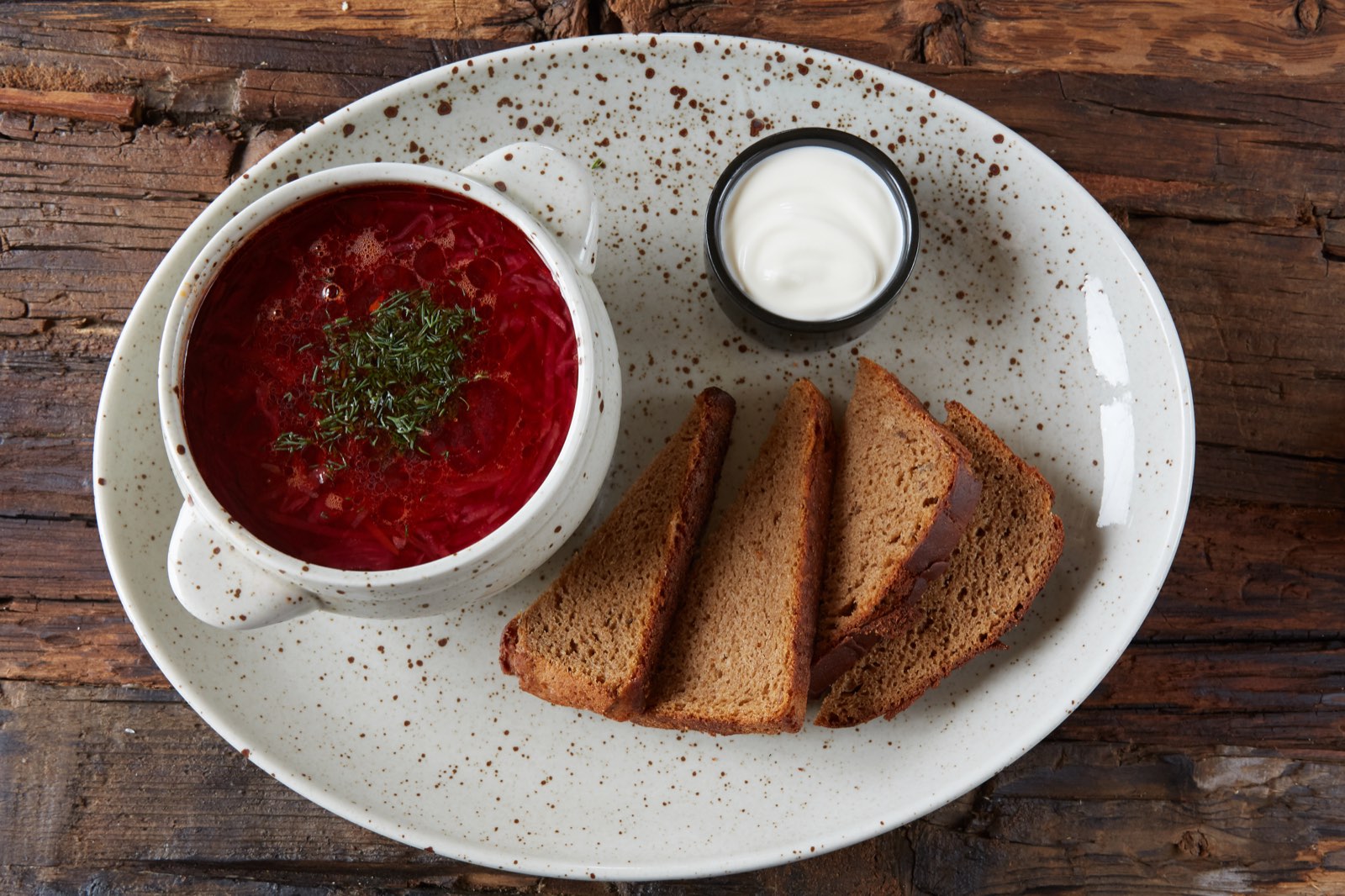
Beyond the buns, there is ruby-red borscht for $15, Bulgarian stuffed peppers for $15, crepes for $15, juicy grilled shashlik skewers for $25 and house-made kvass, the tangy bread drink, for $10. The FAQ also mentions samovar tea, soft drinks and vegetarian options. To skip the line, use the Pre-order Food page on slavicfoodfestival.com before the big day.
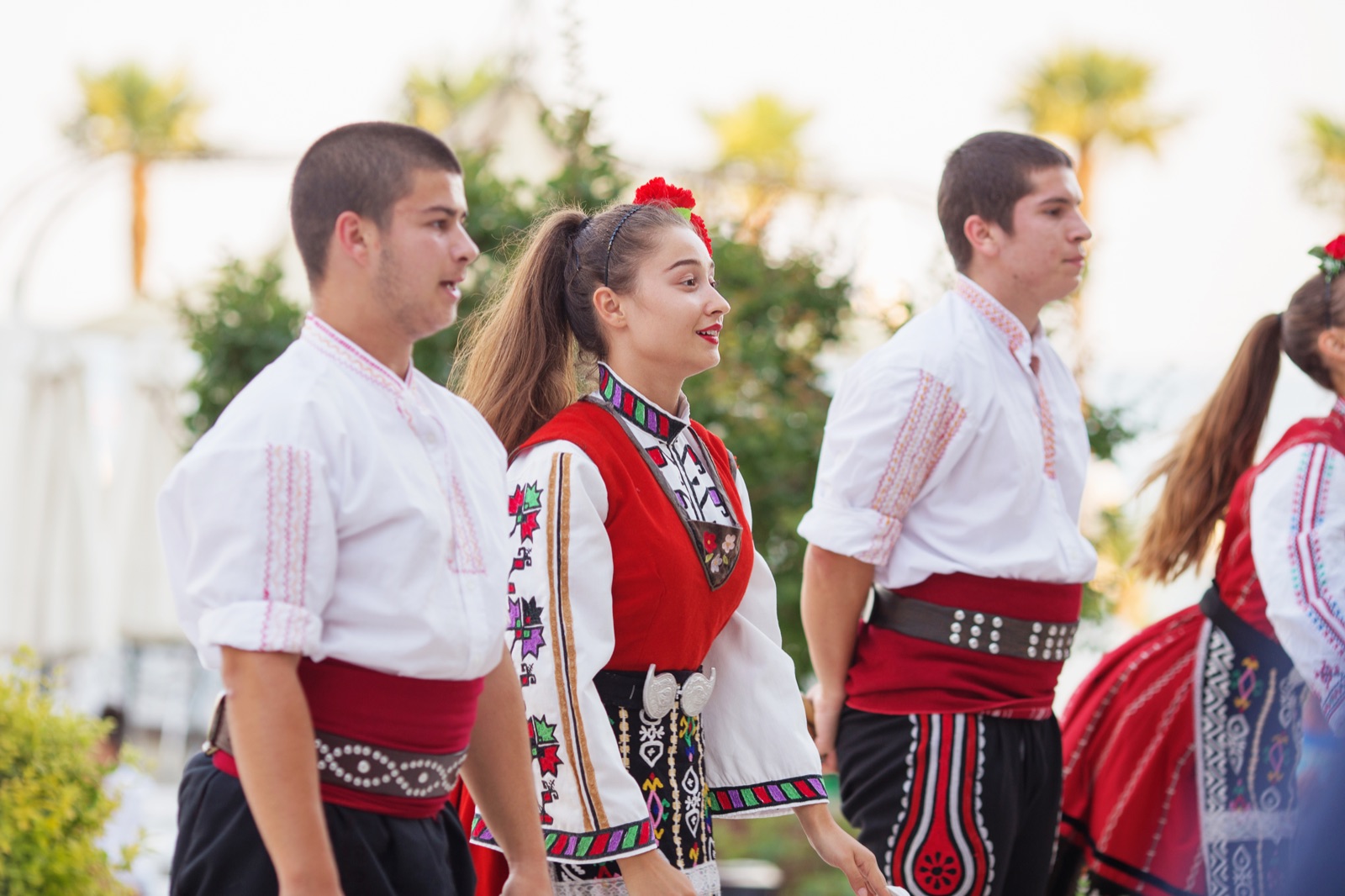
Between bites, the main stage will be busy from 10 AM with the Children's Program, followed by the Opening of the Festival from 12:00 to 12:30. The Russian Program runs from 12:30 to 2:30, the Serbian & Bulgarian Program from 3:00 to 4:00, the Ukrainian Program from 4:30 to 5:30 and the Polish & Croatian Program from 5:30 to 6:30, which together cover nearly every corner of the dumpling map. Check the Schedule page for updates, since times may still change.
Families will find a kids' zone with crafts and activities, and grown-ups can wander the outdoor vendor market. You might spot kitchen goods, folk crafts or treats among the booths, so ask the vendors what they bring from home.
Join the Table
If reading about pinching parties makes you want to roll up your sleeves, the festival would love your help. Visit the Volunteer page to sign up for shifts, help with cooking, or donate ingredients and supplies. Working in a festival kitchen alongside people who learned their recipes from their grandmothers is one of the best ways to learn, and it is exactly how these traditions have always survived.
The Slavic Food & Cultural Festival Orlando takes place on Saturday, February 27, 2027, from 10 AM to 8 PM at Reiter Park, 311 W Warren Ave, Longwood, FL 32750, in Seminole County just north of Orlando. Admission is free for all ages, no tickets are needed, and the festival goes on rain or shine. Cash and cards are accepted at the food stands and most vendor booths. Pets are not allowed, but service animals are welcome.
Over 2,000 guests are expected, so come hungry, bring the whole family, and maybe go home inspired to host a dumpling-pinching party of your own. All you need is flour, a good filling, a glass for cutting circles and a table full of people you love.