Imagine a whitewashed cottage in the Polish countryside on the eve of Easter. The walls have just been freshly painted, the floor scrubbed, the windows polished. And now comes the best part: a young woman takes a pair of heavy shears, the same kind her father uses to shear the sheep, and begins cutting brightly colored paper into roosters, flowers, stars and trees. One by one, the paper cuts are pasted onto the walls and ceiling beams, and in an afternoon the plain room has turned into a celebration. These are wycinanki (pronounced vee-chee-NAHN-kee, Polish folk paper cutouts), and they are just one part of a folk art tradition that is bursting with color. As the Slavic Food & Cultural Festival prepares to welcome guests to Reiter Park in Longwood on Saturday, February 27, 2027, with a Polish & Croatian Program on the main stage, it is the perfect time to explore it.
Polish folk art grew out of village life, where every object, from a wooden spoon to a holiday costume, could be decorated with love and imagination. Each region of Poland developed its own style, and today experts can often tell where a paper cut, an embroidered vest or a painted egg comes from just by looking at it. Let us take a tour.
Wycinanki: Art Cut With Sheep Shears
Paper cutting spread through the Polish countryside in the nineteenth century, as colored paper became cheaper and easier to buy at markets and fairs. Before that, villagers had decorated their homes with things like painted patterns, embroidered cloth and greenery. Once paper arrived, it opened up a whole new world.
The most remarkable thing about traditional wycinanki is the tool. Village artists, most of them women, did not use small craft scissors or knives. They used the large shears that were used for shearing sheep. It seems impossible that such delicate, intricate designs could come from such a heavy tool, but in skilled hands the shears could produce lacy patterns with astonishing precision. Many artists worked without drawing anything first, cutting freehand from memory and imagination.
Wycinanki were made mostly before the big holidays, especially Easter and Christmas, when homes were cleaned and walls whitewashed. The paper cuts were pasted onto walls, ceiling beams, shelves and cupboards, and around the holy pictures that hung in every home. Since the walls were usually repainted each year, the old cuts were replaced with new ones, and every season brought fresh designs. Women competed in a friendly way to make the most beautiful cuts, and a talented paper cutter could become famous in her village.
Over time, wycinanki also became popular beyond the countryside. In the twentieth century they were exhibited in museums, sold as souvenirs and displayed in homes around the world, becoming one of the best-known symbols of Polish folk art. Many Polish-American families have a framed wycinanka hanging on a wall, often a gift from a relative or a souvenir from a trip to Poland.
Kurpie and Łowicz: Two Great Styles
While paper cutting was practiced in many regions of Poland, two styles stand out above all the others: Kurpie and Łowicz.
The Kurpie region lies in the north-east of the Mazovia region, in an area once covered by deep forest called the Green Forest. Kurpie wycinanki are usually cut from a single sheet of paper in one color, folded once or several times so that the design comes out perfectly symmetrical. The most famous Kurpie design is the leluja, a stylized lily that often looks like a tree, with branches, leaves and birds rising symmetrically from a central stem. Another favorite is the gwiazda, or star, a round design made by folding the paper many times, producing a lacy circle that resembles a snowflake. Kurpie paper cuts have a striking, graphic elegance, often in a single bold color such as green, red or black against a white wall.
Łowicz, a town and region in central Poland, developed a very different style. Łowicz wycinanki are multi-layered and multicolored. The artist cuts a base shape, often in a dark color, and then glues smaller pieces of different colored paper on top, building up layers of detail. The result is lush and vivid, with flowers, birds and especially roosters in brilliant colors. Łowicz artists also made two characteristic forms: the gwiazda, a round composition, and the kodra, a rectangular strip often showing scenes of village life, such as weddings, Easter processions, harvests and dancing couples. A Łowicz kodra can be like a little painting made of paper, full of people in striped costumes going about their lives.
Other regions had their own styles too. Paper cuts from the Opoczno area, the Lublin region and Podlasie in the east each have their own shapes and color choices. In every case, the designs drew on the world around the artists: the birds in the trees, the flowers in the garden, the roosters in the yard and the stars in the winter sky.
Pająki: Spider Chandeliers of Straw and Paper
If you walked into a Polish village home at Christmas a century ago, you might have looked up and seen a remarkable decoration hanging from the ceiling beam above the table: a pająk. The word means "spider," and these hanging ornaments were named for the way they hung down from the ceiling, with long strands and geometric shapes radiating out like the legs of a spider or the threads of a web.
Pająki were made from simple materials found around the house: straw, cut into short pieces and threaded onto string, along with colored paper, tissue paper flowers, feathers, beads and sometimes dried peas or beans. The straw pieces were linked together into geometric shapes like diamonds, crowns and stars, which were then hung in tiers from a central point. The more elaborate pająki could reach a meter or more in length and took many hours to make. They gently turned and swayed with every movement of air in the room.
Pająki were traditionally made and hung for Christmas and Easter, and sometimes for weddings, and they were believed to bring prosperity and good fortune to the household. The straw itself, a product of the harvest, symbolized abundance. In the Kurpie region, pająki were often strongly geometric, while in the Łowicz region they were covered with colorful paper flowers. Similar hanging straw ornaments are found among Poland's neighbors, such as the Lithuanian sodai and the Finnish himmeli, showing how ideas traveled across northern and central Europe.
After falling out of fashion for much of the twentieth century, pająki are enjoying a lively revival. Designers, artists and craft lovers in Poland and abroad have rediscovered them, making both traditional pająki and modern versions in bright colors. Workshops for making pająki are popular in Polish cultural centers, and you might even see them in stylish homes and cafes.
Łowicz Stripes: A Costume That Glows
If there is one image that represents Polish folk costume for many people around the world, it is the Łowicz costume with its brilliant stripes. The fabric is called pasiak, meaning "striped cloth," a heavy wool woven on home looms in vertical stripes of many colors. Women wore it as full skirts and aprons, and men wore it as trousers. The effect, especially when a whole group of people in costume walks together, is dazzling.
The colors of Łowicz stripes changed over time, following village fashions. In the nineteenth century, deep reds were popular. Later, orange became the dominant color, giving the costume the bright, sunny glow that most people associate with it today, with stripes of green, blue, purple, yellow and black running through it. Different generations and families had their own preferences, and the exact combination of colors could say a great deal about when and where a costume was made.
A woman's Łowicz costume typically included a striped wool skirt and apron, a white linen blouse with embroidered collar and cuffs, and a black velvet bodice richly embroidered with flowers and sometimes beads. Strings of red coral beads around the neck were a sign of wealth and status, and a colorful scarf or headdress completed the outfit. Men wore striped trousers tucked into tall black boots, a white shirt, a vest and a long coat, along with a black hat. Many of these costumes took months to make, and they were treasured and passed down through families.
The Łowicz region also became famous for its floral embroidery, which appears on blouses, vests and tablecloths in lush, colorful designs of roses, tulips and other flowers. Together with the wycinanki, painted furniture and decorated pottery, it gave the Łowicz region a reputation as one of the most colorful corners of Polish folk culture.
Corpus Christi in Łowicz: A Procession of Color
Polish folk art is closely linked to the church calendar, and nowhere is this more visible than at the feast of Corpus Christi, called Boże Ciało in Polish. Corpus Christi falls on a Thursday in late spring or early summer, sixty days after Easter, and it is a public holiday in Poland. In parishes across the country, the faithful walk in procession through the streets behind the Blessed Sacrament, stopping at four outdoor altars decorated with flowers and birch branches. Little girls in white dresses scatter flower petals along the way.
In Łowicz, the procession is famous throughout Poland. Many participants wear their traditional striped costumes, and the streets fill with a sea of orange, red and green. Families who keep traditional costumes bring them out for the occasion, and it is common to see several generations walking together, from grandmothers in heirloom costumes to toddlers in tiny striped skirts. Visitors come from all over Poland and beyond to watch.
Another Polish Corpus Christi custom has received international recognition. In villages such as Spycimierz in central Poland, residents create long carpets of flowers along the procession route, laying out petals and greenery in patterns and images. In 2021, UNESCO added the tradition of flower carpets for Corpus Christi processions in Poland to its Representative List of the Intangible Cultural Heritage of Humanity. Poland also has the Kraków nativity scene tradition, the szopki, on the same list since 2018, another sign of how much Polish folk art is valued worldwide.
From Zalipie to Croatian Gingerbread Hearts
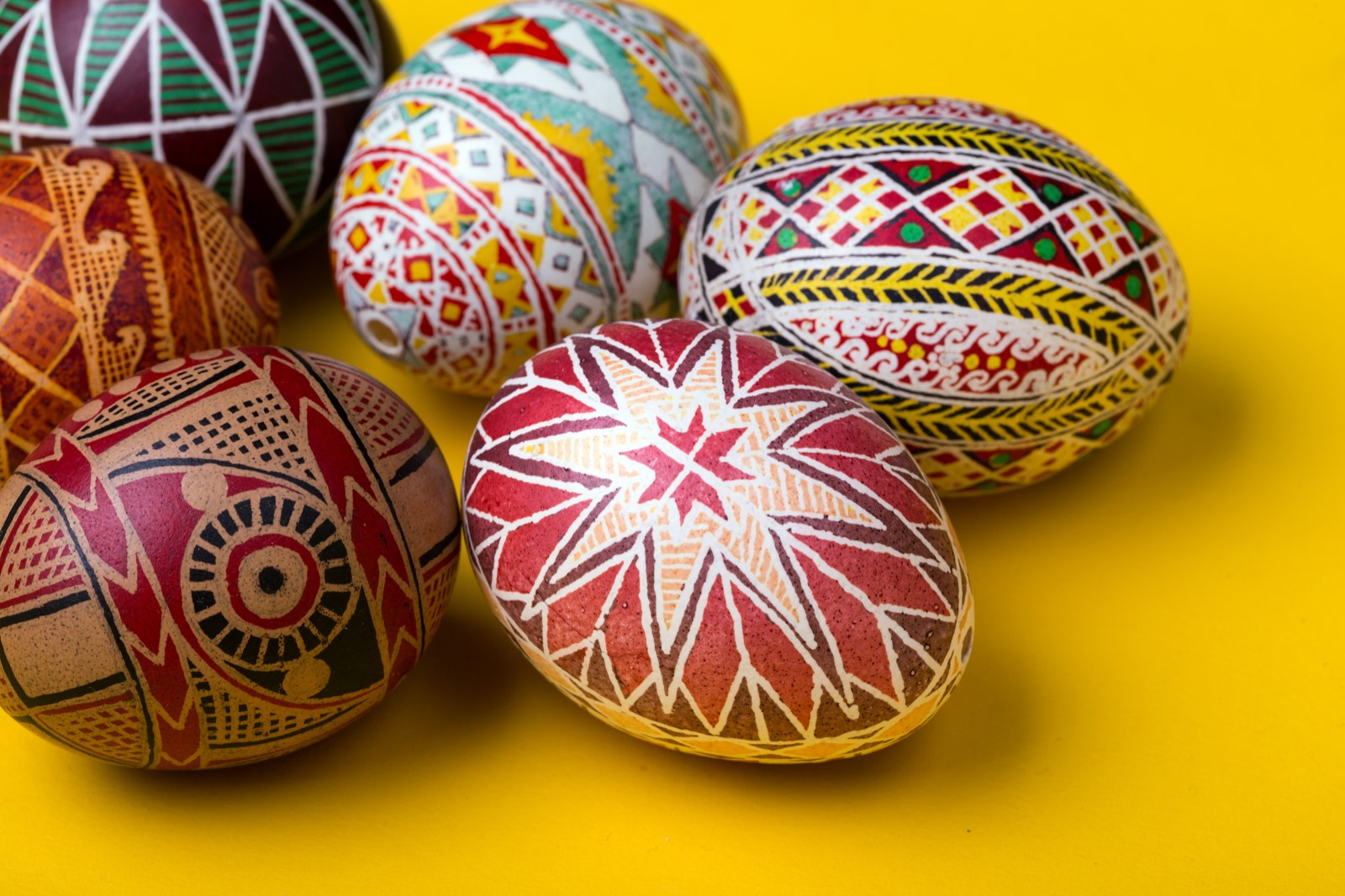
Polish folk art did not stop with paper and stripes. In the village of Zalipie in southern Poland, women have painted the walls of their cottages, inside and out, with colorful flowers, a tradition that has continued for generations and draws visitors from around the world. Polish Easter eggs, called pisanki, are decorated with wax-resist dyeing or with patterns scratched into the dyed shell. Wooden carvings, painted glass, embroidered vests and decorated pottery from different regions fill Polish museums and family homes alike.
Since the festival pairs Polish and Croatian traditions on the same stage, it is worth mentioning that Croatia has its own wonderful folk art. In northern Croatia, bakers make licitar hearts: brightly painted red gingerbread hearts decorated with icing, flowers and small mirrors, traditionally given as gifts of love and friendship at fairs and festivals. The gingerbread craft of northern Croatia was added to the UNESCO Representative List in 2010. Croatian lace from Lepoglava, the island of Pag and the island of Hvar, where lace is made from agave fibers, was recognized by UNESCO in 2009. Both Polish and Croatian folk art share a love of red, of flowers and of making everyday life beautiful.
Bring the Color Home From Longwood
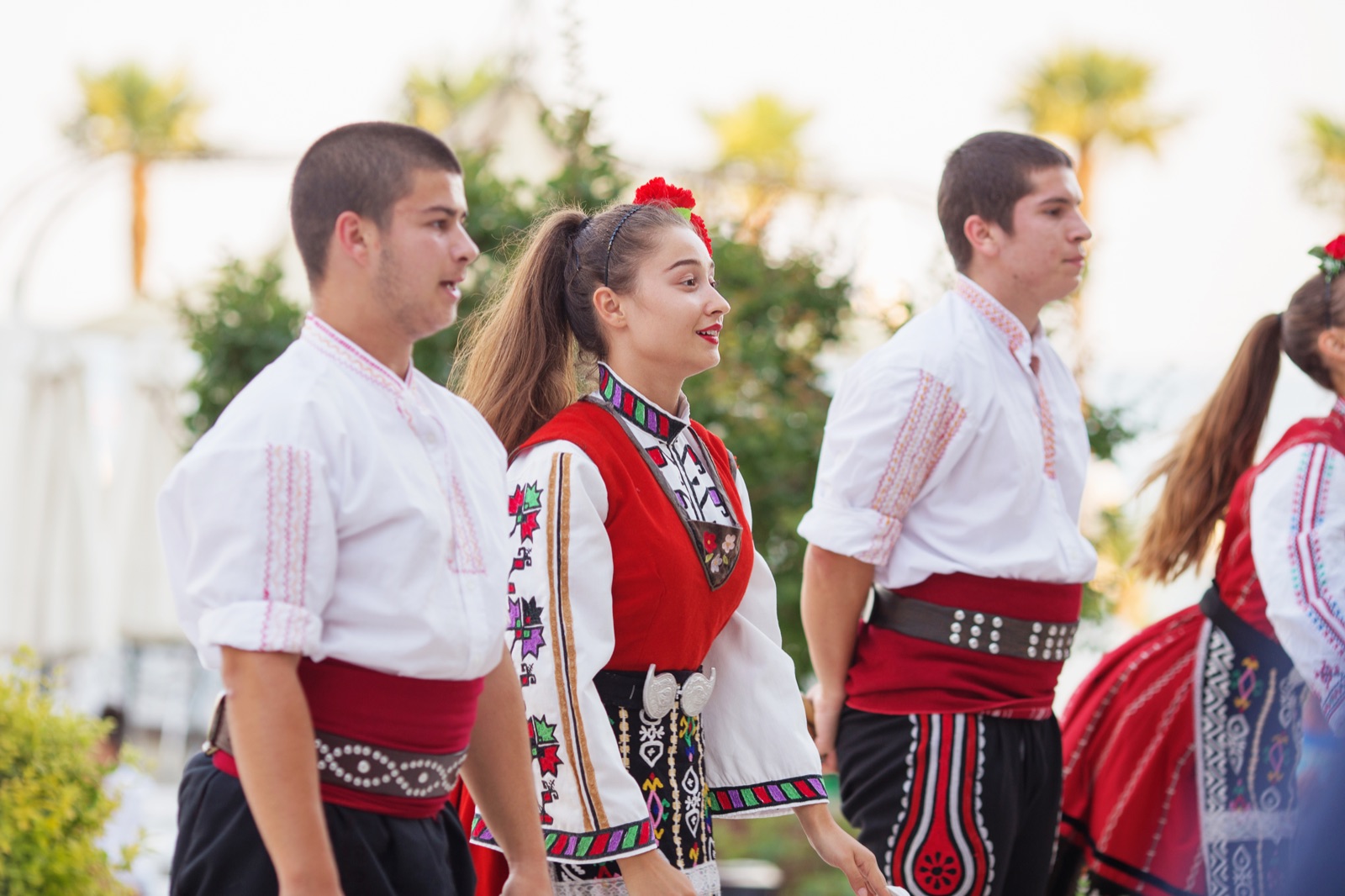
You can experience the spirit of these traditions at the Slavic Food & Cultural Festival. The Polish & Croatian Program takes the main stage from 5:30 to 6:30, featuring the International Folk Dance Group with the Florida Folk Dance Council. Folk dance and folk costume go hand in hand, so keep an eye out for stripes, embroidery and flowers on stage. Earlier in the day, the program also includes the Children's Program from 10:00 to 12:00, the Opening of the Festival from 12:00 to 12:30, the Russian Program from 12:30 to 2:30, a presentation by the National Czech & Slovak Museum & Library with Cecilia Rokusek from 2:30 to 3:00, the Serbian & Bulgarian Program from 3:00 to 4:00 and the Ukrainian Program from 4:30 to 5:30. Check the Schedule page for updates, since times may still change.
Families should visit the kids' zone, where crafts and activities await. And if your children love making things, try a little Polish paper cutting at home after the festival: fold a sheet of colored paper in half, draw half a tree, a bird or a flower along the fold, cut it out with ordinary scissors, and open it up to reveal a symmetrical design. It is the very same idea as a Kurpie leluja, minus the sheep shears. Then browse the outdoor vendor market, where you might spot folk crafts, decorations or gifts. If you are an artisan yourself, you can apply for a booth on the Vendors page (non-profits are free).
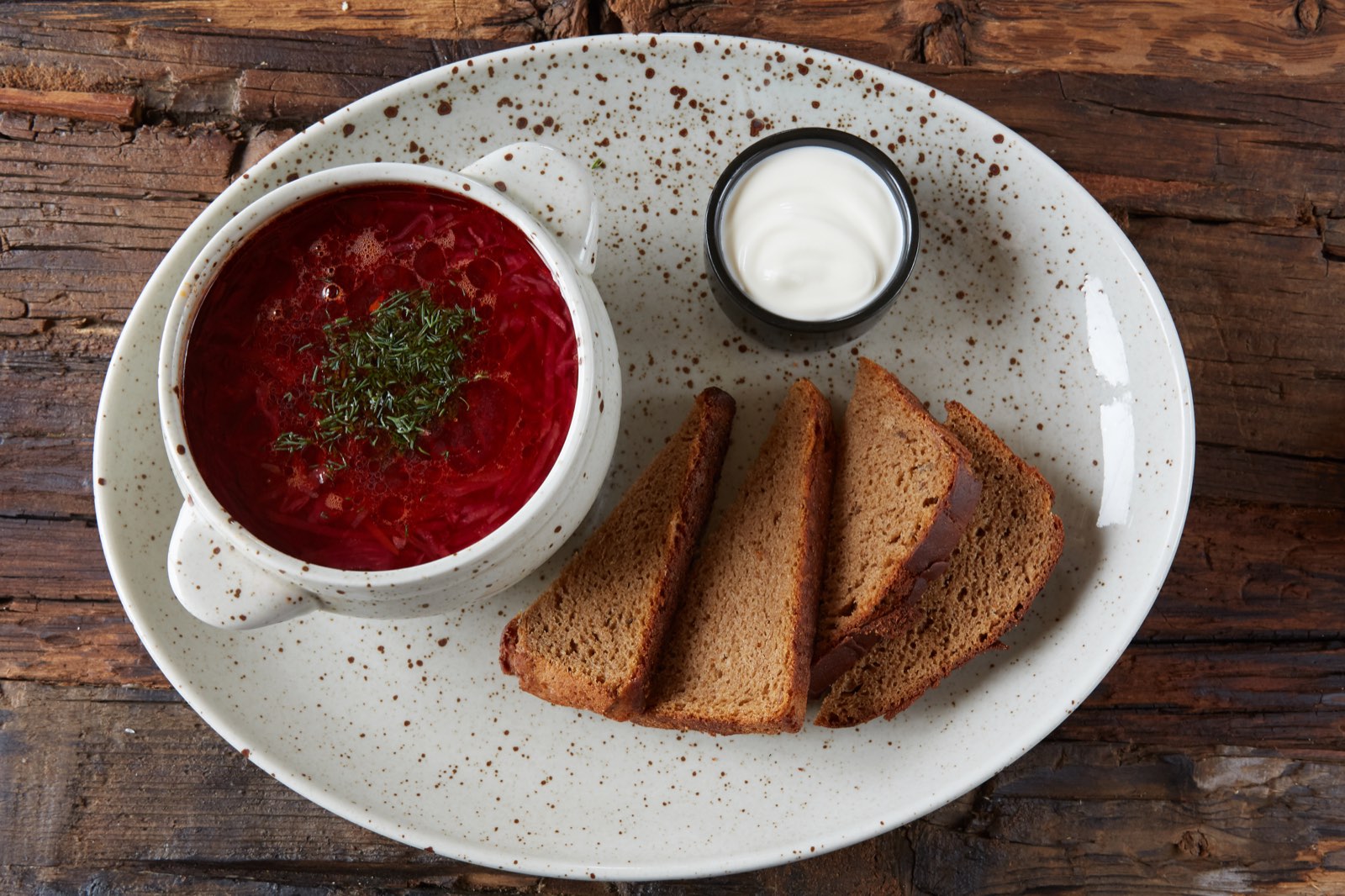
Of course, you will need fuel for all that exploring. The parish kitchen cooks everything fresh on-site: crepes for $15, juicy grilled shashlik skewers for $25, borscht for $15, Bulgarian stuffed peppers for $15, bulochki filled with cabbage, farmer's cheese or cherries for $10, and house-made kvass for $10. Use the Pre-order Food page to skip the line. And if you would like to be part of making the day happen, sign up on the Volunteer page.
See You on February 27
The Slavic Food & Cultural Festival Orlando, hosted by Saint Nina Mission, has been celebrating Slavic cultures in Central Florida for more than ten years, with performers from Ukrainian, Russian, Serbian, Bulgarian, Polish, Slovak, Czech, Croatian and Greek communities. Over 2,000 guests are expected.
Join us on Saturday, February 27, 2027, from 10 AM to 8 PM at Reiter Park, 311 W Warren Ave, Longwood, FL 32750, in Seminole County just north of Orlando. Admission is free for all ages, and no tickets are needed. The festival takes place rain or shine. Cash and cards are accepted at the food stands and most vendor booths. Pets are not allowed, but service animals are welcome.
Come for the music, stay for the food, and leave with a head full of color, and maybe a new idea for decorating your own walls before Easter.