By the time the Slavic Food & Cultural Festival Orlando fills Reiter Park in Longwood on Saturday, February 27, 2027, the Christmas trees will have long been put away. Yet many of the songs, dishes and memories that families bring to the festival grew out of one magical evening in winter: Christmas Eve. For Ukrainians, Poles, Slovaks, Belarusians, Russians, Serbs, Croats and many other Slavic peoples, the night before Christmas is the most intimate and tradition-filled meal of the year, more important in many homes than Christmas Day itself.
It is an evening of candlelight and straw, of twelve meatless dishes, of children pressing their noses to the window to look for the first star, and of carolers stamping snow off their boots at the door. Here is a tour of that night, how it differs across the Slavic world, and how families in Central Florida keep it glowing, even when the thermometer reads seventy degrees.
Waiting for the First Star
In most Slavic homes, Christmas Eve is a day of fasting. Nothing, or only very little, is eaten until the evening meal, and the meal itself cannot begin until the first star appears in the sky, a reminder of the Star of Bethlehem that led the Magi to the newborn Christ. Children are given the important job of watching the window. In Poland, the first star is so central to the holiday that children often call Christmas Eve itself Gwiazdka, the little star, and in some regions the gift-bringer goes by the related name Gwiazdor.
The day before is full of work. The house is cleaned until it shines, and in the kitchen mothers, grandmothers and aunts cook for hours. In the villages of old, the man of the house brought in hay or straw, and some was spread under the white tablecloth or on the floor, a reminder of the manger in Bethlehem. Many families in the diaspora still tuck a handful of hay under the tablecloth, sometimes bought in a craft store, because the table simply does not feel right without it.
When the star appears, the family gathers. In Ukrainian and Belarusian homes, the head of the family may carry in the first dish, greet everyone with Christ is born, and lead a prayer. A candle burns on the table, often set inside a braided round bread called kolach. An extra place is frequently set for an unexpected traveler, or in memory of family members who have died, so that no one is truly absent from the table that night.
Sviata Vecheria and Wigilia: The Twelve Dishes
In Ukraine, the meal is called Sviata Vecheria, the Holy Supper. In Poland it is Wigilia, from the Latin word for vigil. Belarusians call the evening Kućcia, after its most important dish. In Russian tradition it is Sochelnik, a name linked to sochivo, a dish of grain softened in water or nut milk and sweetened with honey. Slovaks call it Štedrý večer, the Generous Evening, and Czechs say Štědrý den, the Generous Day.
The best-known tradition is that the meal should consist of twelve dishes. Most families explain the number as honoring the twelve apostles, while others connect it to the twelve months of the year. All the dishes are meatless, and in strict Ukrainian and Orthodox tradition they also avoid dairy and eggs. Polish Wigilia traditionally avoids meat but includes fish, and in many Catholic families milk and butter are allowed. In practice, every family has its own list, and nobody counts too strictly when there is pickled herring in one hand and a dumpling in the other.
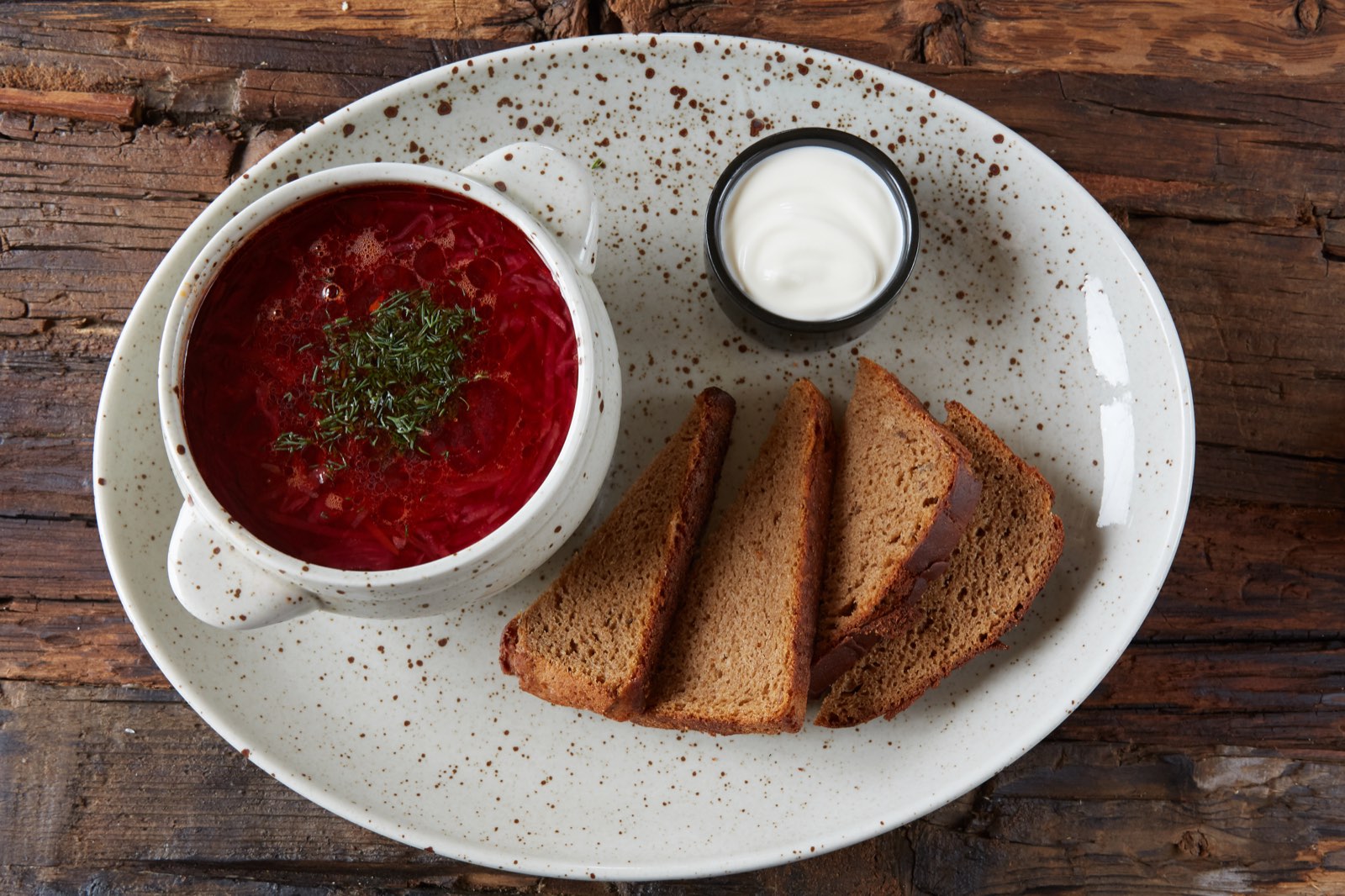
A Ukrainian table might include kutia, borscht with tiny mushroom dumplings called vushka (little ears), varenyky (dumplings) filled with potato, sauerkraut or mushrooms, holubtsi (cabbage rolls) stuffed with rice or buckwheat, fried or marinated fish, herring, beans, mushrooms in sauce, pampushky (doughnuts) and uzvar, a smoky compote made of dried fruit. A Polish Wigilia often features clear red barszcz with uszka, carp, herring in oil or cream, pierogi with sauerkraut and mushrooms, cabbage with peas, poppy seed noodles called kluski z makiem or the poppy seed roll makowiec, and a dried fruit kompot. Slovaks serve kapustnica, a sauerkraut soup, along with fish and potato salad, while Czech families are famous for fried carp with potato salad and fish soup. Many Polish, Czech and Slovak families even keep a live carp in the bathtub for a day or two before Christmas Eve, much to the delight of children.
Before the meal begins, Polish families share the opłatek, a thin wafer stamped with Nativity scenes. Each person breaks off a piece from someone else's wafer while exchanging wishes and forgiveness for the past year, moving around the room until everyone has shared with everyone. Slovaks have a similar custom with oblátky, wafers eaten with honey and sometimes garlic, for sweetness and health in the year ahead.
If one dish defines the Ukrainian and Belarusian Christmas Eve, it is kutia. It is made from wheat berries cooked until tender and mixed with ground poppy seeds, honey and often walnuts and raisins. Every ingredient carries a meaning. Wheat stands for life and the harvest, poppy seeds for abundance, honey for sweetness and happiness. Kutia is ancient, connected both to Christian memorial customs and to older rites that honored ancestors, and it is the first dish tasted at the Holy Supper. Lithuanians, Poles from the eastern regions and Russians have related dishes, and in Russia the similar sochivo gave Christmas Eve its name.
Kutia is surrounded by folk customs. In some Ukrainian villages, the head of the family tossed a spoonful of kutia up at the ceiling. If it stuck, the family could look forward to a good harvest, or in some versions, to plenty of bees and honey. Children loved this moment, and parents were less fond of cleaning the ceiling afterwards. In other homes, a little kutia was left on the table overnight for the souls of ancestors believed to visit on this holy night.
The Didukh and the Badnjak
In the corner of many Ukrainian homes on Christmas Eve stands the didukh, a sheaf of wheat, rye or oats, often bound with colorful ribbons and sometimes woven into elaborate shapes. The name comes from did, meaning grandfather, and the didukh represents the spirits of ancestors and the harvest that sustains the family. It is brought into the house with ceremony before the meal and placed under the icons, where it stays through the holiday season. After the holidays, the didukh was sometimes burned, and its grain might be mixed into the seed for the spring planting. Today, decorative didukhy appear in Ukrainian homes worldwide, from Kyiv apartments to Florida living rooms.
South Slavic families have their own remarkable custom. In Serbia, Montenegro and among Orthodox and many Catholic communities in Bosnia and Croatia, Christmas Eve, Badnje veče, centers on the badnjak, a young oak log or branch. Traditionally it was cut early in the morning, brought home and burned on the hearth in the evening, with sparks interpreted as wishes for prosperity. Today, when most people do not have open hearths, families and churches often burn the badnjak in a bonfire in the churchyard or keep a bundle of oak branches with leaves in the home. Straw is spread on the floor, and on Christmas Day a round bread called česnica is broken among family members, with a coin hidden inside for the luckiest. Croatian families often plant wheat in a dish on Saint Lucy's Day, December 13, so that green shoots stand on the table by Christmas Eve.
Kolyadky: The Carols of Winter
No Slavic Christmas is complete without carols. In Ukrainian they are kolyadky, in Russian kolyadki, in Polish kolędy, in Slovak koledy and in Czech koledy too, and in Serbian and Bulgarian the carolers are called koledari. The word comes from kolyada, an ancient name for the winter festival, related in turn to the Latin calendae, the first day of the month.
Some kolyadky are deeply religious, telling the story of the Nativity, the shepherds and the Magi. Others are much older, preserving pre-Christian images of the world created by birds on a sea, of the sun, the moon and the rain sitting at a householder's table as honored guests. Ukrainians also sing shchedrivky, special songs for Generous Evening, the eve of the New Year, wishing the household health and a rich harvest.
One of these songs became world famous. Shchedryk, a Ukrainian shchedrivka about a swallow who flies into a house and promises the family a prosperous year, was arranged by the composer Mykola Leontovych in the early twentieth century. The Ukrainian National Chorus performed it during an international tour, including a concert at Carnegie Hall in New York in 1922. Later, the American choral director Peter Wilhousky wrote new English lyrics, and the melody became Carol of the Bells, now heard in shopping malls and movies across America every December. Many people in Central Florida hum it every winter without knowing it began as a New Year's wish from a Ukrainian village.
Polish kolędy are equally beloved. Families sing them around the table after Wigilia and before Midnight Mass, called Pasterka, the Shepherds' Mass. Songs like Bóg się rodzi (God Is Born) and Lulajże, Jezuniu, a tender lullaby to the Christ child, are known by heart by generations of Poles. Czech and Slovak families have their own treasured carols, and Croatian families sing Radujte se, narodi (Rejoice, O Nations) at Christmas services.
The Star, the Vertep and the Carolers at the Door
In the villages, caroling was a group performance. Young people went from house to house, often led by someone carrying a large star on a pole. The star, frequently made of paper and wood, sometimes lit from inside with a candle and able to spin, stood for the Star of Bethlehem. Carolers sang beneath each window, wishing the family health and good fortune, and the household thanked them with treats, coins, sausage or pastries.
Some groups brought a vertep, a traditional Ukrainian puppet theater in the form of a wooden box, usually built in two levels. The upper level showed the Nativity, with Mary, Joseph and the shepherds. The lower level showed the earthly drama of King Herod and the soldiers, often with comic folk characters added. Over time, the vertep also became a live performance in which carolers dressed as angels, shepherds, kings, Herod, a devil and death acted out the story, with plenty of humor along the way. Polish carolers have similar traditions, known as herody and the szopka (Nativity scene). In Kraków, the art of making ornate szopki, glittering Nativity scenes shaped like the city's churches, was added to the UNESCO list of Intangible Cultural Heritage in 2018.
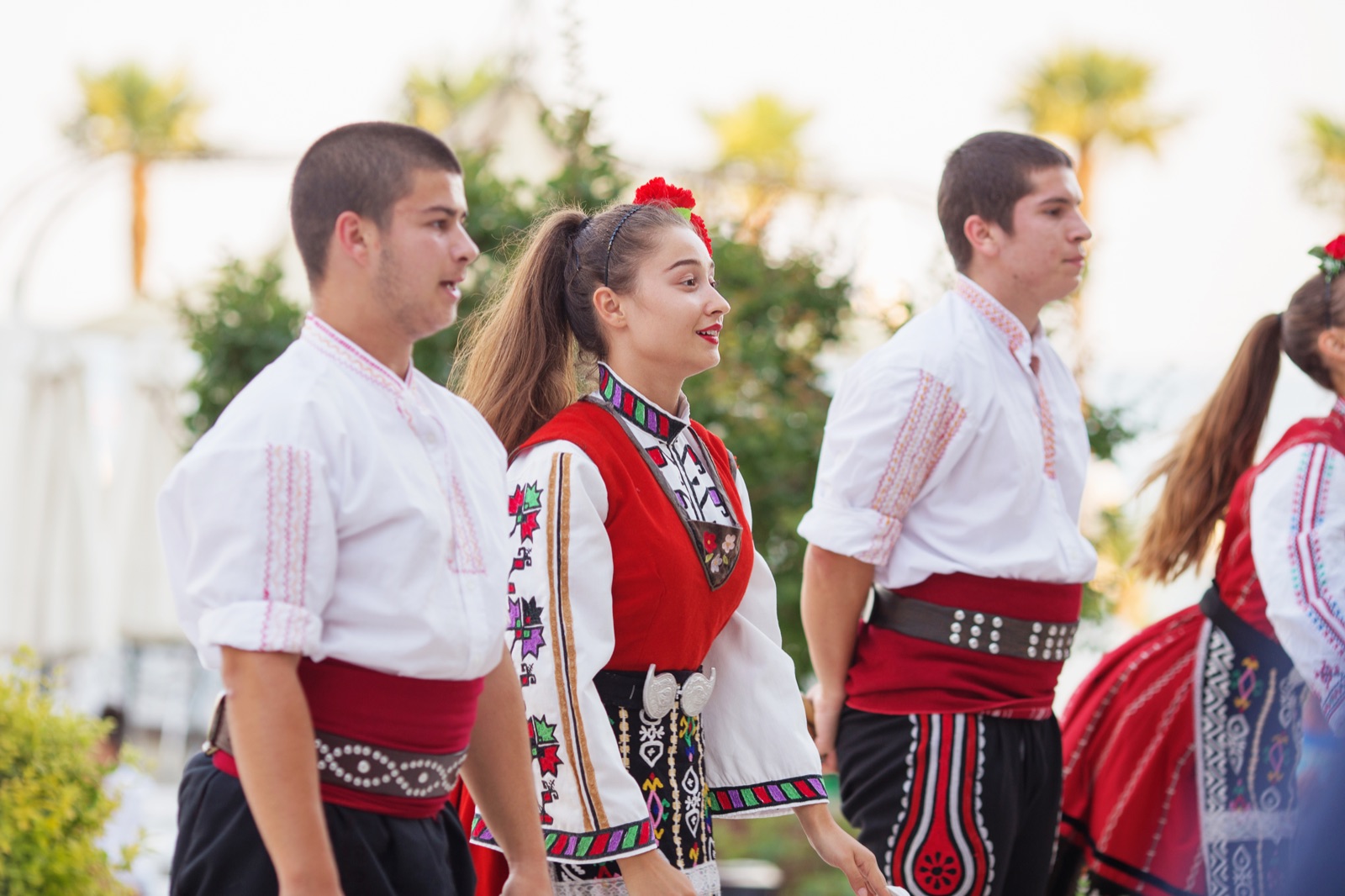
In Bulgaria, the koledari are young men who walk through the village after midnight on Christmas Eve, dressed in traditional clothes and carrying decorated staffs, singing songs of blessing at every house. Each region has its own songs and costumes, and households welcome them with ring-shaped breads and treats.
Julian or Gregorian: Why Some Families Celebrate Twice
If you have Slavic friends, you may have heard them wish you a Merry Christmas in January. The reason is the calendar. In 1582, Pope Gregory XIII introduced the Gregorian calendar to correct a drift in the older Julian calendar. Catholic countries such as Poland, Croatia, Slovenia, Slovakia and the Czech lands adopted it, and Protestant countries followed over time. Many Orthodox churches, however, kept the Julian calendar for church feasts. Today the two calendars are thirteen days apart, so December 25 on the Julian calendar falls on January 7 on the civil calendar, with Christmas Eve on January 6.
The Russian and Serbian Orthodox Churches still celebrate Christmas on January 7, as do many other Orthodox communities. The Bulgarian Orthodox Church moved its fixed feasts to December 25 in 1968, following the Revised Julian calendar. In 2023, the Orthodox Church of Ukraine and the Ukrainian Greek Catholic Church also moved their fixed feasts, including Christmas, to December 25, though some parishes and families continue to keep January 7. In the diaspora, many mixed families simply celebrate both, enjoying a December Christmas with American friends and a January Holy Supper with grandparents. Children, unsurprisingly, rarely object to having two Christmases.
Christmas Memories at the Festival in Longwood
By late February, the winter holidays are behind us, but their flavors and songs linger, and many of them find their way to the festival. Borscht, which appears on so many Christmas Eve tables in its meatless form, is on the festival Menu for $15, cooked fresh on-site by the parish kitchen of Saint Nina Mission. The bulochki, soft buns filled with cabbage, farmer's cheese or cherries for $10, recall the cabbage and fruit fillings that appear in many holiday pastries. You will also find crepes ($15), juicy grilled shashlik skewers ($25), Bulgarian stuffed peppers ($15) and house-made kvass ($10), and the FAQ mentions samovar tea, soft drinks and vegetarian options. To skip the line, use Pre-order Food on slavicfoodfestival.com.
The main stage carries the musical side of the story. The Children's Program runs from 10 AM to noon with children's songs and dances by Elina Deyev, the Rodni Ritmi Dance Group and the Serbian Crown Folklore Group. The Opening of the Festival follows from 12:00 to 12:30, and the Russian Program, with a children's chorus and folk ensemble, runs from 12:30 to 2:30. From 2:30 to 3:00, Cecilia Rokusek of the National Czech & Slovak Museum & Library takes the stage. The Serbian & Bulgarian Program, with the Serbian Crown Folklore Group, runs from 3:00 to 4:00, the Ukrainian Program, with Dina Deyev singing Ukrainian songs, from 4:30 to 5:30, and the Polish & Croatian Program, with the International Folk Dance Group and the Florida Folk Dance Council, from 5:30 to 6:30. The program is still being finalized and times may change, so check the Schedule and Music pages before you come.
Families can bring the children to the kids' zone for crafts and activities, and stroll the outdoor vendor market, where you might spot embroidered textiles, folk ornaments or handmade gifts worth saving for next Christmas.
Join the Feast at Reiter Park
Christmas Eve teaches that the best things in life are shared: a wafer broken between family members, a bowl of kutia passed around the table, a song sung under a stranger's window. The Slavic Food & Cultural Festival Orlando carries that same spirit into a sunny Florida afternoon.
Join us on Saturday, February 27, 2027, from 10 AM to 8 PM at Reiter Park, 311 W Warren Ave, Longwood, FL 32750, in Seminole County just north of Orlando. Admission is free for all ages, no tickets needed, and the festival goes on rain or shine. Pets are not allowed, though service animals are welcome, and cash and cards are accepted at the food stands and most vendor booths. More than two thousand guests are expected.
If you would like to help, visit the Volunteer page to sign up for shifts, cooking or donations of ingredients and supplies. Singers, musicians and dance groups can apply on the Artists page, and businesses can apply for a booth on the Vendors page. However you come, there will be a place for you at the table. Christ is born, Wesołych Świąt, Veselé Vianoce, and see you in Longwood.