Ask ten Slavic grandmothers how to make borscht and you will get eleven answers, two arguments and an invitation to dinner. Everyone agrees on the basics: beets, broth, a little sourness, a spoonful of sour cream on top. Beyond that, every family has its own way, and every family is quietly sure its way is the right one.
On Saturday, February 27, 2027, the parish kitchen of Saint Nina Mission will be ladling out borscht by the bowlful at the Slavic Food & Cultural Festival Orlando in Reiter Park, Longwood. For $15 you get a steaming bowl of deep red soup, cooked fresh on-site, and with it a taste of one of the oldest and most beloved dishes of Eastern Europe. Before you pick up your spoon, here is the story of the soup, from its humble beginnings to its many regional faces, the chemistry behind its famous color and the secrets families guard in their kitchens.
From a wild plant to a national dish
The name borscht (in Ukrainian borshch, in Polish barszcz) is thought to come from an old Slavic word for hogweed, a wild plant with broad leaves that grows in meadows across Eastern Europe. Long ago, people gathered young hogweed, fermented it, and cooked it into a sour soup. Over the centuries, that sour soup took on other vegetables, and at some point beets became the star. Beets grew well in the rich soils of the region, stored easily through the winter, and gave the soup its unforgettable color and sweetness.
Food historians generally trace beet borscht to the lands of today's Ukraine, where it became an everyday dish for peasants and nobles alike. From there it spread in many directions: to Poland, Lithuania, Belarus and Russia, to Romania and Moldova, to Ashkenazi Jewish communities, and eventually, with emigrants, across the oceans. Each place adapted it to local tastes and ingredients, which is why borscht today belongs to so many people at once.
In Ukraine, borscht is far more than a soup. It is part of daily life, holidays, weddings and memorial meals. There is an old saying that a girl was ready to marry once she could make a good borscht, and in many villages the dish was cooked for important occasions in special ways. In 2022, UNESCO inscribed the culture of Ukrainian borscht cooking on its List of Intangible Cultural Heritage in Need of Urgent Safeguarding. The listing recognizes not one recipe but a living tradition: the family knowledge, the regional variations, the rituals and the gatherings around the pot, passed from generation to generation.
At the same time, borscht is cherished in Russian, Belarusian, Polish, Lithuanian, Jewish and many other kitchens, each with its own history and affection for it. At a festival like ours, with families from across the Slavic world sharing one park, borscht is a wonderful example of how one dish can carry many memories.
How a classic red borscht comes together
There are countless recipes, but a typical red Ukrainian borscht follows a familiar rhythm. It begins with a broth, often made from beef or pork on the bone, simmered slowly for an hour or two. Some cooks use chicken, some use smoked meat, and in Lenten or vegetarian versions the broth is made from vegetables, beans or dried mushrooms.
While the broth simmers, the vegetables are prepared. Beets are peeled and cut into thin strips or grated. Carrots and onions are chopped, potatoes cubed, cabbage finely shredded. Then comes the step many cooks consider the heart of the matter: the zazharka (a sauté of vegetables in fat). Onions and carrots are gently fried in oil, butter or rendered pork fat until soft and sweet. The beets go in, sometimes in their own pan, with a little acid and a spoonful of tomato paste or chopped tomatoes, and they cook slowly until tender and glossy.
Potatoes go into the broth first, since they take longest, then the cabbage. The beet and vegetable mixture is added toward the end, along with salt, pepper, bay leaf and perhaps a pinch of sugar to balance the sourness. Finally, the pot is taken off the heat and left to rest. Many families add crushed garlic and chopped dill or parsley at this moment, and some pound garlic with salt and a little salo (cured pork fat) into a fragrant paste that is stirred in just before serving.
The result should be deep red, sweet and sour at once, rich but not heavy. It is served hot, with a generous spoonful of smetana (thick sour cream) and a sprinkle of fresh dill. In Ukraine, the traditional companion is pampushky, soft little yeast buns brushed with garlic and oil. Dark rye bread, a clove of raw garlic, or a slice of salo on the side are also beloved.
And almost everyone agrees on one thing: borscht is even better the next day, after the flavors have had time to settle together.
The chemistry of ruby red
Why does a good borscht glow like a ruby, while a careless one turns an unappetizing brownish orange? The answer lies in the beet itself.
The red color of beets comes from pigments called betalains, mainly one called betanin. Unlike the pigments in red cabbage or berries, betalains are found in only a few plant families, beets among them. They dissolve easily in water, which is why beets bleed so dramatically onto your cutting board and why the whole pot of soup turns red. But betanin is sensitive. Long boiling breaks it down, and the color fades toward brown or yellow. Light, oxygen and the wrong pH can also dull it.
Acid is the cook's best friend here. Betanin is most stable in a mildly acidic environment, which is why so many borscht recipes add vinegar, lemon juice, sour apples, tomatoes or fermented beet liquid. Traditional cooks figured this out long before anyone knew what a pigment was. They sautéed the beets separately with a splash of vinegar or lemon, added them near the end of cooking rather than boiling them for hours, and never let the soup come to a hard boil once the beets were in. The result: a soup that stays bright and beautiful.
Some families use beet kvass (a sour, fermented beet liquid) to add both color and tang. A few slices of beet are left to ferment in water for several days, and the ruby liquid is stirred into the pot at the end. It is the same idea that probably made the first borscht sour centuries ago, a natural fermentation that brightens flavor and color at once.
So if your borscht turns brown, do not despair. Add a little acid, or grate a small raw beet into the pot just before serving and let it steep for a few minutes. The color will come back like magic.
A soup that changes every hundred miles
Within Ukraine alone there are dozens of regional borschts, and food writers love to argue about how many. A few of the best known show just how much the dish can vary.
Poltava borscht is famous for being made with poultry, often goose or chicken, and served with halushky (small dumplings) dropped right into the pot. Kyiv-style borscht can be very rich, with several kinds of meat and sometimes beans and apples. Chernihiv borscht might include zucchini, beans and sweet peppers, with the sourness coming from tomatoes or sour apples. In the Carpathians, mushroom borscht made with dried forest mushrooms is a treasure, especially during fasts. In the Galicia region around Lviv, a clear, ruby beet broth is popular, sometimes served in cups. Some regions add prunes for a smoky sweetness, others smoked pears, still others a handful of beans or fresh greens.
Then there is green borscht, zelenyi borshch, a spring and summer favorite. It contains no beets at all. Instead it gets its color and tang from sorrel, a sour, lemony green leaf, sometimes along with young nettles, spinach or other greens. It is usually made with chicken or pork broth and potatoes, and finished with a chopped hard-boiled egg and sour cream. For many families, the first green borscht of spring is a celebration that winter is truly over.
In Poland, barszcz czerwony (red borscht) is often a clear, deep red broth, made sour with zakwas (fermented beet starter). It plays a starring role at Wigilia, the Christmas Eve supper, where it is served with uszka, tiny mushroom-filled dumplings whose name means "little ears." Poland also has barszcz biały (white borscht), a creamy sour soup based on fermented rye or wheat flour and served with sausage and egg, especially at Easter. And on hot summer days, Polish families enjoy chłodnik, a cold, bright pink soup of beets, beet greens, kefir or buttermilk, cucumbers and dill.
Russian borscht is close to the Ukrainian, with its own regional versions. Belarusian cooks make borscht too, along with cold beet soups for summer. Lithuanians, though not Slavic, are famous for the shockingly pink cold soup šaltibarščiai, and Romanian and Moldovan cooks have their own sour soups called ciorbă and borș. Ashkenazi Jewish families brought both hot and cold beet borscht to America, where it became so familiar that the Catskill Mountains resorts once frequented by Jewish New Yorkers earned the nickname "the Borscht Belt."
Family secrets
Every borscht cook has secrets, and some are guarded as closely as a family jewel. Here are a few that you might hear if you get grandmothers talking.
Some swear by a spoonful of sugar to balance the sourness. Others add a splash of beet juice or a squeeze of lemon right at the end for brightness. Many insist that the beets must be cooked separately and added at the last moment, never boiled in the soup for hours. Some cooks bake the beets whole in the oven first for a deeper, sweeter flavor.
There are beans: dried white or red beans soaked overnight and cooked into the soup, making it heartier. There are prunes, which give a smoky, almost fruity depth. There are mushrooms, especially dried porcini, which turn even a meatless borscht into something rich and savory. In some families, a little smoked meat goes in for flavor. In others, the secret is pounded garlic and salo stirred into the pot at the end, or a handful of fresh herbs added off the heat.
Then there are the unwritten rules. Never stir borscht with a metal spoon, says one grandmother; use wood. Let it rest at least an hour before serving, says another, or better yet, overnight. The cabbage must be shredded thin as hair. The soup should be thick enough for a spoon to stand up in, or thin enough to drink from a cup, depending on whom you ask. These rules contradict each other wonderfully, and that is the point. Borscht is a conversation that has been going on for centuries.
Borscht in Central Florida
When Slavic families moved to Florida, borscht came with them, adapting to a new climate and new grocery stores. Beets are easy to find in Orlando supermarkets, as are carrots, cabbage and dill. Sour cream from the dairy aisle stands in for village smetana, and some families seek out European markets for farmer's cheese, rye bread and pickled goods. On cool winter evenings, which Central Florida does occasionally get, a pot of borscht on the stove feels like home.
For many diaspora families, borscht is how children first learn about their heritage. A grandmother cooks it, a grandchild helps chop beets and gets pink fingers, and somewhere along the way stories are told: about the village, about the war years, about the first borscht in a new country. Even for families who have been in America for generations, borscht is often the one dish that never left the table.
At the festival, borscht has a proud place on the menu. The parish kitchen of Saint Nina Mission cooks it fresh on-site for the big day, with volunteers lending a hand. If you are curious about how they do it, ask the cooks; they might share a secret or two, or they might just smile and tell you it is a family recipe.
A bowl of borscht at Reiter Park
At the festival on February 27, borscht ($15) is one of the stars of the menu. It goes beautifully with the other dishes cooked by the parish kitchen: crepes ($15), juicy grilled skewers or shashlik ($25), Bulgarian stuffed peppers ($15), and bulochki ($10), soft buns filled with cabbage, farmer's cheese or cherries. To drink, there is house-made kvass ($10), the tangy, lightly fermented bread drink that is a natural partner for borscht, plus soft drinks and samovar tea. Vegetarian options are available too. If you want to skip the line, pre-order food online at slavicfoodfestival.com and pick it up when you arrive.
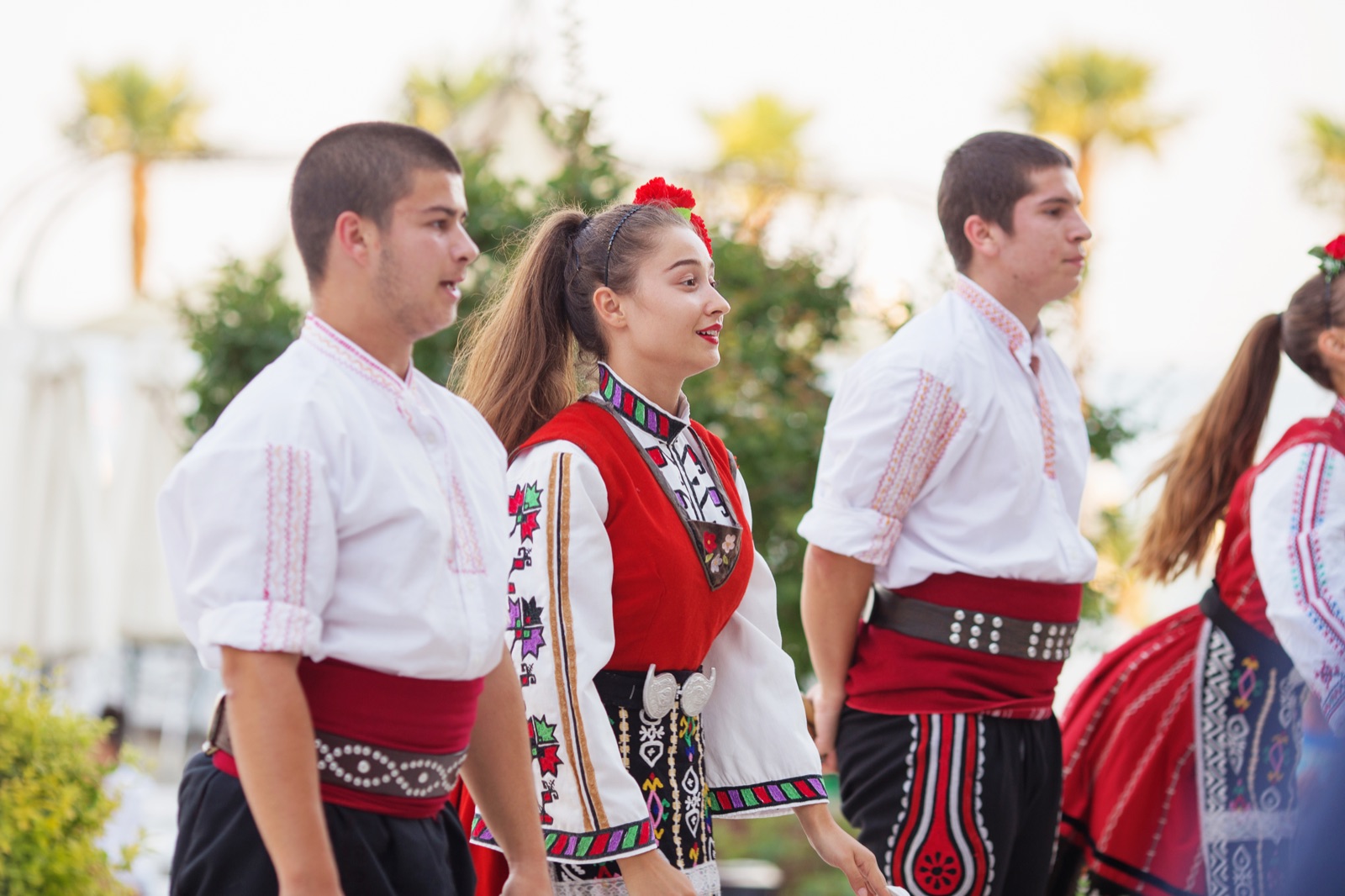
Take your bowl to a spot on the lawn and enjoy the music. The day starts at 10:00 with the Children's Program on the main stage, followed by the official opening at 12:00 and the Russian Program from 12:30 to 2:30 with a children's chorus and folk ensemble. At 2:30 the National Czech & Slovak Museum & Library shares Czech and Slovak heritage, then the Serbian & Bulgarian Program runs from 3:00 to 4:00. The Ukrainian Program, from 4:30 to 5:30, features Dina Deyev singing Ukrainian songs, the perfect soundtrack to a second bowl of borscht. The Polish & Croatian Program closes the main performances from 5:30 to 6:30. Times may change as the program is finalized, so check the Schedule page.
While the adults eat, the children can head to the kids' zone for crafts and activities, and everyone can browse the outdoor vendor market. And if you would like to help make the borscht yourself next time, the Volunteer page lets you sign up for cooking, shifts or donations. There is no better way to learn a family recipe than to stand beside the people who make it.
Come hungry
The Slavic Food & Cultural Festival Orlando, hosted by Saint Nina Mission and loved by Central Florida families for more than ten years, takes place on Saturday, February 27, 2027, from 10 AM to 8 PM at Reiter Park, 311 W Warren Ave, Longwood, FL 32750, in Seminole County. Admission is free for all ages, no tickets needed, rain or shine. Food stands and most vendor booths accept cash and cards. Pets are not allowed, though service animals are welcome.
Come hungry, bring your family, and taste one version of a soup that has a thousand versions. Then go home and argue happily about how your grandmother made it. That, after all, is the true tradition of borscht.