Picture a late February afternoon at Reiter Park in Longwood. The Florida sun is warm, the smell of grilled skewers drifts over the lawn, and somewhere between the vendor market and the kids' zone a child is holding an egg up to the light, turning it slowly to see every line. It is covered in tiny stars, wheat ears and a ribbon of red that never seems to end. That small, astonishing object is a pysanka, and for many Ukrainian families it is the most precious thing on the Easter table.
The Slavic Food & Cultural Festival Orlando returns on Saturday, February 27, 2027, from 10 AM to 8 PM, and Easter will be only weeks away for most of the families who come. So it feels like the right moment to talk about pysanky: where they come from, how they are made, what the patterns mean, and why people who have never set foot in the Carpathian Mountains still sit up late at a kitchen table in Seminole County with a candle, a block of beeswax and a dozen raw eggs.
Written, not painted
The word pysanka (plural pysanky) comes from the Ukrainian verb pysaty, "to write." That small detail tells you almost everything. A pysanka is not painted with a brush. Its design is written on the shell in hot beeswax, and the egg is then dipped in dye. Wherever the wax covers the shell, the color underneath is protected. The artist adds more wax, dips again in a darker color, adds more wax, and so on, building the design layer by layer. Only at the very end is the wax melted away, and the whole pattern appears at once, bright and crisp, like a photograph developing.
This method is called wax resist, and it is related to batik on fabric. It demands planning. You have to think in reverse: whatever you want to stay white, you cover first. Whatever you want yellow, you cover after the yellow bath. The darkest color, often red or black, comes last and fills every space you left open. Experienced pysanka writers can see the finished egg in their heads before they light the candle.
The traditional tool is the kistka (a small stylus). It is a short wooden stick with a tiny funnel of brass or copper fastened to one end. The writer scoops a little beeswax into the funnel, warms it over a candle flame until the wax melts, and then draws on the egg as if with a fountain pen. Fine kistky make hair-thin lines; heavier ones lay down bold strokes and filled areas. Today many people use electric kistky that keep the wax at a steady temperature, but plenty of grandmothers still swear by the candle, the soft crackle of the wax and the faint smell of honey that fills the kitchen.
If you have never watched a pysanka being made, here is how a typical evening goes. The eggs are chosen carefully: clean, smooth, without cracks, at room temperature. Traditionally they are raw and whole. Over many months the inside slowly dries out, and a well-made pysanka can last for years, even generations. Some modern artists blow out the contents first, making a small hole at each end, which makes the egg lighter and easier to ship but also a little more fragile in the dye.
The shell is wiped with a little vinegar or simply washed, because oil from fingers keeps dye from taking evenly. Then the egg is divided with light pencil lines or wax lines into sections: halves, quarters, bands around the middle, sometimes triangles. This division is the skeleton of the design, and many traditional patterns grow out of it.
The first wax goes on the white shell. Then the egg goes into the lightest dye, usually yellow. After it dries, more wax: everything that should stay yellow. Next comes orange or green, then red, and often black last. Each dip lasts a few minutes. Each layer of wax has to be precise, because a slip cannot be erased. Many families keep jars of dye on a shelf for weeks during Lent, and the colors seem to get richer as the season goes on.
When the final dye is dry, the moment everyone waits for arrives. The writer holds the egg near the side of the candle flame, never in the smoke at the top, and wipes away the softened wax with a soft cloth or tissue, a little at a time. The black, waxy egg turns into a jewel. A coat of varnish or a rub of oil gives it a soft shine, and it is set aside to dry, sometimes on a nail board or a little stand.
Before modern dyes, color came from the garden and the forest. Onion skins gave yellows, oranges and deep reddish browns. Oak and alder bark gave browns and blacks. Berries, flowers and young shoots gave other shades. Some folk artists still experiment with natural dyes, and the results have a gentle, earthy glow that modern colors cannot quite match.
The language of symbols
Every line on a traditional pysanka means something, and an egg can be read almost like a letter. The meanings vary by village, by family and by who is telling the story, so think of what follows as a general guide rather than a strict dictionary.
The sun is one of the oldest motifs, drawn as a circle, a rosette, a rotating "sun wheel" in very old village designs, or an eight-pointed star. It stands for life, light, warmth and good fortune. The eight-pointed star in particular appears on countless eggs from every region of Ukraine. A simple cross reminds the family of Christ and the Resurrection, and it often sits quietly at the center of a pattern built around older symbols.
Wheat ears and grain mean a good harvest and prosperity. Pine branches and other evergreens stand for eternal youth and health, because they stay green all winter. Flowers, especially the stylized rose, speak of love, beauty and care. Birds can mean spring, happiness and the fulfillment of wishes. Deer and horses suggest strength, wealth and long life. Fish, of course, is one of the earliest Christian symbols.
Lines carry meaning too. A band that circles the egg with no beginning and no end, often called the endless line or meander, is a symbol of eternity. Wavy lines mean water. Ladders mean prayer and the soul's journey upward. Dots can stand for stars, or for the tears of the Virgin Mary in some family explanations.
One of the most loved patterns is the sorokoklynets (literally "forty wedges"). The egg is divided into forty triangles (some versions use forty-eight), each filled with its own small design. People explain the forty in different ways: the forty martyrs of Sebaste, the forty days of Lent, or the forty tasks a person faces in a lifetime. It is a beautiful puzzle of an egg, and making one is a real test of patience.
Colors speak too. Red is joy, love and the sun. Yellow is light and harvest. Green is spring, new growth and hope. Blue is the sky and good health. White is purity. Black, which many Americans associate with mourning, often stands for the fertile earth or for eternity on a pysanka, and black backgrounds can make every other color glow.
Regional styles from the Carpathians to the steppe
Ukraine is a big country, and pysanky change as you travel across it. Collectors can often tell where an egg comes from at a glance.
In the Hutsul region of the Carpathian Mountains, eggs are famous for intricate geometric designs, fine lines and warm colors: yellows, oranges, brick reds and black. Patterns are dense and exact, with rosettes, wedges and ribbons. Bukovyna, next door, is known for extremely fine detail and a richer palette, with many small elements packed into every section. Lemko and Boyko eggs from other parts of the mountains have their own simpler, bolder character.
Further east, in Poltava and the central regions, designs tend to be lighter and more open, with floral and plant motifs, softer colors and more white space. In Podillia, eggs often have dark backgrounds with bright figures standing out. Volyn and Polissia in the north have their own patterns too, sometimes sparer and more archaic.
Neighbors share the tradition in their own ways. Polish families make pisanki, using both wax resist and scratching techniques, and Easter baskets in Poland are full of them. Czech and Slovak kraslice may be decorated with wax, scratched with a blade, or covered in straw appliqué. Lemkos, Rusyns, Belarusians and Slovenes have their own decorated eggs, and Serbian and Bulgarian families dye eggs red for Easter and crack them against each other at the table. Lithuanians and Romanians, though not Slavic, have closely related crafts. Across this whole part of Europe, the decorated egg is one of the great shared folk arts.
Krashanky, drapanky and the Easter basket
Not every Easter egg is a pysanka. Krashanky (from krasyty, "to color") are eggs dyed a single solid color, usually by boiling them in dye. These are meant to be eaten. The classic krashanka is deep red, often made with onion skins, and many families say the red is a reminder of Christ's blood and of new life. Children play games with them, tapping egg against egg to see whose shell survives.
Drapanky (from drapaty, "to scratch") are made by dyeing an egg and then scratching a design into the color with a needle or blade, revealing the white shell underneath. Krapanky are decorated with simple dots of wax, a lovely beginner's technique for small children. A pysanka itself is usually not eaten. It is a gift, a blessing and a keepsake.
On Holy Saturday, families carry an Easter basket, the koshyk, to church to be blessed. It is covered with an embroidered cloth and filled with paska (the tall, rich Easter bread), butter, cheese, sausage or ham, salt, horseradish, krashanky and, tucked among them, a few of the year's best pysanky. After the blessing, the eggs go home to their places of honor. They are given to godchildren, parents, priests and friends. Some are kept on a shelf for years. In old village custom, a pysanka might be placed in the corner of a new house, buried in a field for a good harvest, or set near beehives to keep the bees healthy.
Legends of the egg
Pysanky are surrounded by stories, and every family seems to have its favorite.
The best known is the Hutsul legend of an evil monster chained to a cliff. Every year, the monster's servants go out into the world to count how many pysanky have been written. When few eggs are made, the chains loosen and evil spreads. When many pysanky are written, the chains hold tight and the world is safe for another year. Grandmothers tell this to children not to frighten them, but to explain why every egg matters: each one is a small act of love that holds the darkness back.
Another legend tells of the Virgin Mary bringing a basket of eggs to Pontius Pilate to plead for her son. As she wept, her tears fell on the eggs and left bright dots of color. Another story says that Simon of Cyrene, who helped Christ carry the cross, was an egg seller, and when he returned to his basket, all his eggs had turned beautifully decorated. These stories joined older springtime beliefs, from long before Christianity reached the region, that eggs hold the mystery of new life and the return of the sun.
There is also a gentle custom about giving. Light eggs with bright designs are given to children and young people, whose lives are still mostly blank. Darker, richer eggs, covered in symbols, are given to older people whose lives are already full. It is a lovely way to say "I see who you are."
Keeping the tradition alive in Florida
When Ukrainian immigrants came to North America, they brought kistky in their suitcases and patterns in their heads. In the Canadian prairies, the town of Vegreville, Alberta, built a giant aluminum pysanka in the 1970s that still stands as a landmark. In Ukraine itself, the city of Kolomyia has a Pysanka Museum whose building is shaped like an enormous egg. Between those two places are thousands of kitchens where the tradition simply continues, year after year.
Central Florida has its own share of those kitchens. In diaspora communities, parishes, schools and cultural groups often hold pysanka evenings during Lent, and the people at the table are often a fascinating mix: grandmothers who learned in a village, teenagers who learned on video, and curious neighbors with no Slavic roots at all who simply fell in love with the art. A first pysanka is usually lopsided and a little blotchy, and everyone keeps it anyway.
If you want to try at home, a beginner's kit with a few kistky, beeswax and dye packets is enough. Start with white eggs, simple divisions and two or three colors. Keep the candle steady and the wax hot. Do not worry about mistakes; folk art has always forgiven a shaky hand. And if you have small children, krapanky with dots of wax or simple onion-skin krashanky are a wonderful first step.
At the festival, keep your eyes open. Browse the vendor market and you might spot pysanky, egg-shaped ornaments, embroidered cloths for an Easter basket or other handmade pieces from local artisans; what appears depends on who comes that year, so it is a happy surprise rather than a promise. Bring the kids to the kids' zone for crafts and activities, and talk to the families around you. Many of them will have stories about their grandmothers' eggs, and they love to share.
From the egg to the stage and the table
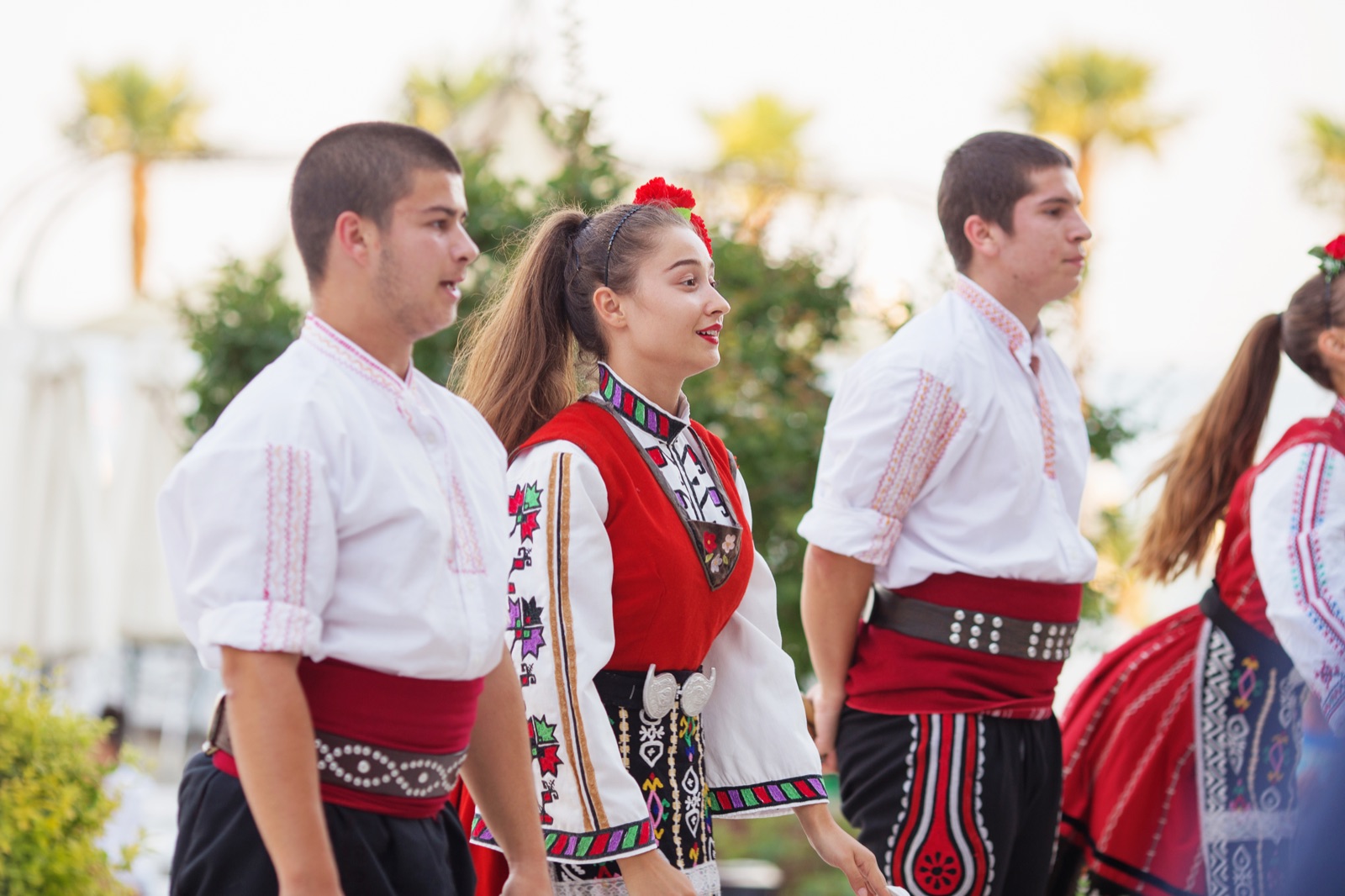
A pysanka is a little world, and the festival is a big one. The day at Reiter Park opens at 10:00 with the Children's Program, when young performers sing and dance, and the official opening follows at noon. The Ukrainian Program takes the main stage from 4:30 to 5:30, when Dina Deyev sings Ukrainian songs, and it is the perfect hour to think about the women who sang while they wrote their eggs by candlelight. Across the afternoon you will also hear Russian, Serbian, Bulgarian, Polish, Croatian, Czech and Slovak traditions, each with its own Easter customs and its own version of the decorated egg. Times may still shift a little, so check the Schedule page before you come.
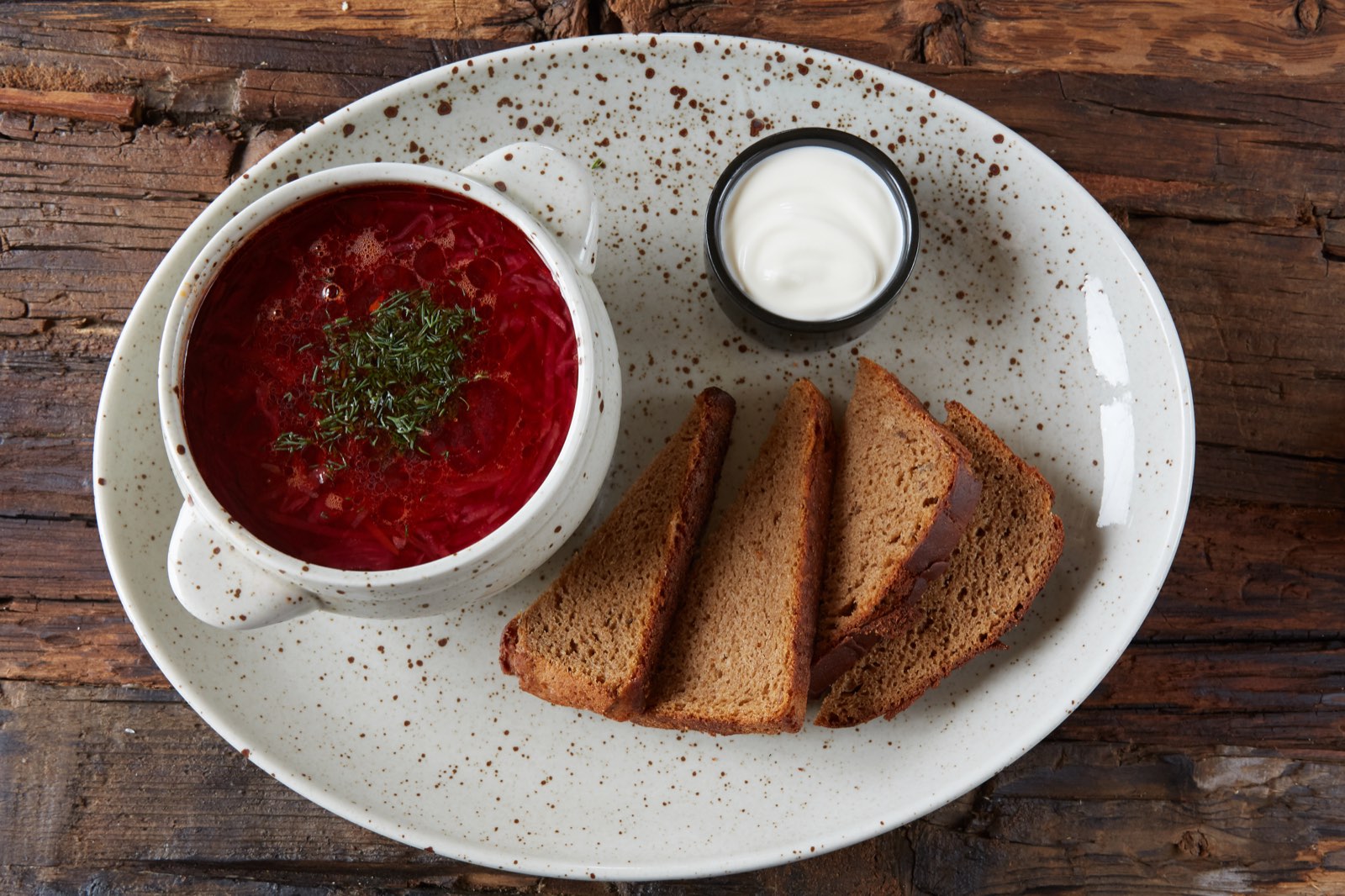
Then there is the food, cooked fresh on-site by the parish kitchen of Saint Nina Mission. A bowl of borscht ($15) is the kind of dish that waits at home after a long Lenten season ends. Bulochki ($10), soft buns filled with cabbage, farmer's cheese or cherries, echo the sweet breads of the Easter table. There are crepes ($15), Bulgarian stuffed peppers ($15), juicy grilled skewers ($25), house-made kvass ($10) and samovar tea, with vegetarian options too. If you would rather not wait in line, you can pre-order food online at slavicfoodfestival.com and pick it up when you arrive.
The festival itself is a little like a pysanka: many hands, many layers, each one added with care. Volunteers cook, set up, serve and clean. If you would like to be one of them, the Volunteer page lets you sign up for shifts, cooking or donations. And if you sing, play or dance, the Artists page is where performers can apply for the stage.
Come see it for yourself
The Slavic Food & Cultural Festival Orlando has been gathering Central Florida families for more than ten years. It takes place on Saturday, February 27, 2027, from 10 AM to 8 PM at Reiter Park, 311 W Warren Ave, Longwood, FL 32750, in Seminole County just north of Orlando. Admission is free for all ages, with no tickets needed, and it happens rain or shine. Food stands and most vendor booths accept cash and cards. Pets are not allowed, though service animals are welcome.
Come for the music, stay for the borscht, and let the children wander from the crafts in the kids' zone to the dancers on the main stage. And when you get home, maybe light a candle, warm a little beeswax and write your own first line on an egg. Somewhere a chained monster will feel the chains grow just a little tighter.