There is a smell that every Slavic grandchild knows by heart. It drifts out of the kitchen early on a Saturday morning: warm yeast, melting butter, a little sugar browning at the edges of a baking sheet. It means that grandmother got up before dawn, that the dough has risen under a towel, and that very soon there will be buns. On Saturday, February 27, 2027, that smell will be drifting across Reiter Park in Longwood, where the parish kitchen of Saint Nina Mission bakes bulochki, soft buns with cabbage, farmer's cheese or cherries, for the guests of the Slavic Food & Cultural Festival Orlando. At $10, they are one of the simplest pleasures on the menu, and one of the most beloved.
Bread and baking sit at the very heart of Slavic culture, from Poland to Ukraine, from Russia to Serbia and Bulgaria. Guests are welcomed with bread and salt. Weddings are blessed with a great decorated loaf. Easter is unthinkable without its tall, sweet breads. And everyday life is sweetened by an endless variety of buns, pies and doughnuts. Here is a tour of the Slavic bakery, with a stop at our festival in Seminole County at the end.
The patience of yeast dough
Ask an experienced Slavic home baker about yeast dough and you will hear advice that sounds almost like folk wisdom, because it is. The dough must be kept warm. It must not be rushed. It does not like drafts or cold hands. Many grandmothers will tell you it does not like noise either: no slamming doors and no shouting while the Easter bread rises, or it will fall. Some say the dough can sense the mood of the person who makes it, so you should bake only when you are calm and happy.
Behind the folklore is real technique. Many traditional recipes begin with an opara, a sponge made from yeast, warm milk, a little sugar and some flour, left to bubble and rise before the rest of the dough is mixed. Then come eggs, butter, more sugar for sweet doughs, a pinch of salt, and flour added little by little until the dough is soft, smooth and slightly sticky. Kneading takes time, often fifteen minutes or more, and the dough is then covered with a clean towel and left in a warm spot to double in size. Before ovens were common, that warm spot was often near the great clay stove that heated the house. In American homes it might be a turned-off oven with the light on, or a sunny windowsill in Florida.
Enriched dough of this kind has a name in Russian, sdoba, and versions of it exist in every Slavic kitchen. It is the foundation for bulochki, pirozhki, festive breads and many cakes. Once you master it, a whole world of baking opens up.
Bulochki: the little buns of childhood
Bulochka (plural bulochki) is a loving diminutive of bulka, a bun or small loaf, and it means something like "little bun." The word is used in Russian, and very similar words exist in Ukrainian and other Slavic languages. Bulochki can be plain or sweet, round or twisted, sprinkled with sugar, poppy seeds or streusel, and filled with almost anything.
For many people who grew up in Eastern Europe, bulochki are bound up with memories of childhood: a warm bun from the school canteen with a glass of milk or kefir, a paper bag of buns bought on the way home from the bakery, a tray of grandmother's buns cooling on the table under a linen cloth. Each family has its favorites. Some love savory fillings, like cabbage gently stewed with onion, or potatoes with fried onions. Others prefer sweet ones, with farmer's cheese, jam, apples, raisins or poppy seed.
Farmer's cheese deserves a special word. It is a soft, fresh, crumbly cheese, a bit like a drier cottage cheese, called tvorog in Russian, syr in Ukrainian, twaróg in Polish and tvaroh in Czech and Slovak. Mixed with egg, sugar and sometimes a little vanilla or raisins, it becomes one of the most beloved fillings in all of Slavic baking. The vatrushka, a round open-faced bun with a hollow in the middle filled with sweetened farmer's cheese, is a classic Russian and Ukrainian treat.
Cherries are another favorite. Sour cherries grow abundantly in Ukraine, southern Russia, Poland and the Balkans, and the image of a cottage surrounded by a cherry orchard is almost a symbol of Ukrainian village life. Every summer, families pit buckets of cherries for jam, dumplings and buns, and a bun filled with cherries tastes, to many, like summer itself.
That is exactly the lineup at our festival: bulochki with cabbage, with farmer's cheese, or with cherries, $10, from the parish kitchen of Saint Nina Mission. Ask the volunteers at the counter which filling they would recommend, or simply try one of each: savory cabbage first, then farmer's cheese, and the cherry bun for dessert.
Pirozhki and their many cousins
If bulochki are the sweet side of Slavic baking, pirozhki are often the savory side, though they come in sweet versions too. Pirozhok (plural pirozhki) means "little pie" and comes from pirog, the word for a large pie. In Ukrainian they are called pyrizhky. They are small, oval or half-moon shaped pastries with a filling sealed inside, either baked until golden or fried in oil until puffy and crisp.
The fillings are endless. Cabbage is a classic, as is potato with onion or dill. There are meat pirozhki, liver pirozhki, rice and egg pirozhki, mushroom pirozhki, and a springtime favorite of chopped hard-boiled egg with green onion. Sweet pirozhki are filled with apples, cherries, apricots, jam or poppy seed. In the Soviet era, fried pirozhki sold from street carts and train station kiosks were a cheap, filling snack, and many people still remember eating them on the go, wrapped in a scrap of paper.
A note for anyone confused by the names: pirozhki are not the same as Polish pierogi. Despite the similar sound, pierogi are boiled dumplings made from unleavened dough, the same family as Ukrainian varenyky. Pirozhki are made from yeast dough and baked or fried. Both are delicious, and both are beloved, but they are different foods.
Every Slavic country has its own baked treasures. Czech and Slovak kitchens are famous for koláče, round buns topped with farmer's cheese, plum jam or poppy seed, and for buchty, soft filled buns baked side by side in a pan. Texas Czech communities turned the kolache into a beloved American breakfast. In Serbia, Croatia and Bulgaria, pogača, a round, soft yeast bread, is baked for family celebrations and to welcome guests. Bulgarians love banitsa, a flaky pastry of thin sheets filled with cheese and eggs. It is not a yeast pastry, but at New Year's many families bake a banitsa with little paper fortunes hidden inside, and everyone eagerly opens their piece to see what the year will bring.
Paska and kulich: the breads of Easter
No season in the Slavic year is as full of baking as Easter. For many Orthodox and Eastern Catholic families, and for Roman Catholic families in Poland, Slovakia and Croatia, the week before Easter is spent cleaning, dyeing eggs and baking, and the results are carried to church to be blessed.
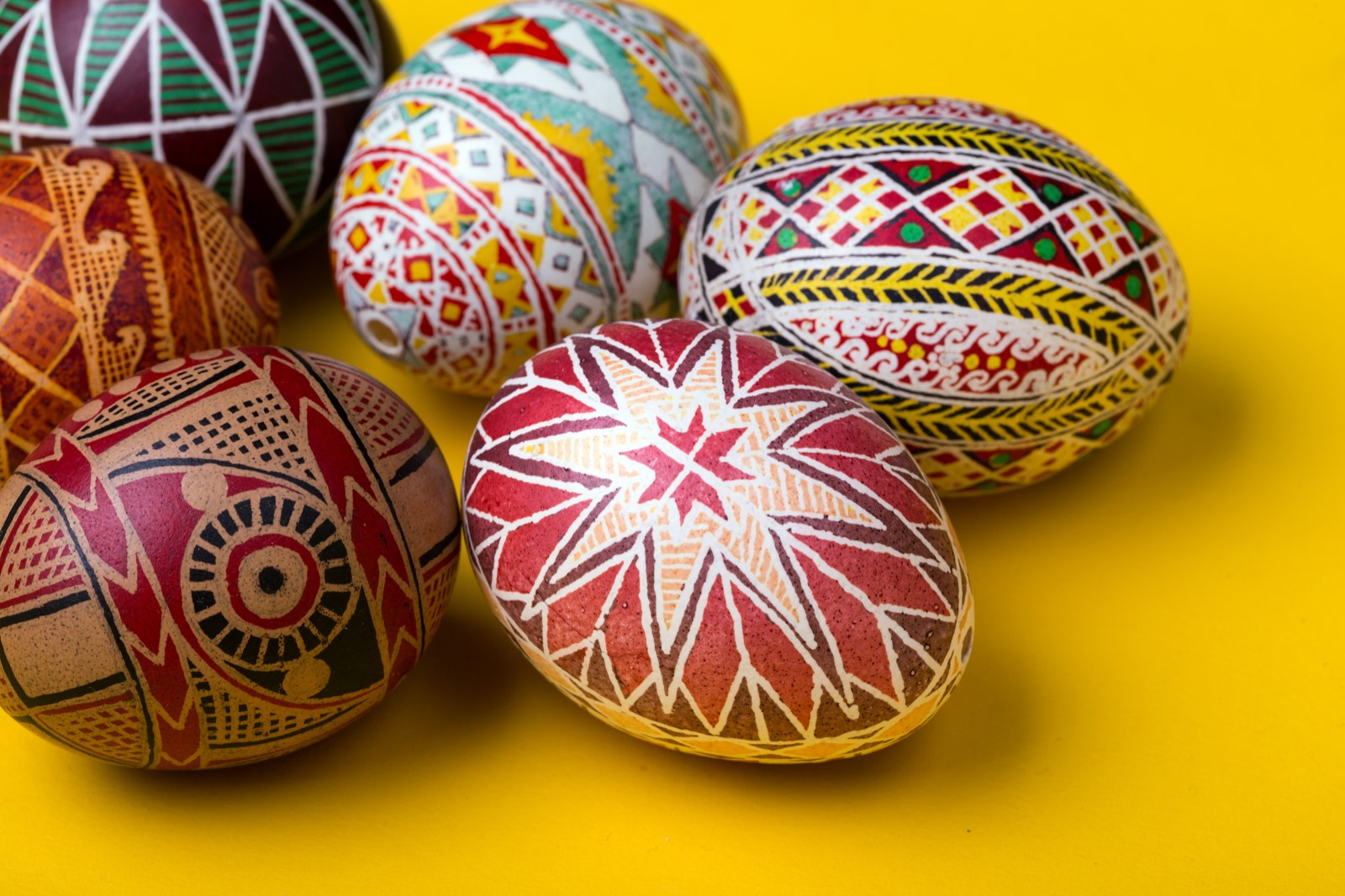
In Ukraine, the Easter bread is called paska. It is a round, rich, sweet bread, often decorated on top with ornaments made from dough: braids, crosses, rosettes, little birds and leaves. In some regions it is topped with white glaze and colorful sprinkles. Ukrainian families carry paska to church on Holy Saturday or early on Easter morning in a basket covered with an embroidered rushnyk (a ritual towel), along with decorated eggs, butter, salt, cheese, sausage, ham and horseradish. The priest blesses the baskets with holy water, and the blessed food is the first thing the family eats when the long Lenten fast ends.
In Russia, the Easter bread is the kulich, a tall, cylindrical loaf, often baked in a tin can or special tall mold, topped with a white sugar glaze that drips down the sides and sprinkled with colored nonpareils. It is often decorated with the letters XB, standing for "Khristos Voskrese," "Christ is risen." The kulich is served with paskha, a rich, sweet dessert made from farmer's cheese, butter, cream and sugar, pressed into a pyramid-shaped wooden mold and decorated with the same letters. Here is where the names can get confusing: in Russian, paskha usually means this cheese dessert, while in Ukrainian, paska is the bread. Both words come from Pascha, the name of Easter itself.
Neighbors have their own festive loaves. Bulgarians bake kozunak, a sweet, braided Easter bread, often flavored with lemon zest and raisins. Serbs bake decorated Easter breads and dye red eggs for the traditional egg-tapping game. In the Czech Republic, the round Easter bread called mazanec is marked with a cross on top. Easter baking is one place where you can see both the shared roots and the delightful differences among the Slavic peoples.
Babka, the grandmother cake
In Poland, one of the stars of the Easter table is the babka, a tall, fluted cake traditionally made from a rich yeast dough with eggs and butter, often studded with raisins and finished with icing. The name means "grandmother" or "little old woman," and a popular explanation is that the tall, ruffled shape of the cake looked like a grandmother's wide skirt. Polish families also carry babka in the Easter basket, the święconka, along with eggs, bread, salt, sausage and often a little lamb made of sugar or butter.
Many Americans know babka in a different form: the braided, swirled loaf filled with chocolate or cinnamon sold in New York bakeries. That version comes from the baking traditions of Eastern European Jewish communities, who shared many recipes and techniques with their Polish, Ukrainian and Belarusian neighbors. It is a lovely reminder of how baking traditions traveled and mixed across Eastern Europe and then again in America.
Pączki and ponchiki: doughnuts before Lent
Every baking tradition has its indulgence, and for many Slavic peoples it comes just before Lent. In Poland, the last Thursday before Lent is Tłusty Czwartek, Fat Thursday, when people line up outside bakeries for pączki (pronounced roughly "POONCH-kee"). These are round, rich doughnuts filled with rose petal jam, plum butter or custard and dusted with powdered sugar or glazed with orange peel. Eating at least one is practically a duty.
Polish immigrants brought the custom to America, where Pączki Day is usually celebrated on Fat Tuesday instead. In cities with large Polish communities, such as Detroit, Chicago and Buffalo, bakeries open before dawn and sell thousands of pączki to customers of every background.
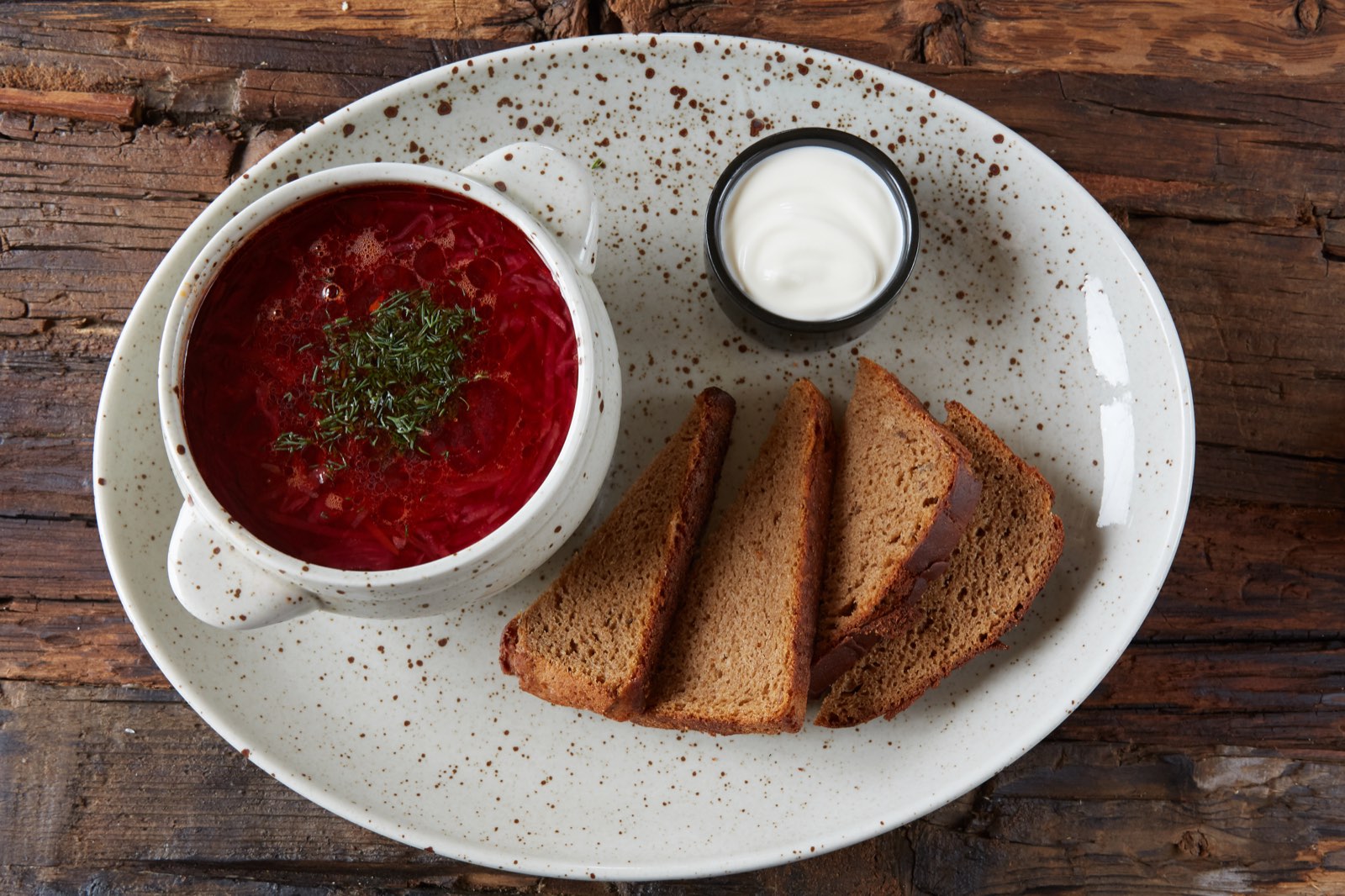
In Russian, small doughnuts are called ponchiki or pyshki, and in Ukraine, pampushky. Ukrainian pampushky can be sweet, with jam or poppy seed, but the word also names the small, soft garlic rolls that are the classic partner for a bowl of borscht. Imagine tearing open a warm roll brushed with garlic, oil and dill and dipping it into a bowl of deep red soup. You can get close at our festival by pairing a bowl of borscht ($15) with a cabbage bulochka.
Grandmother kitchens in America
When Slavic families came to America, in the great migrations of the late nineteenth century, after the Second World War, in the 1990s and more recently, the kitchen was one of the first places they rebuilt home. American flour, butter and yeast behaved a little differently, ovens were different, and farmer's cheese was hard to find for decades. So grandmothers improvised, pressing cottage cheese through a sieve, adjusting recipes by feel and teaching their daughters and granddaughters to do the same.
Many of those recipes were never written down. They lived in the hands and memory of the baker: a glass of milk, flour "until it feels right," a "warm place" for rising. Families today are working to save them, filming grandmothers in the kitchen, writing recipes on index cards, and passing them around in family group chats. Many church communities across the country hold baking days before Easter and Christmas, where younger members learn to braid paska ornaments, fold pirozhki and shape bulochki under the eye of experienced bakers.
And bread connects to the rest of the menu in unexpected ways. Traditional kvass, the tangy, lightly fermented drink beloved across Eastern Europe, was originally made from rye bread. The house-made kvass at our festival ($10) is a refreshing nod to that thrifty kitchen tradition of never wasting a crust.
If you love to bake, or you want to learn from people who do, our festival kitchen is always grateful for help. The Volunteer page on our website lists ways to pitch in, from cooking and food prep to shifts on the day and donations of ingredients.
Find the bulochki in Longwood on February 27
The Slavic Food & Cultural Festival Orlando takes place on Saturday, February 27, 2027, from 10 AM to 8 PM at Reiter Park, 311 W Warren Ave, Longwood, FL 32750, in Seminole County just north of Orlando. Admission is free for all ages, no tickets needed, and the festival goes on rain or shine. Cash and cards are accepted at the food stands and most vendor booths.
The parish kitchen cooks everything fresh on site: bulochki with cabbage, farmer's cheese or cherries ($10), crepes ($15), borscht ($15), Bulgarian stuffed peppers ($15), juicy grilled skewers ($25) and house-made kvass ($10), plus samovar tea, soft drinks and vegetarian options. Lines can get long with more than two thousand guests, so consider using the Pre-order Food page at slavicfoodfestival.com to order ahead and skip the wait.
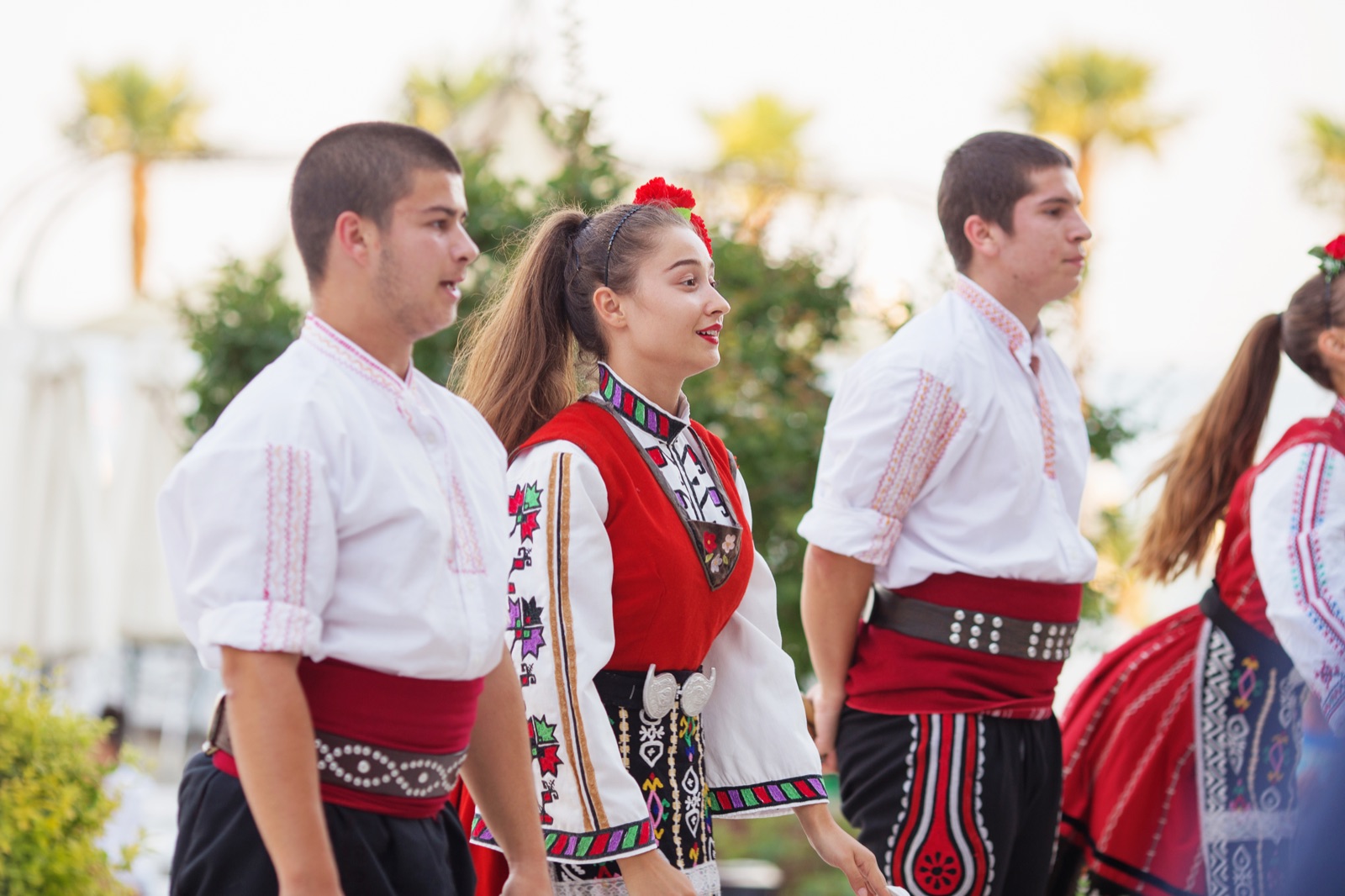
Take your bun to the lawn and enjoy the program: the Children's Program at 10:00 AM, the opening at noon, the Russian Program at 12:30 PM, the National Czech & Slovak Museum & Library at 2:30 PM, the Serbian & Bulgarian Program at 3:00 PM, the Ukrainian Program at 4:30 PM, and the Polish & Croatian Program at 5:30 PM. Times may change, so check the Schedule page. Bring the kids to the crafts zone and wander the outdoor vendor market.
Come hungry, come curious, and come early if you have your heart set on the cherry bulochki. Grandmother would approve.